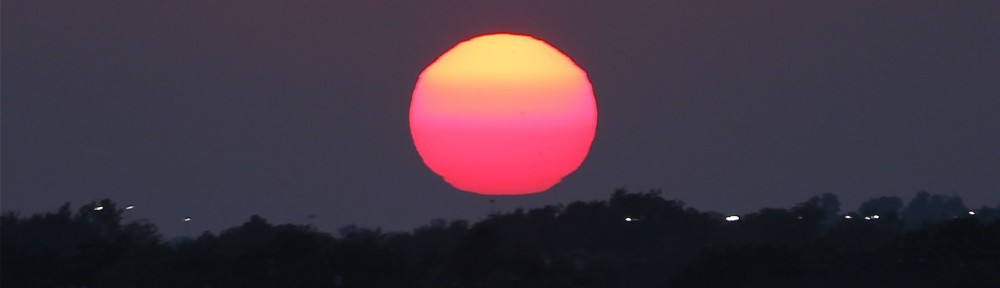
One of the things I wanted to capture with the total solar eclipse was the wide field experience of the sky getting darker and darker and then the weird alien sky with a black circle surrounded by a white glow (potentially with hot pink prominences) and the sunset colors on either side. And, for this particular eclipse, also the crescent sunset.
I have a GoPro camera, so I decided to bring it and attach it to the tripod I had my SeeStar on and capture just the period around totality and the sunset. I set it in auto mode for shutter, white balance, and ISO because I anticipated a pretty large dynamic range for how much light there was.
Unfortunately, some idiot (pointing fingers at my own head here) stood in front of the GoPro in order to remove and install the solar filter on the SeeStar. So I didn’t get a video of the whole event because my own hands, back, cell phone, and camera were in the way. Lessons learned: set up the cameras so managing one won’t block another.
However, I was able to extract video of entering totality and exiting totality. I also got video of the sunset, but the view was too wide and the sun too bright to really see the crescent shape. The pictures I got with my Panasonic LUMIX camera were better, which I’ll share in a future blog post.
I was also able to extract images from the video of the diamond ring on both sides of totality as well as totality itself.
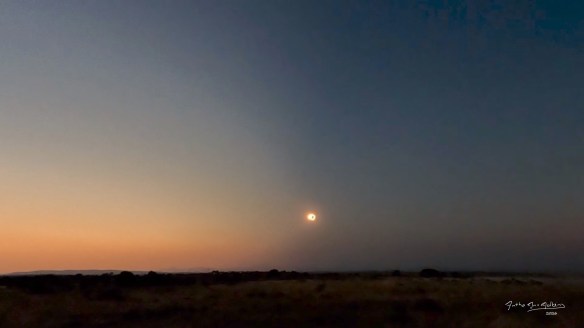
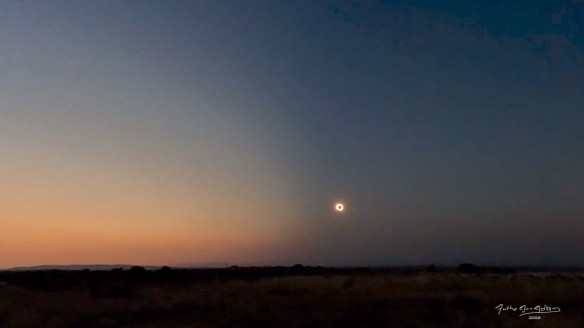
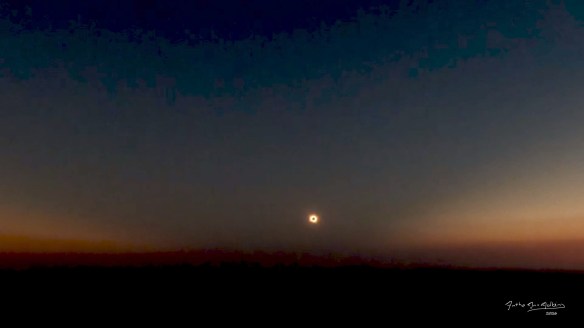
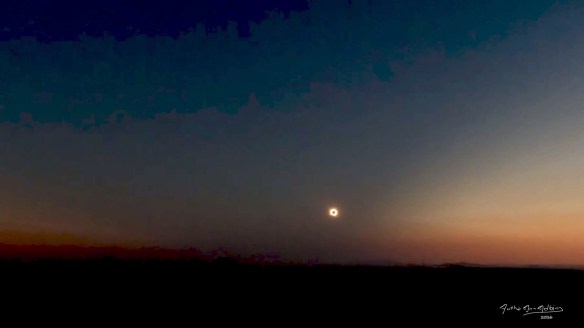
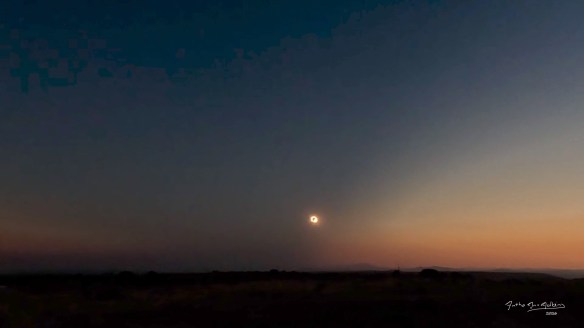
Even though it isn’t 100% what I was after, it’s still pretty amazing. (And I used other cameras as well, which will get their own blog posts.)
Camera geek info:
- GoPro HERO13 Black
- 16:9 aspect ratio
- 1080 resolution
- 30 frames/sec
- L+ zoomed in
- Auto shutter, white balance, ISO


