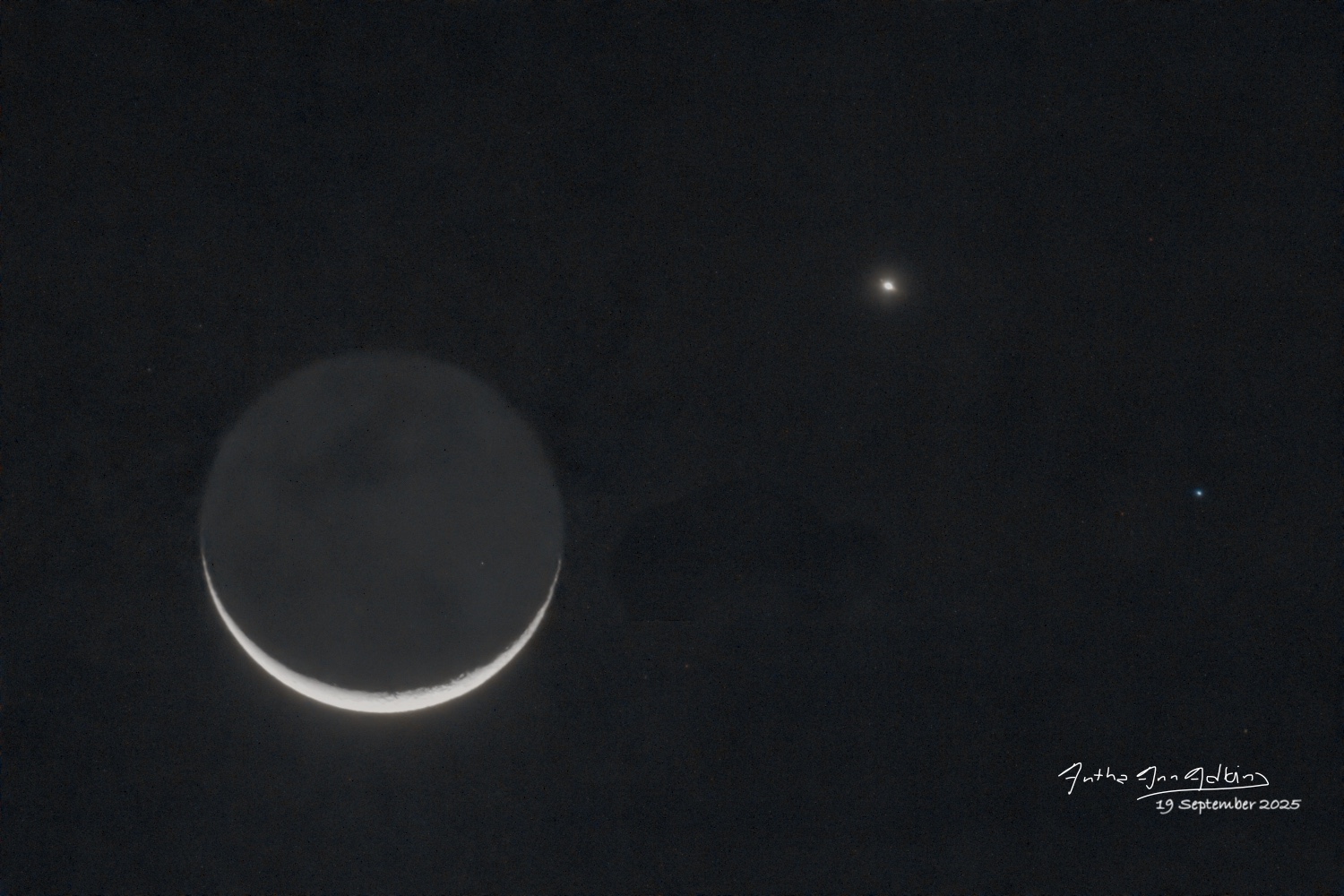
A Beautiful Conjunction: the Moon, Venus, Regulus … and Starlink?

My tracking mount is now in the shop, so I thought I’d have to go without taking astrophotos for a while … but when I woke up early yesterday morning, my husband recommended I go outside and check out the conjunction of the crescent Moon, Venus, and the star Regulus.  It was beautiful!

I got my old setup – my trusty Canon 60D and tripod and intervalometer/cable release and set up to take some pictures.

As I was focusing on the Moon and looking at camera view screen, I saw a satellite moving across the dark face of the Moon!  How cool!  Then I saw a second satellite moving across the dark face of the Moon in the same direction, which made me suspect I was seeing Starlink satellites.  
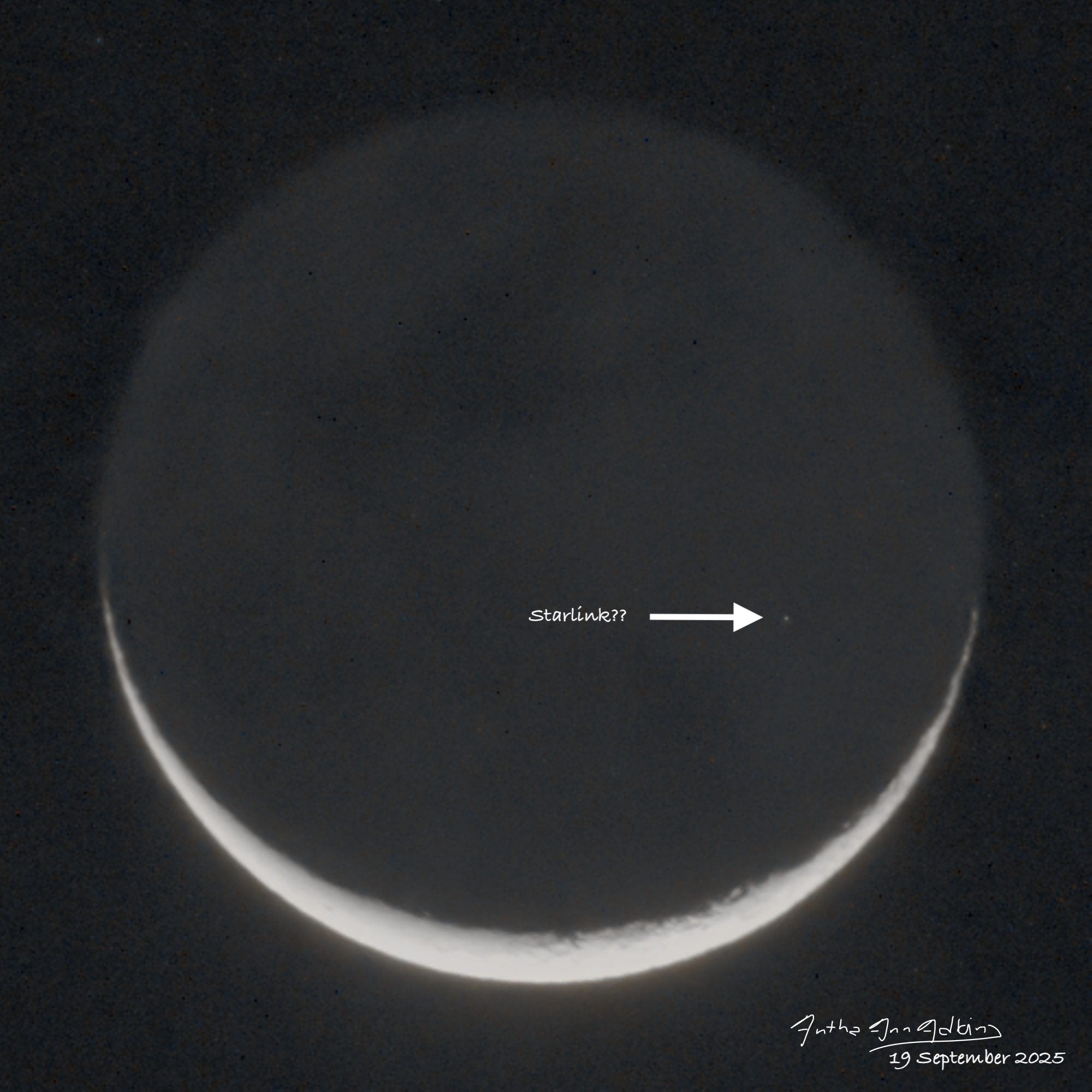
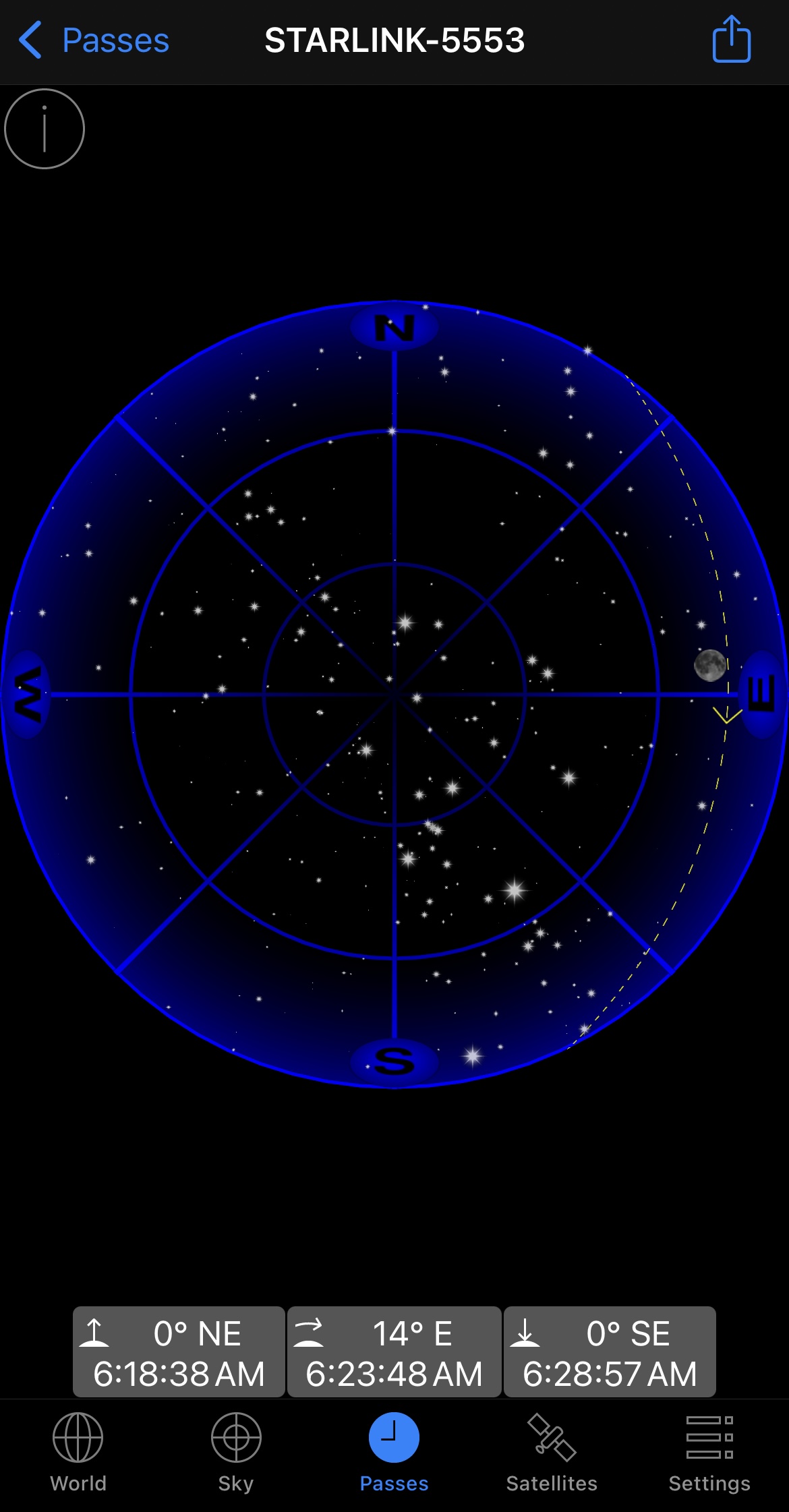
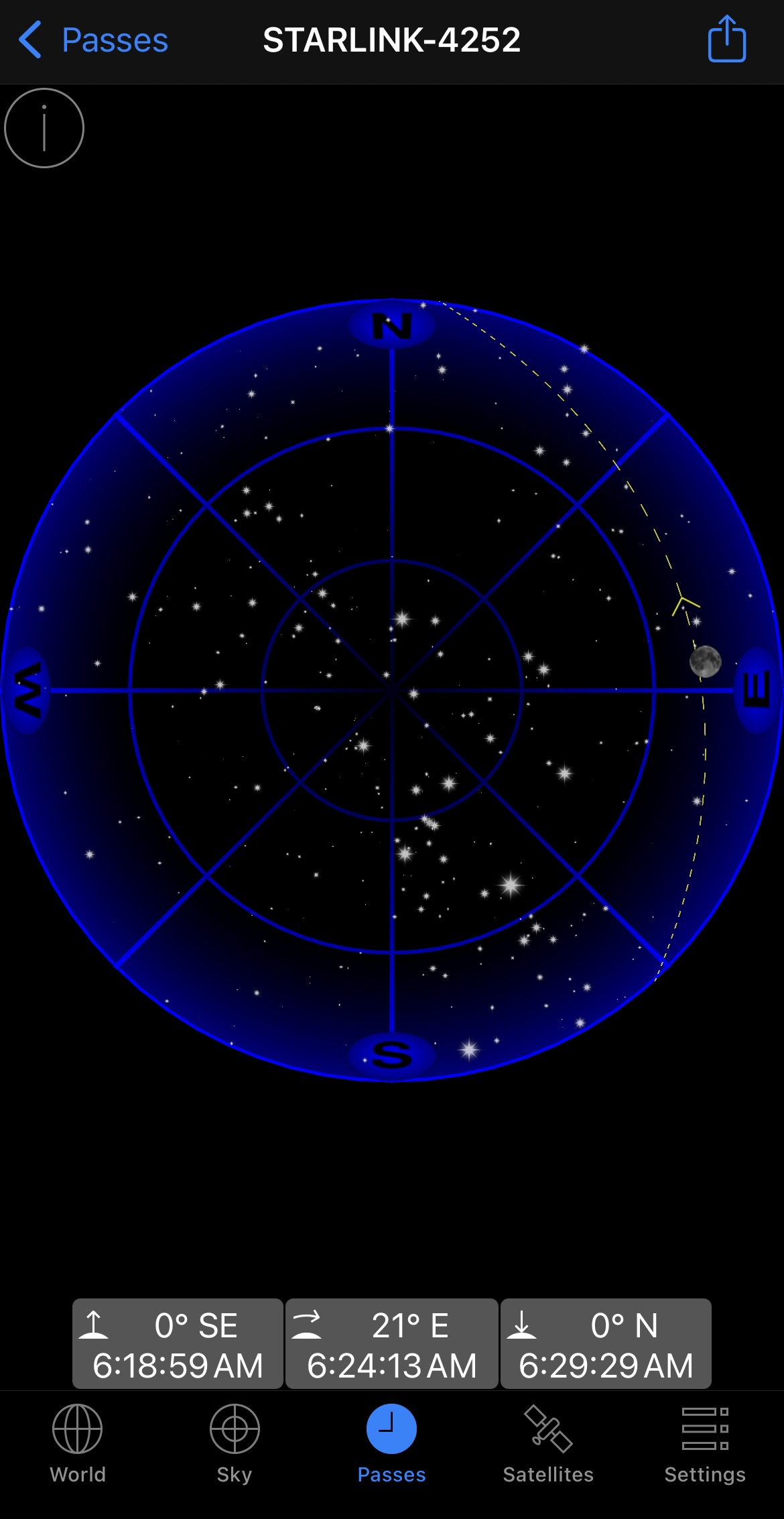
I processed the best image I took in PixInsight and discovered there was a bright spot on the face of the Moon.  So I used the GoSatWatch app on my phone, set to 0 degrees horizon and no limit on magnitude to get all the satellites, and figured out which satellites crossed the face of the Moon when my picture was taken.  There were a ton of Starlinks which made them the very high probability source.  My time stamps are only good to the minute, and I don’t have the exact time the Starlinks crossed the moon although when they were high in the East was a good stand-in, but it looks like there were two potential Starlinks crossing the Moon around the time of my photo!  
It was a pretty neat thing to see, and I think it would be fun to try to capture a bigger satellite (eg the International Space Station) crossing the Moon with my telescope after I get my tracking mount back.  Something to look forward to!

Camera geek info:

  •             Canon EOS 60D in manual mode set at f/4, 1/60 second exposure, ISO 1250
  •             Canon EF 70-200mm f/4L USM lens, set at 200 mm, manual focus on lunar craters
  •             Tripod
  •             Intervalometer used as cable release

Starlink Train on June 23, 2024

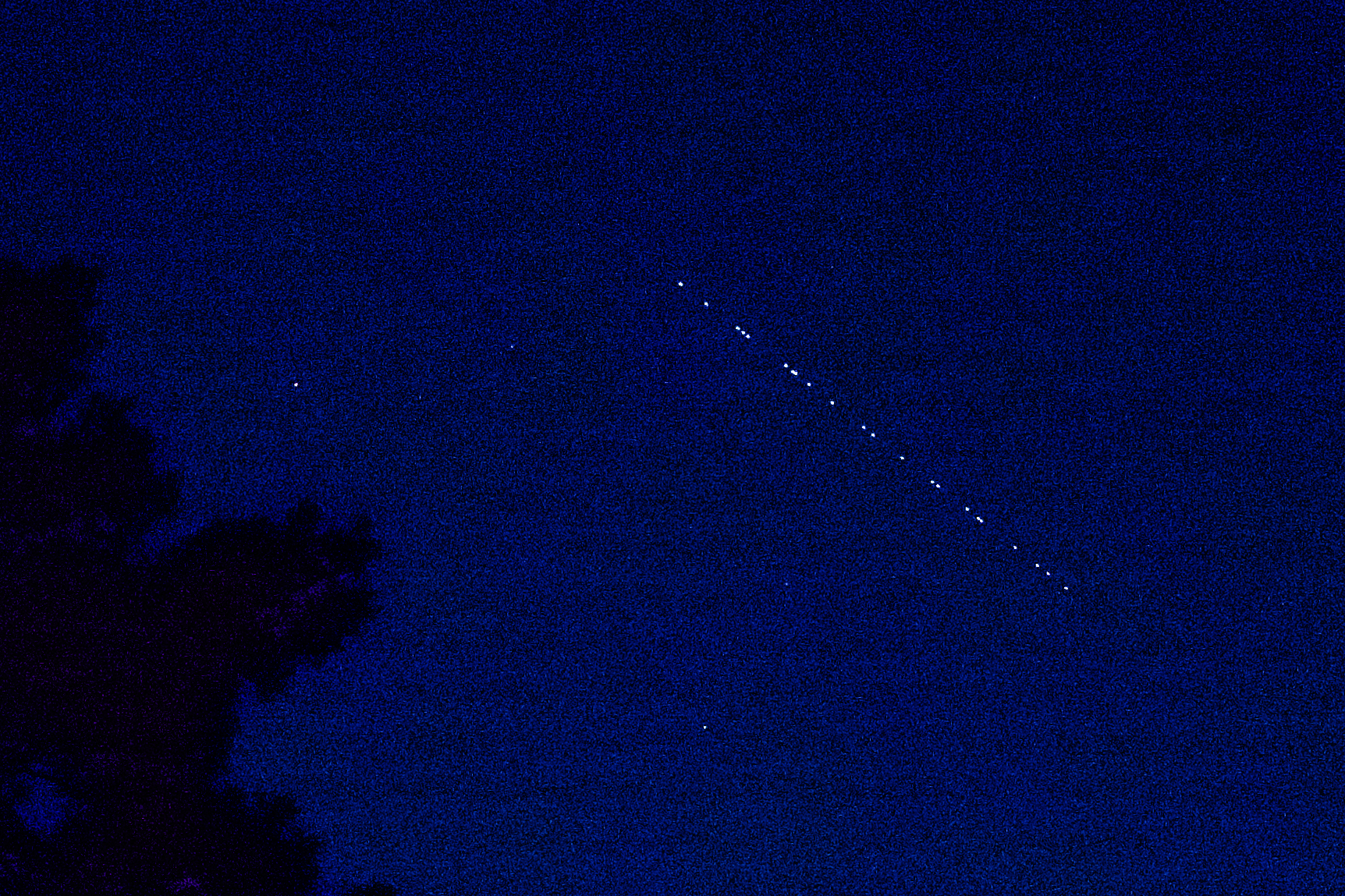
Starlink is SpaceX’s megaconstellation of satellites, which provides global mobile broadband communication. It currently consists of over 6000 satellites.  The satellites have recently been launched in sets of 20 – 23 satellites on a single Falcon 9 rocket that are initially released one after another into the same orbit, so they appear to follow one another across the sky in a “train”.  

Starlink satellites are visible when the sky is dark but they are still sunlit, so just after sunset/before sunrise.  They are easiest to see within a couple of days of launch, when they are in the orbit raising phase and are closer together and lower.  Once they reach their final orbit, they are harder to see.  Because of concerns raised by astronomers over the effect of such a large number of satellites on astronomical observations (satellites create streaks of photobombing light on astrophotos), SpaceX has implemented two things to reduce their brightness: 1) made the satellites invisible to the naked eye within a week of launch by changing their attitude during orbit raising so the solar arrays won’t reflect sunlight down to the Earth and 2) made them less bright on orbit by deploying sun visors on the satellites so the chassis won’t reflect sunlight down to the Earth.  

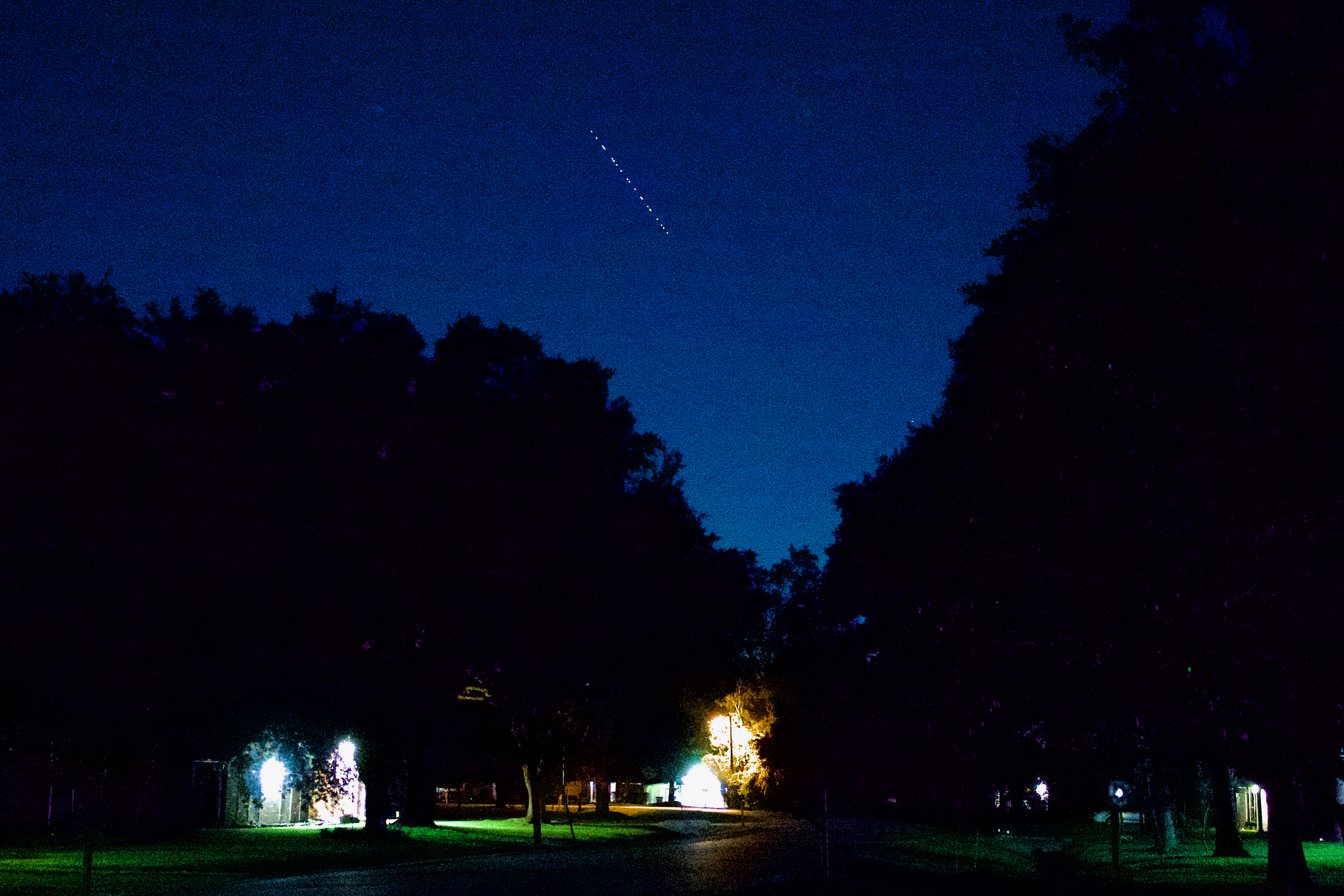
On Monday, June 24, the FindStarlink app/website predicted we’d have good visibility for a Starlink train, so we went outside to check it out.  The “train” of satellites was really striking as it rose at the end of our street and traveled in a line across the sky, then went into the Earth’s shadow and disappeared just as the satellites “reached” a bright star (it could have been Pacmac gobbling up dots).  Given the date and that 22 satellites were visible in the train, I think this was Starlink Group 10-2 (the FindStarlink site says what train is visible, but I forgot to record that on Monday).

I thought they were a really cool thing to see, but I am also glad that SpaceX is working on making them less of a nuisance to astronomers.

Camera geek info:

  • Panasonic DC-GX9 set at f/2.5, 15 second exposure, ISO 3200
  • LUMIX G 14/F2.5 II, 14 mm fixed
  • Tripod