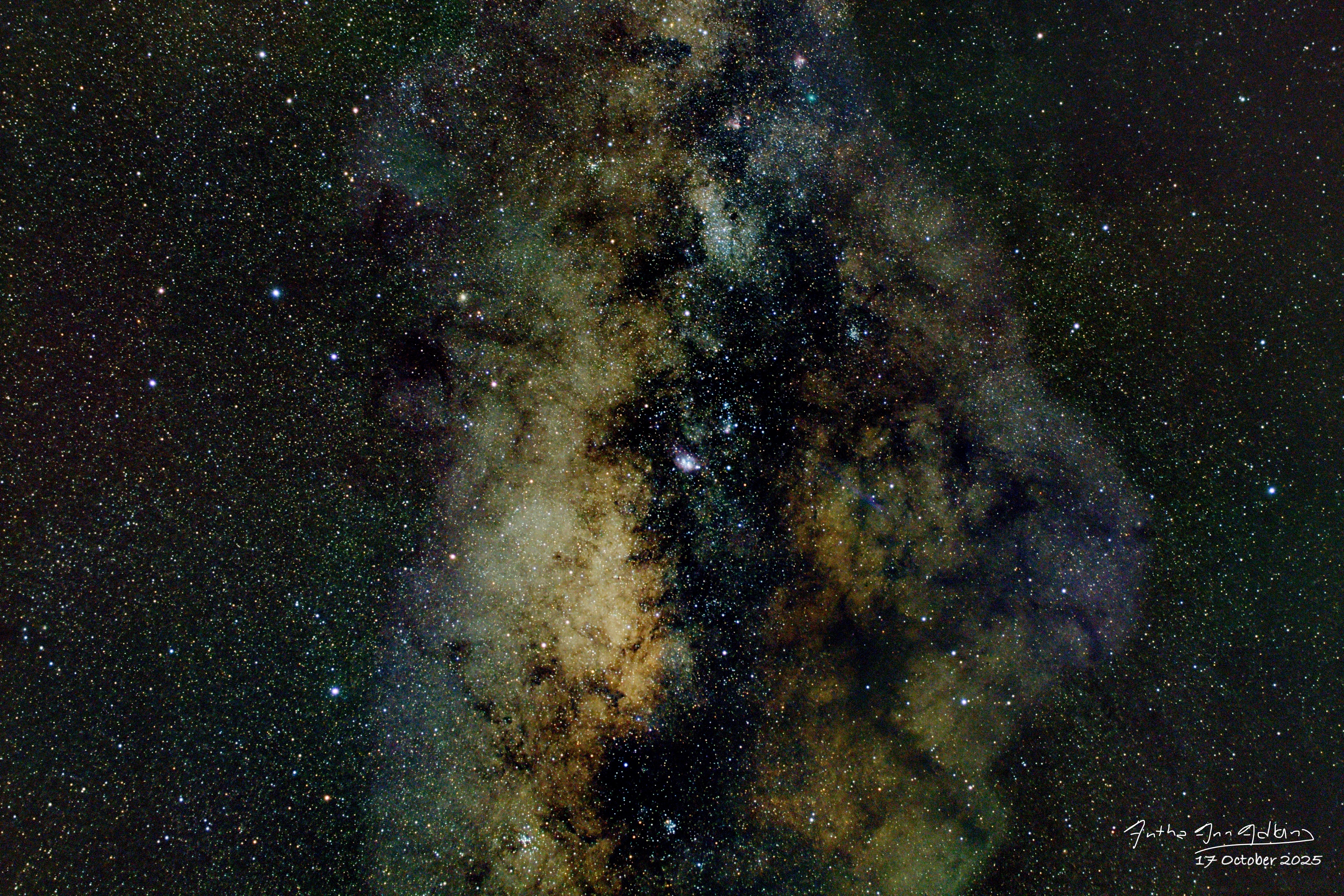
Sagittarius, the Teapot, Pours out the Milky Way, Messier Objects, and Comet C/2025 R2 SWAN

By Friday October 17, 2025, Comet C/2025 A6 Lemmon had become an evening object, so my husband and I drove to Sargent, Texas for darker skies (Bortle 4).  Unfortunately, the clouds stayed near the horizon and hid Comet Lemmon.  It was quite windy out, so I didn’t want to get out my telescope.  

However, there was another bright comet in the sky, C/2025 R2 SWAN, and I also had my camera to try to capture a wide field image, so I set the camera up to capture a wide field with Comet C/2025 R2 Swan.  I didn’t have much time to capture it before it was obscured by clouds and only got 7 minutes of data.  
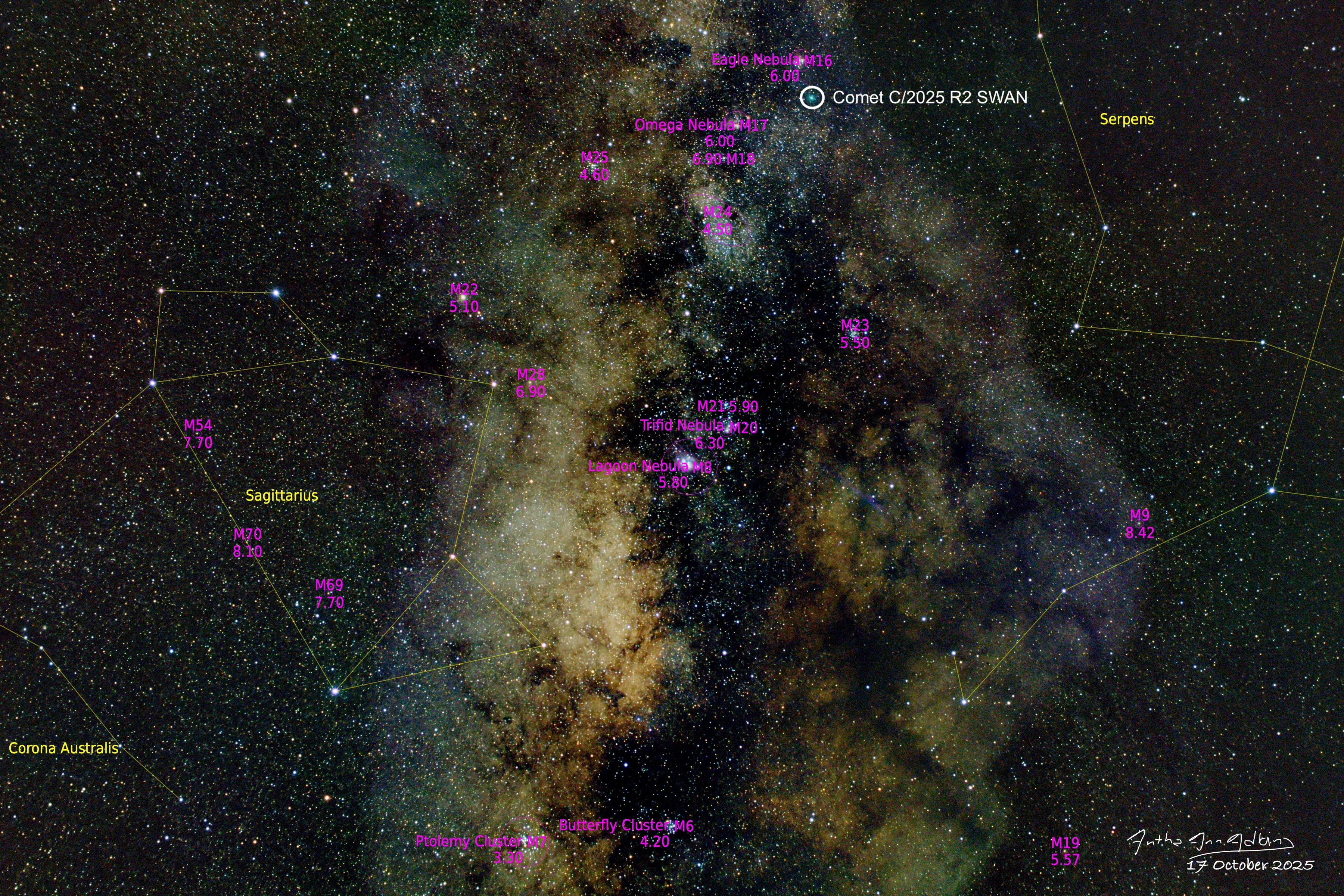
The comet was above the constellation Sagittarius which is in the direction of the center of the Milky Way, so it is a particularly bright section of the Milky Way and contains multiple Messier Objects, marked in magenta.  Messier Objects are Deep Space Objects that comet hunter Charles Messier put on a list of “not-comets.”  There are 17 Messier Objects in this image, four of which I have imaged before in more detail.  It’s fun to compare them to an actual comet here.  While the comet stands out with its greenness in the image, visually it would be a fuzzy spot like the others … except that it very slowly moves across the field of view.

Apparently I forgot to take flat frames for this image, so I used a synthetic flat.

Camera geek info – camera:

  • Canon EOS 60D in manual mode set at f/2.8, 10 second exposure, ISO 4000
  • Sigma 24-70 mm f/2.8EX lens, set at 24 mm, manual focus
  • Tripod
  • Intervalometer 

Frames – camera:

  • October 17, 2025
    • 42 10 second lights
    • Matching darks from library

Dell City Astrophotography October 2019

BandBwithISS 20191010

Last month we took a break and returned to Dell City, Texas, where we stayed in a lovely B&B, enjoyed gorgeous sunsets and sunrises over the Guadalupe and Cornudas Mountains, and enjoyed seeing the stars, planets, and the Milky Way.

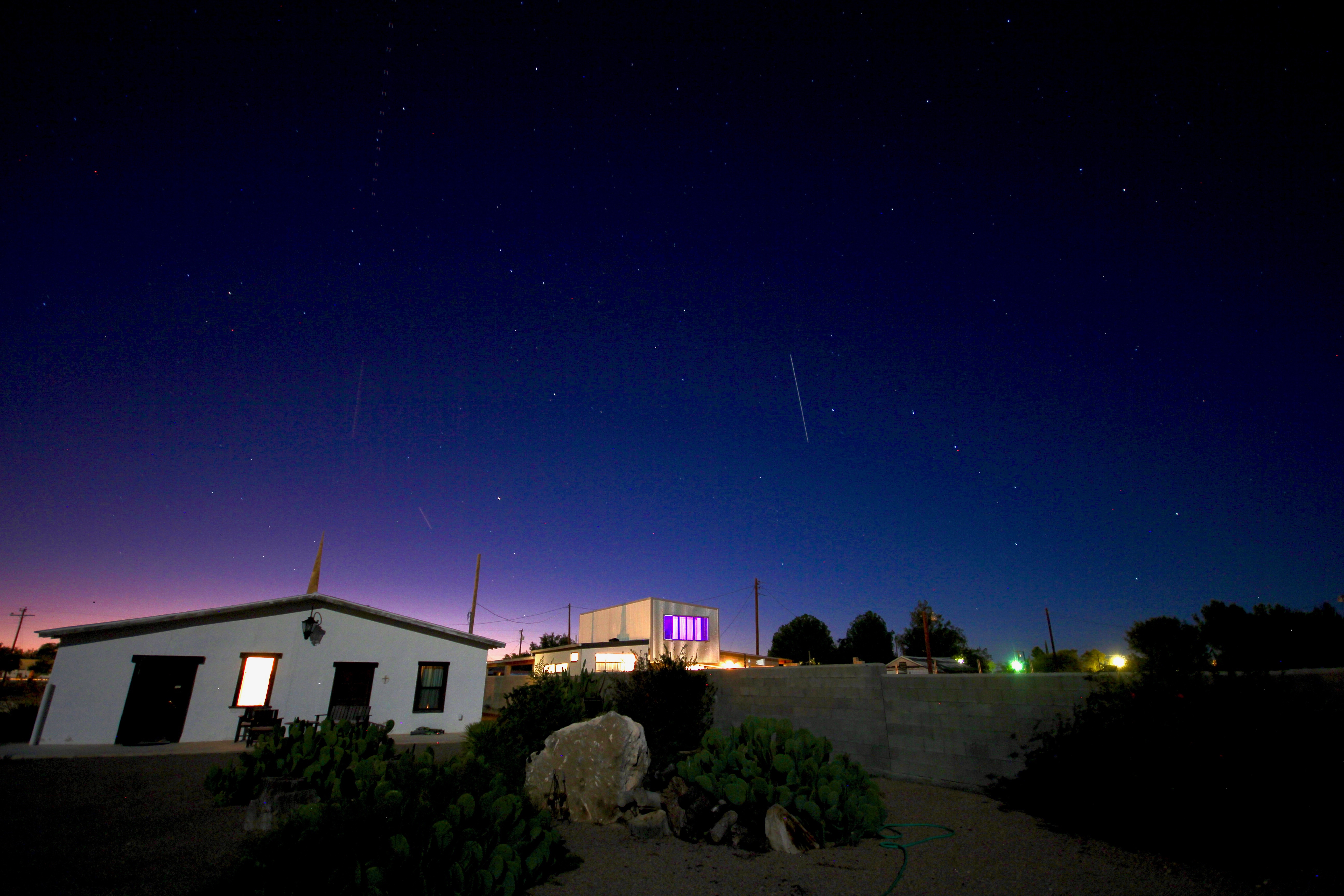
The picture above shows our B&B with the International Space Station starting an overhead pass (white line in center-right of picture).

Camera geek info:

  •             Canon EOS 60D in manual mode set at f/4, 30.0 second exposure, ISO 100
  •             Sigma 10-20 mm f/4-5.6 lens, set at 10 mm, manual focus
  •             iOptron SkyTracker with ballhead
  •             Tripod

This slideshow requires JavaScript.

The picture above shows our B&B with the Milky Way, Jupiter, and Saturn.

Camera geek info:

  •             Canon EOS 60D in manual mode set at f/4, 30.0 second exposure, ISO 640
  •             Sigma 10-20 mm f/4-5.6 lens, set at 10 mm, manual focus
  •             iOptron SkyTracker with ballhead
  •             Tripod

This slideshow requires JavaScript.

Jupiter and Saturn surround the constellation Sagittarius, home to many beautiful deep sky objects, including a number of Messier objects, the brightest of which are labeled here.

Camera geek info:

  •             Canon EOS 60D in manual mode set at f/4, 15.0 second exposure, ISO 1000
  •             Canon EF 70-300mm f/4-5.6L IS USM lens, set at 70 mm, manual focus
  •             iOptron SkyTracker with ballhead
  •             Tripod

MilkyWay 20191011

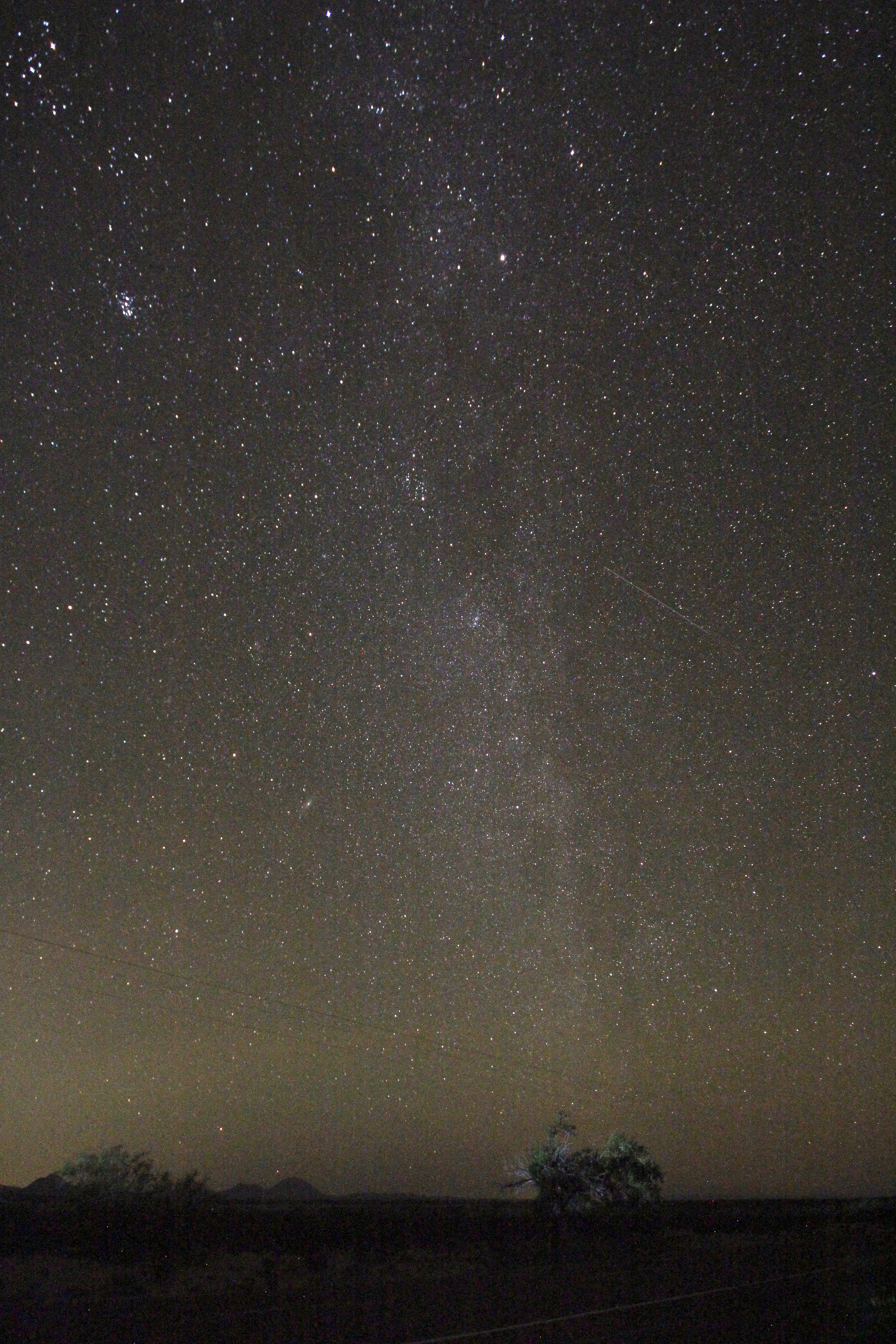
One of the great treats of going somewhere with dark skies is getting to see the Milky Way.  We could see it over our B&B, and we also saw it when we drove out to a darker spot to try to spot a comet at sunrise.  The comet was too close to the sun to see, but the Milky Way before dawn was beautiful.

Camera geek info:

  •             Canon EOS 60D in manual mode set at f/4, 30.0 second exposure, ISO 4000
  •             Sigma 10-20 mm f/4-5.6 lens, set at 10 mm, manual focus
  •             iOptron SkyTracker with ballhead
  •             Tripod

MoonriseWithBunny 20191012

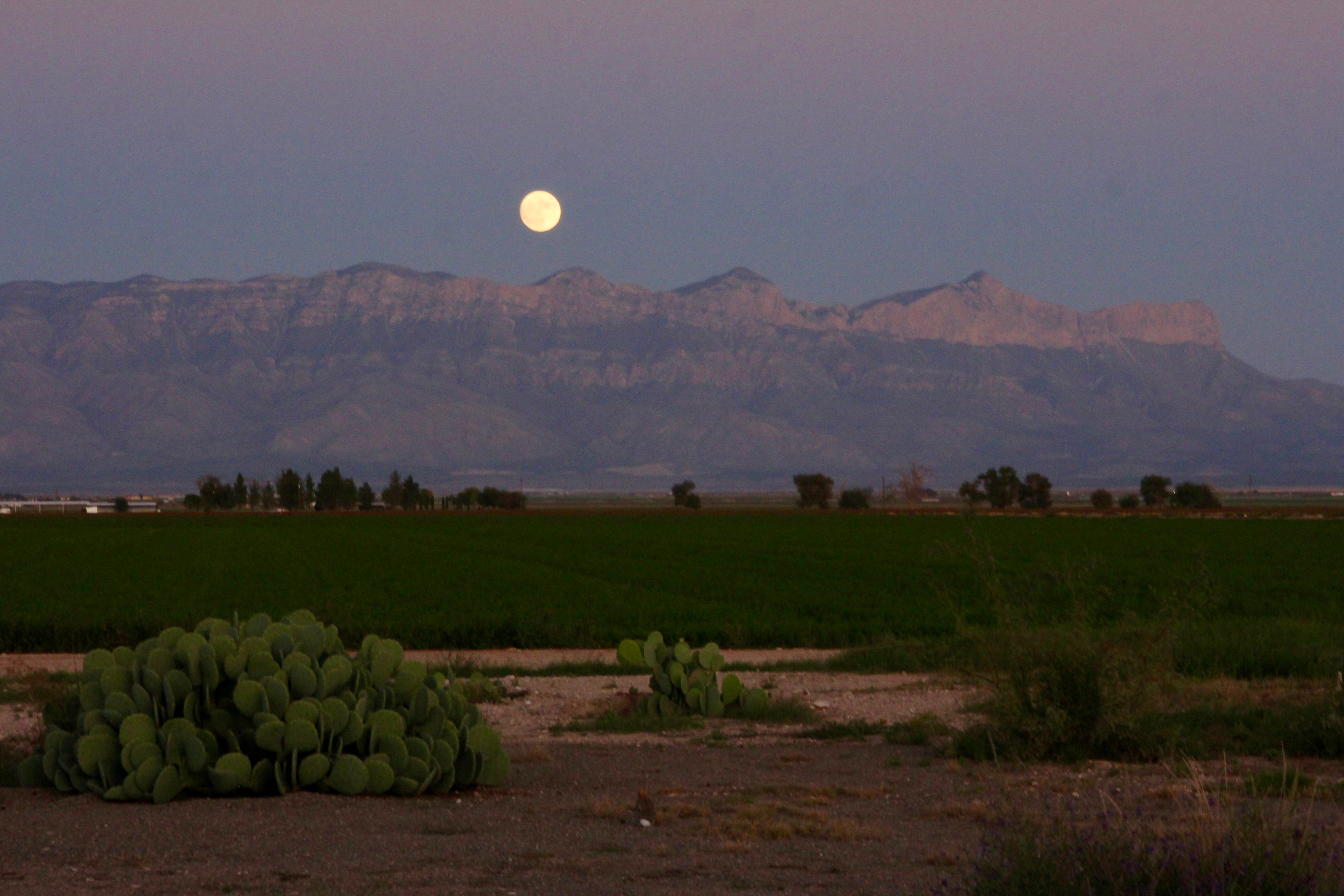
Local wildlife joined me for some of my astrophotography.  One night a skunk walked right past me.  Another night, a bunny watched the moonrise with me.  I didn’t get a picture of the skunk, but the picture above includes the bunny (its tail is the white spot below and just to the right of the moon).

Camera geek info:

  •             Canon EOS 60D in manual mode set at f/11, 1/40 second exposure, ISO 800
  •             Sigma 24-70 mm f/2.8 EX lens, set at 70 mm

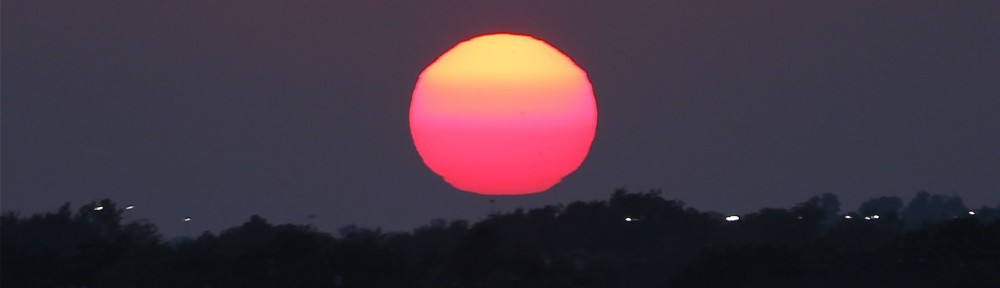
Another of the great treats of visiting Dell City is getting to experience sunrises and sunsets that fill the sky.  Here are two of my favorite shots from this trip.

Camera geek info (mountains):

  •             Canon EOS 60D in manual mode set at f/6.3, 1/30 second exposure, ISO 800
  •             Sigma 24-70 mm f/2.8 EX lens, set at 45 mm

Camera geek info (church):

  •             Canon EOS 60D in manual mode set at f/6.3, 1/100 second exposure, ISO 800
  •             Sigma 24-70 mm f/2.8 EX lens, set at 24 mm