NGC 7293 Helix Nebula 2023

On our recent trip to the fabulous dark skies of Dell City, Texas, I mostly tried to image things that would be difficult to capture from my light-polluted driveway at home.  However, a couple of those objects weren’t visible at sunset, so I snuck in some brighter objects as well.

NGC 7293 also called the Helix Nebula or Eye of God Nebula is a planetary nebula – the gases expelled from a star before it becomes a white dwarf, lit up by that star.  It’s located in the Milky Way, approximately 655 light years away, and it’s approximately 2.5 light-years across.  It’s estimated to be 10,600 years old.  Its apparent size is 25 arcminutes, and it has an apparent magnitude of 7.6.  

I’d imaged NGC 7293 last year, and I’d even posted a single 3 minute shot, but I’d never gone back and really processed it.

I processed the data from this year, and then went back and added in the data from last year.  Which version do you like better? I think I actually like the 2023 only version better.

Either way, this shows that less than an hour and a half of data was sufficient time to generate a decent image of this neat object with dark skies.

This is a particularly spectacular planetary nebula, and even last year it made me want to try to image more. Isn’t our galaxy amazing?  

Camera geek info:

  • Canon EOS 60D in manual mode, 3 minute exposure, ISO 1600
  • Intervalometer
  • Williams Optics Zenith Star 73 III APO telescope
  • Williams Optics Flat 73A
  • iOptron CEM40
  • Dell City, Texas Bortle 2-3 dark skies

Frames:

  • October 28, 2022
    • Run 1
      • 10 3 minute lights
  • October 11, 2023
    • Run 2
      • 17 3 minute lights 
      • 30 0.01 second flats
      • 30 0.01 second flat darks

Processing geek info:

  • PixInsight
  • BlurXterminator
  • NoiseXterminator
  • StarXTerminator
  • Generalized Hyperbolic Stretch

3 Minute Pictures from Dell City – October 2022

A few weeks ago, we took my telescope and tracking mount on a road trip to our favorite Air B&B in Dell City, Texas.  My telescope and I enjoyed the dark (Bortle 2-3) skies.

Here are some three minute long exposure images I was able to get:

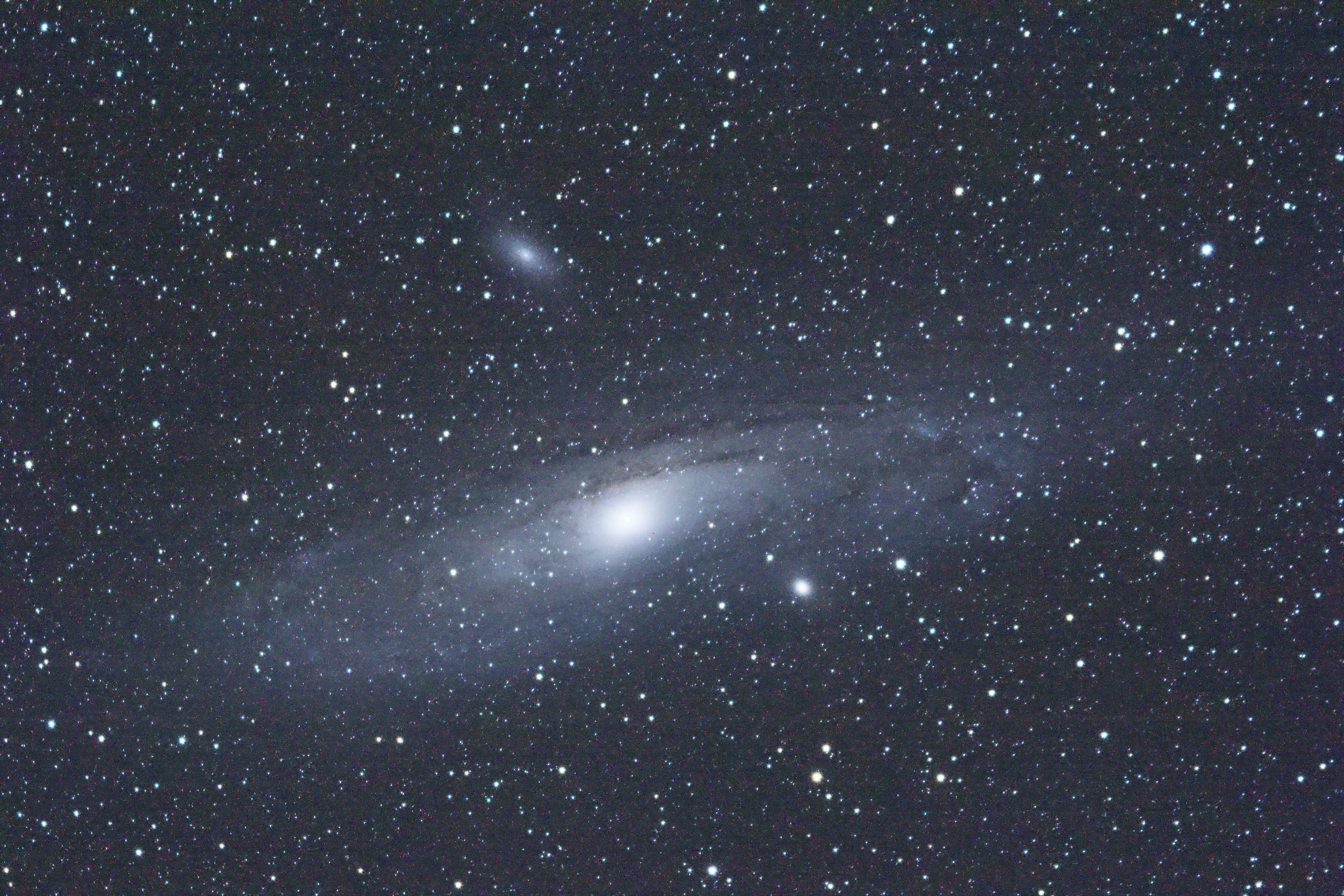
Andromeda Galaxy (M31) plus two satellite galaxies (M32 and M110).  The Andromeda Galaxy is the nearest large galaxy to our own, at 2.5 million light years away.  Its apparent size is 3.167 degrees by 1 degree.  In comparison, the Moon has an apparent size of 0.52 degrees on average.  The Andromeda Galaxy filled the screen on my camera – this image is not cropped at all.  It has an apparent magnitude of 3.44. 

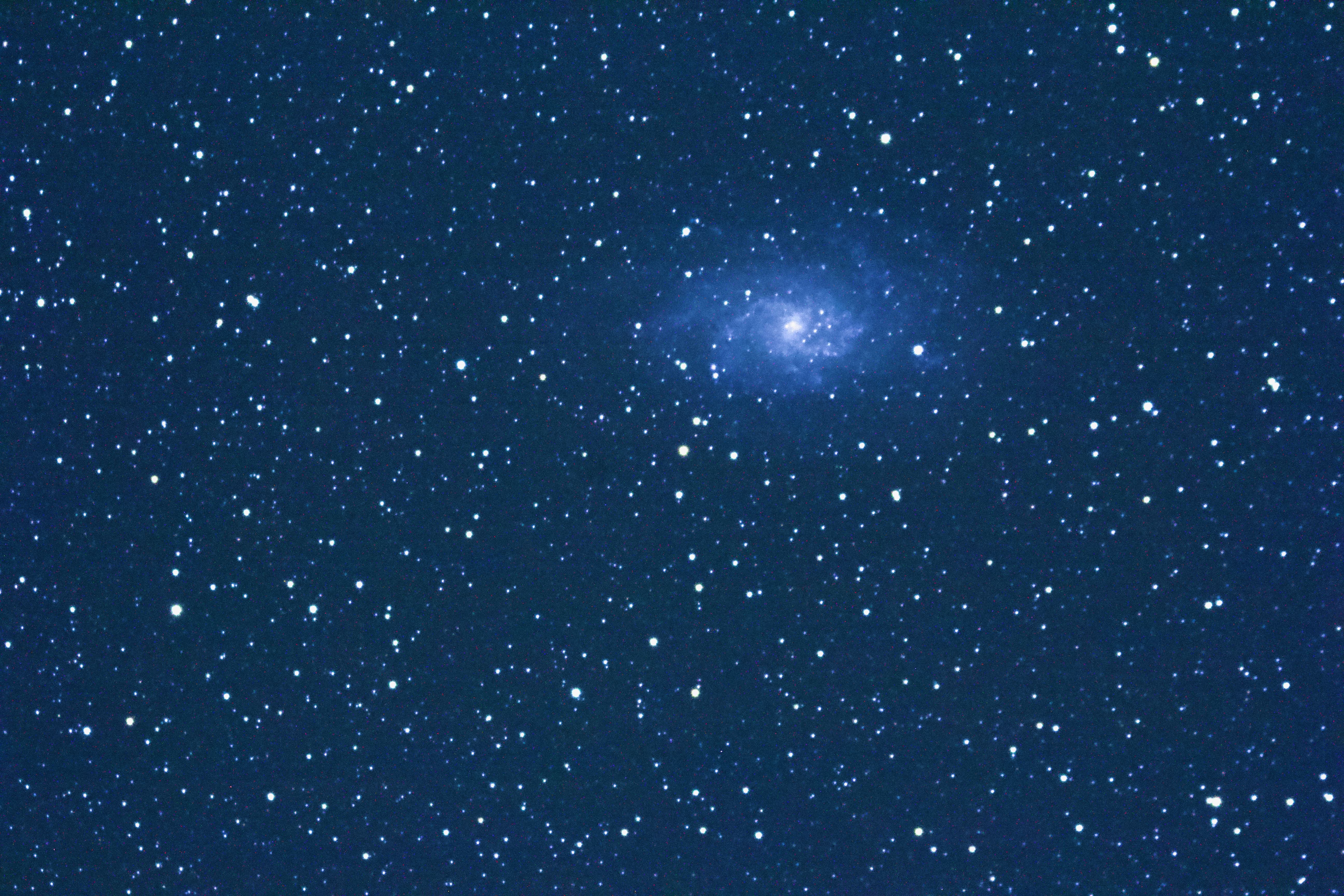
Triangulum Galaxy (M33).  The Triangulum Galaxy is the third largest galaxy in our local group, after the Andromeda Galaxy and the Milky Way.  It’s 2.73 million light years away, and its apparent size is 1.2 degrees by 0.7 degrees.  It has an apparent magnitude of 5.72.  

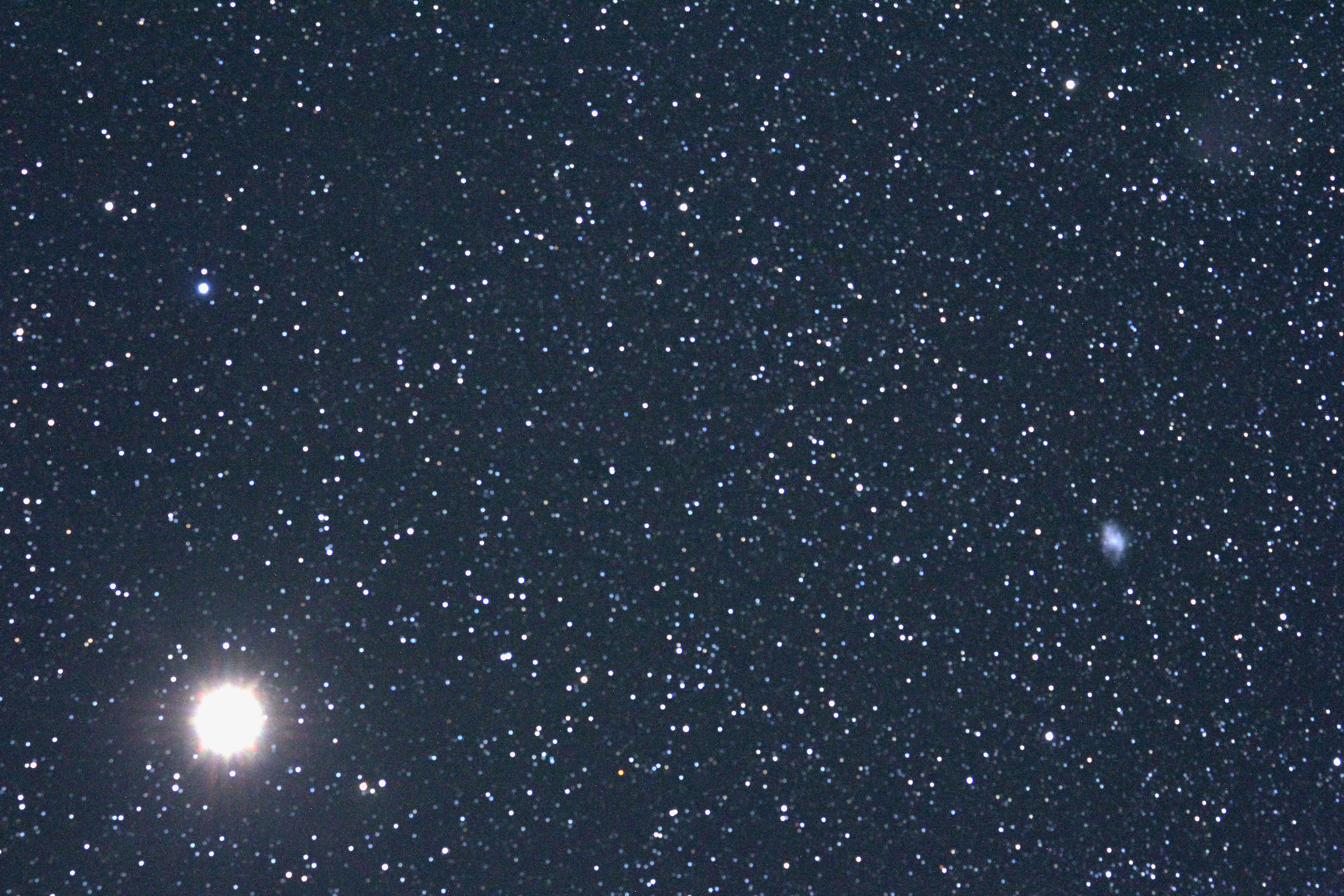
Crab Nebula (M1) with Mars.  M1 is the remnant of a supernova observed in 1054.  It’s located in the Milky Way, 6500 light years away.  Its apparent size is 7 arcminutes by 6 arcminutes, and it has an apparent magnitude of 8.4.  Mars, of course, is the fourth planet in our own solar system, and the brightest object by far in the image.  

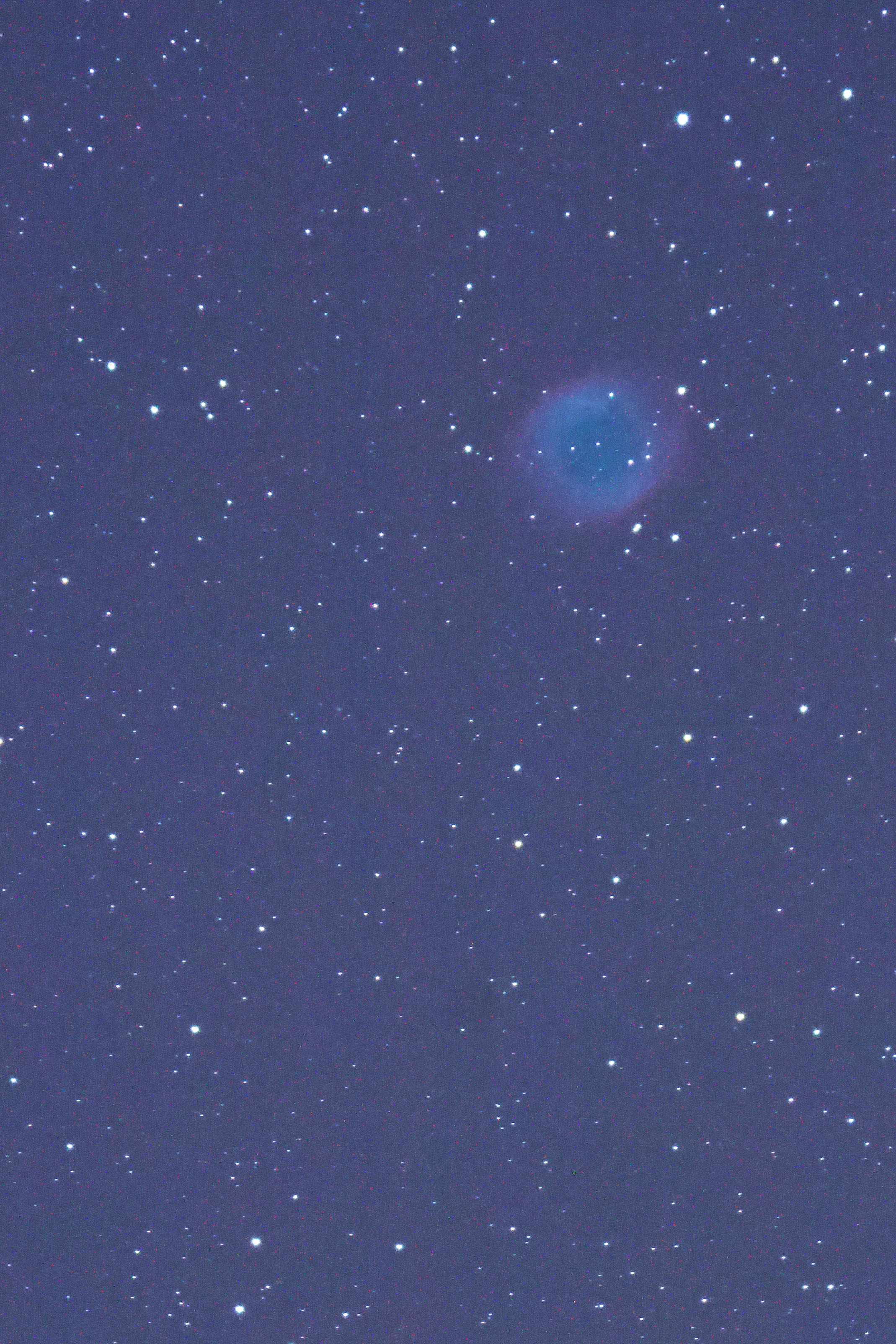
Eye of God (or Helix) Nebula (NGC7293).  The Helix Nebula is planetary nebula – the gases expelled from a star before it becomes a white dwarf, lit up by that star.  It’s located in the Milky Way, approximately 655 light years away.  Its apparent size is 25 arcminutes, and it has an apparent magnitude of 7.6.  

Orion Nebula (M42).  The Orion Nebula is one of my favorite objects in the sky, and one I’ve photographed before.  It’s a diffuse nebula, a cloud of dust and gas that is forming new stars.  It’s located in the Milky Way, about 1344 light years away.  Its apparent size is 65 by 60 arcminutes, and it has an apparent magnitude of 4.

Camera geek info:

  • Canon EOS 60D in manual mode, 179 second exposure, ISO 1600, custom white balance 3500K
  • Williams Optics Zenith Star 73 III APO telescope
  • Williams Optics Flat 73A
  • iOptron CEM40
  • Dell City, Texas Bortle 2-3 dark skies

I’m really looking forward to photographing these from my suburban driveway to see how the images compare.  It will be interesting to see if I get a white screen (pure light pollution) at these settings.  I’ll let you know!

I’m also looking forward to learning how to stack together a sequence of images with PixInsight to see what an hour plus image looks like.  I’ll share that when I figure out how to do it!

Spooky Nebula?  Happy Halloween!

Camera geek info:

  • Canon EOS 60D in manual mode, 179 second exposure, ISO 1600, custom white balance 3500K
  • Williams Optics Zenith Star 73 III APO telescope
  • Williams Optics Flat 73A
  • iOptron CEM40
  • Dell City, Texas Bortle 2-3 dark skies

This is an image of NGC 7293, also known as the “Helix Nebula” and the “Eye of God.”

The first time I saw this nebula on my camera screen, I thought it looked pretty eerie.  What do you think?

Happy Halloween!