I am working on figuring out how much exposure time I need for astrophotography. The answer from my Bortle 7-8 driveway is generally: More.
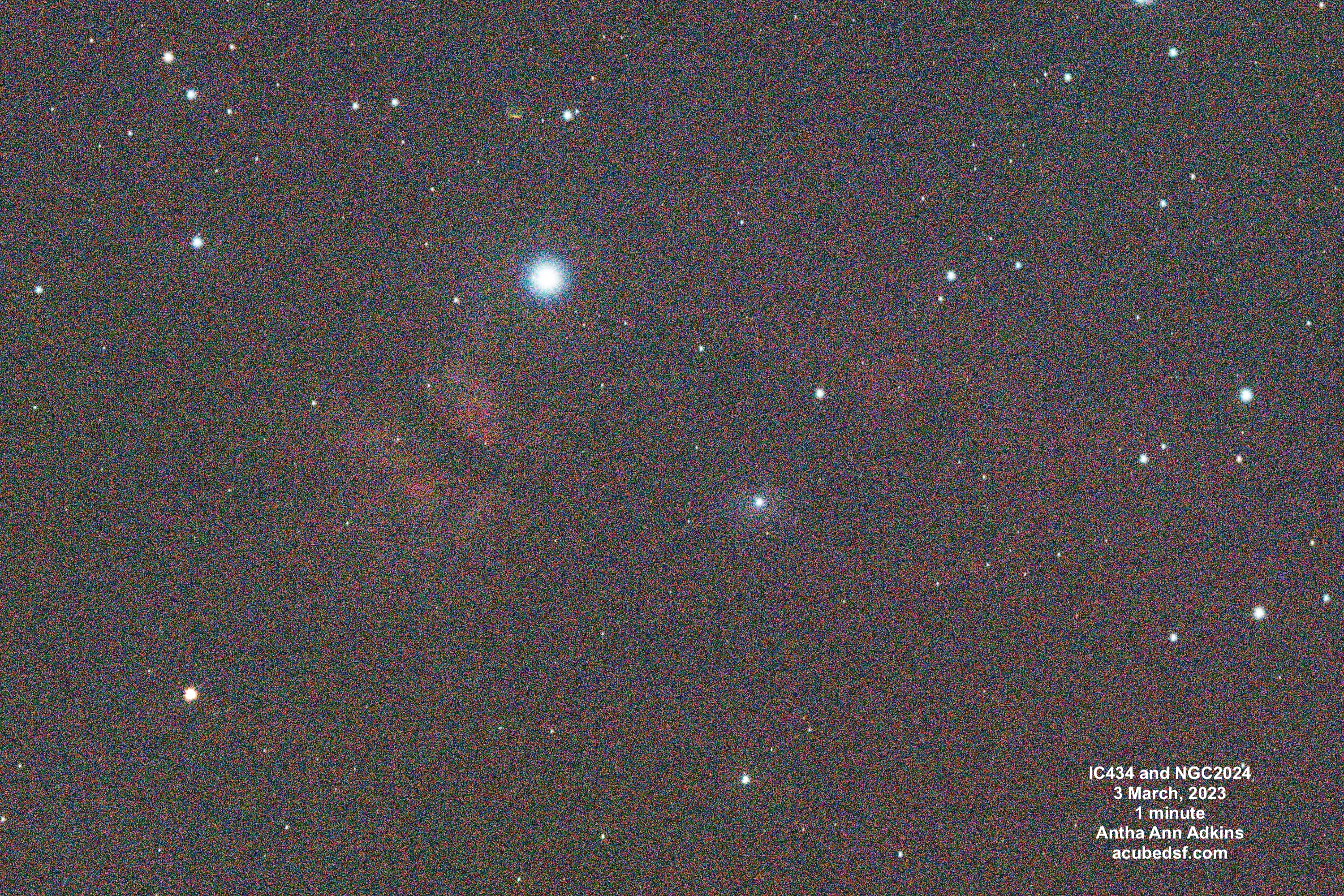
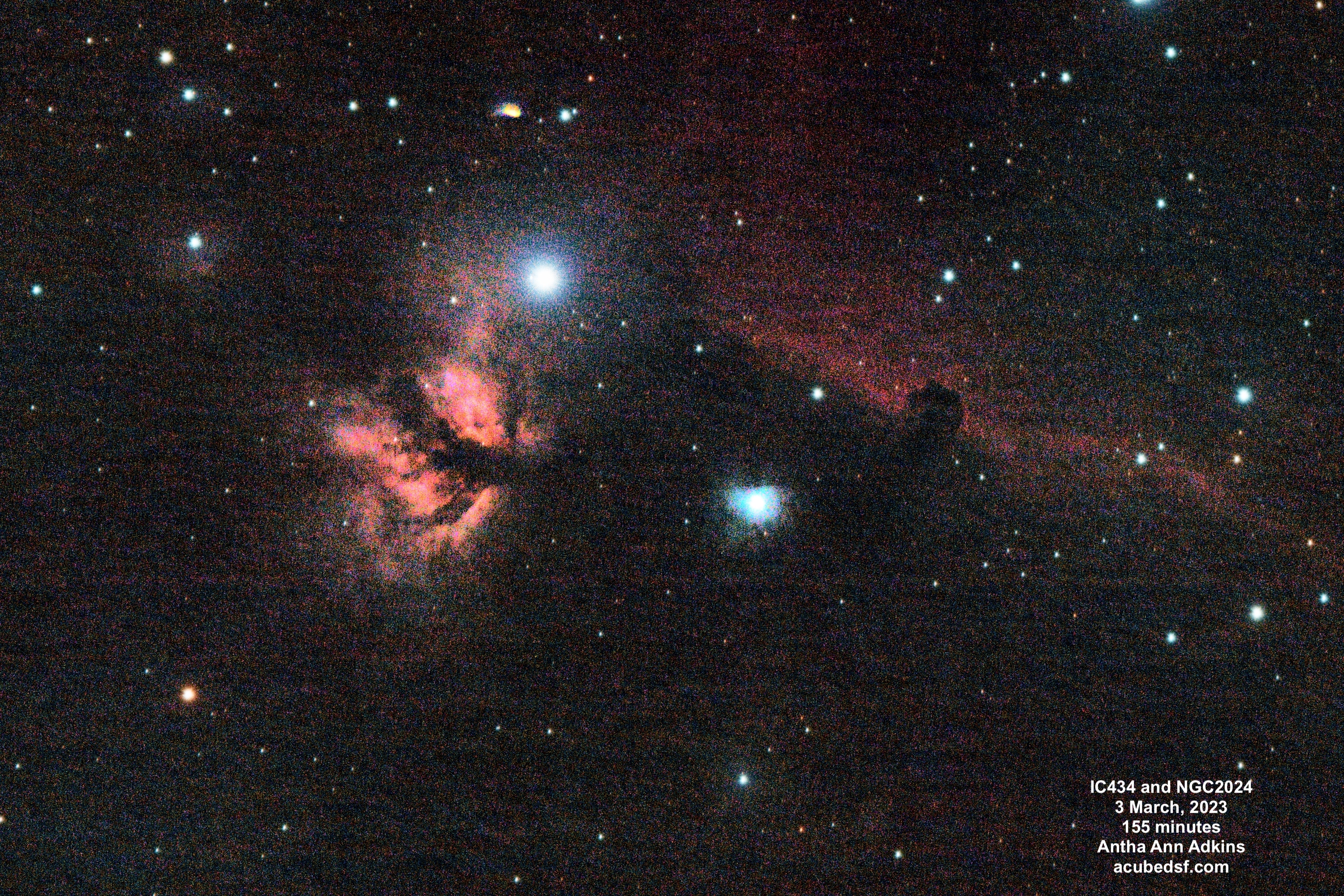
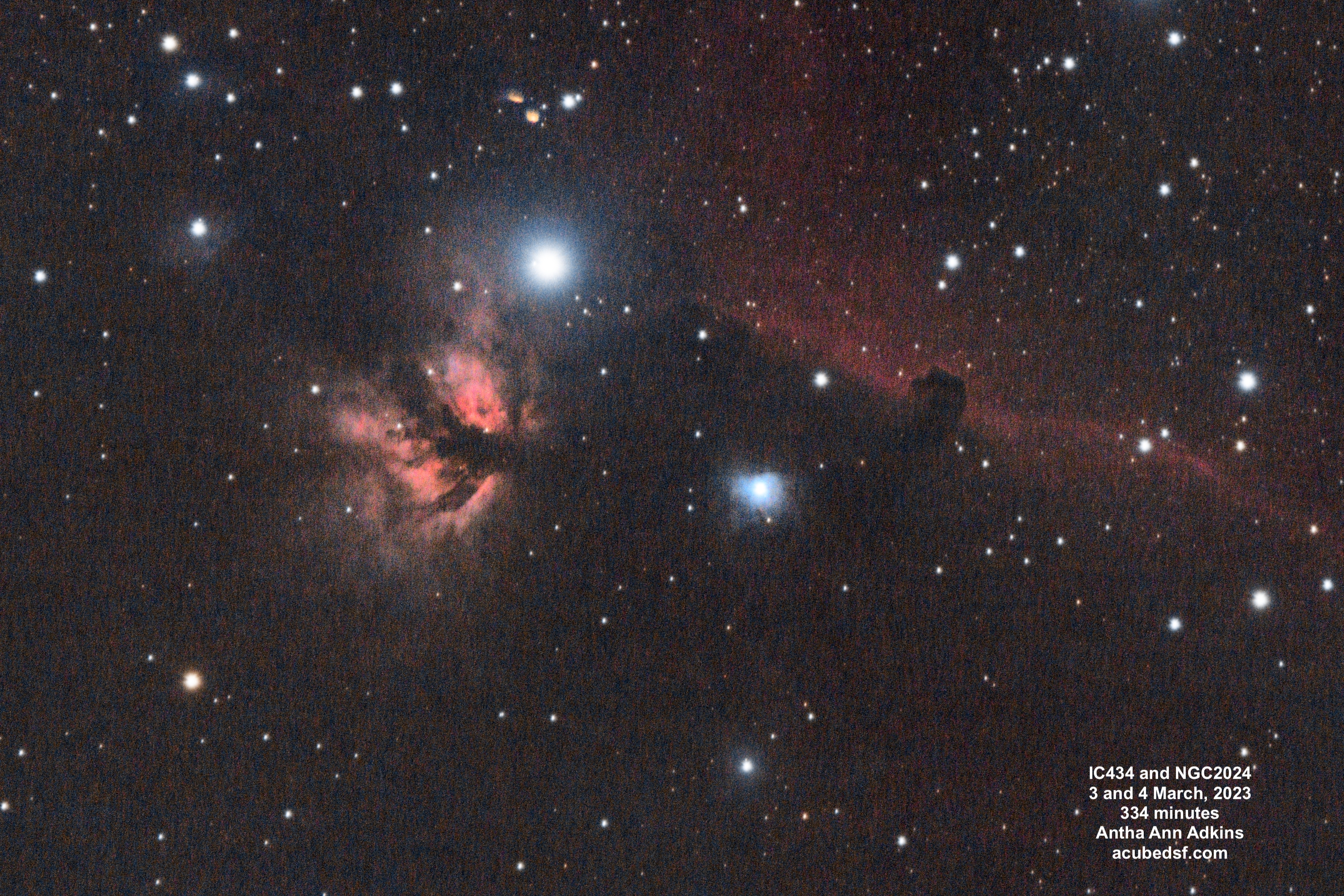
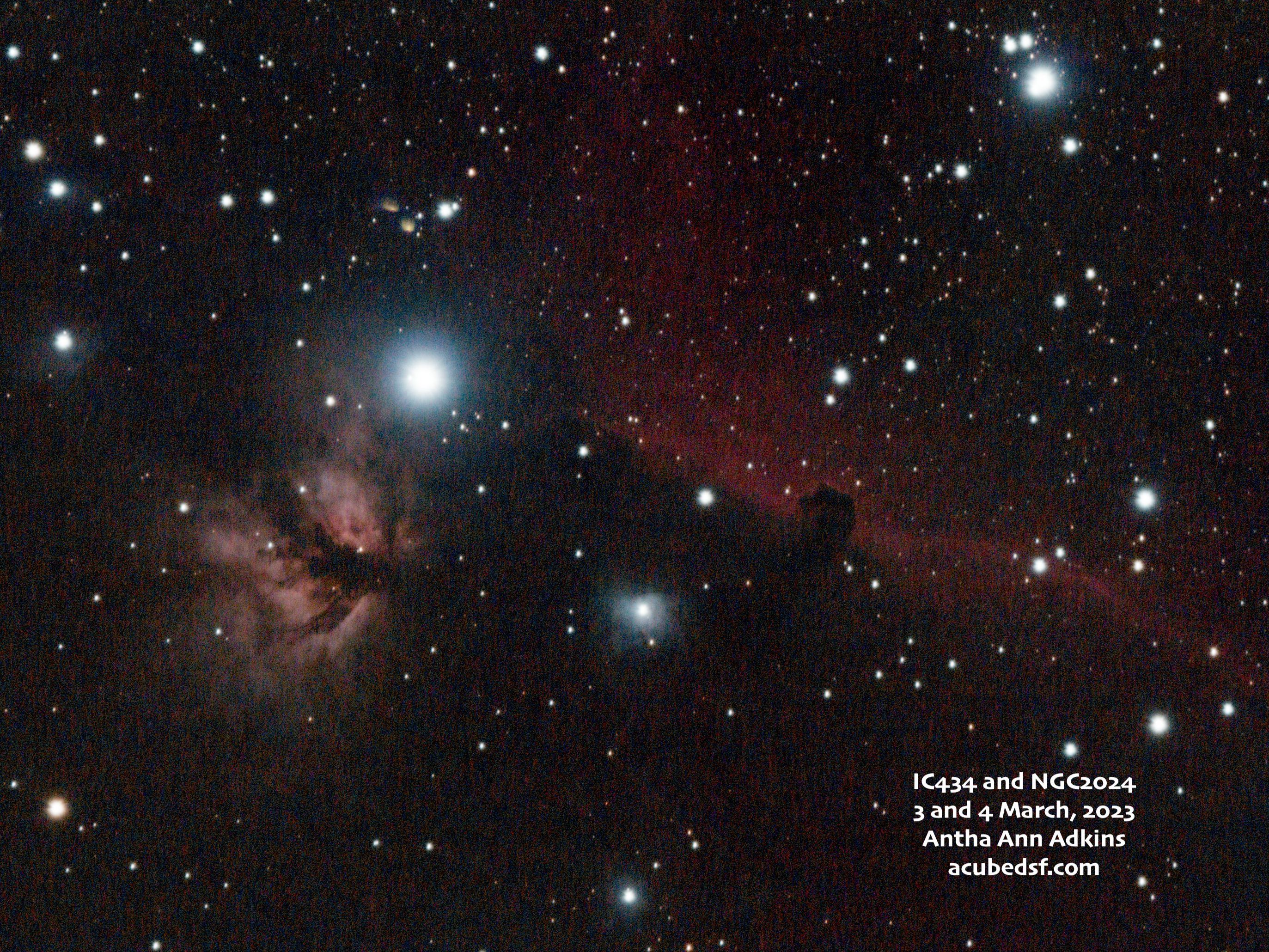
Here I’ve got three example to show how adding time adds detail to the images. In one minute, with a lot of processing, I can get the flame nebula to be barely visible, but the horsehead nebula … might be there, maybe, if you squint and know where to look. With 155 minutes … like magic … you can see both, but they’re grainy. Going up to 334 minutes, and the image is getting less grainy. But more time is still needed to get a really nice picture.
Camera geek info:
- Canon EOS 60D in manual mode, ISO 400, 1 minute exposure
- Williams Optics Zenith Star 73 III APO telescope
- Williams Optics Flat 73A
- SkyTech 2” LPRO-MAX CCD Filter
- iOptron CEM40
- Friendswood, Texas Bortle 7-8 suburban skies
Frames:
- March 3, 2023
- 155 1 minute lights
- 20 0.2 second flats
- 20 0.2 second flat darks
- 28 1 minute darks
- March 4, 2023
- 179 1 minute lights
- 21 0.5 second flats
- 21 0.5 second flat darks
- 26 1 minute darks
Processing geek info:
- PixInsight
- StarXterminator
- Generalized Hyperbolic Stretch
 Space&Aliens