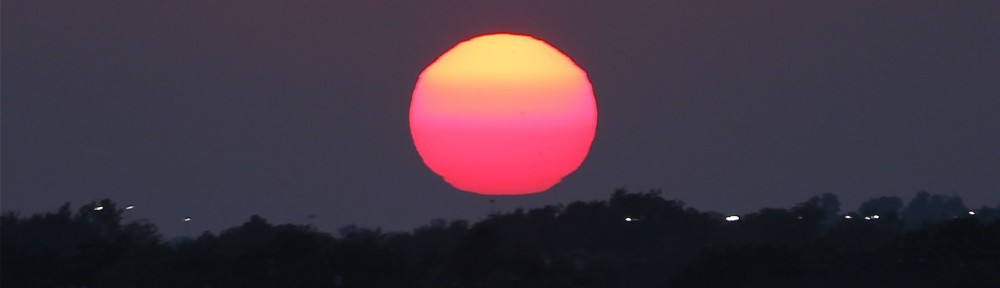
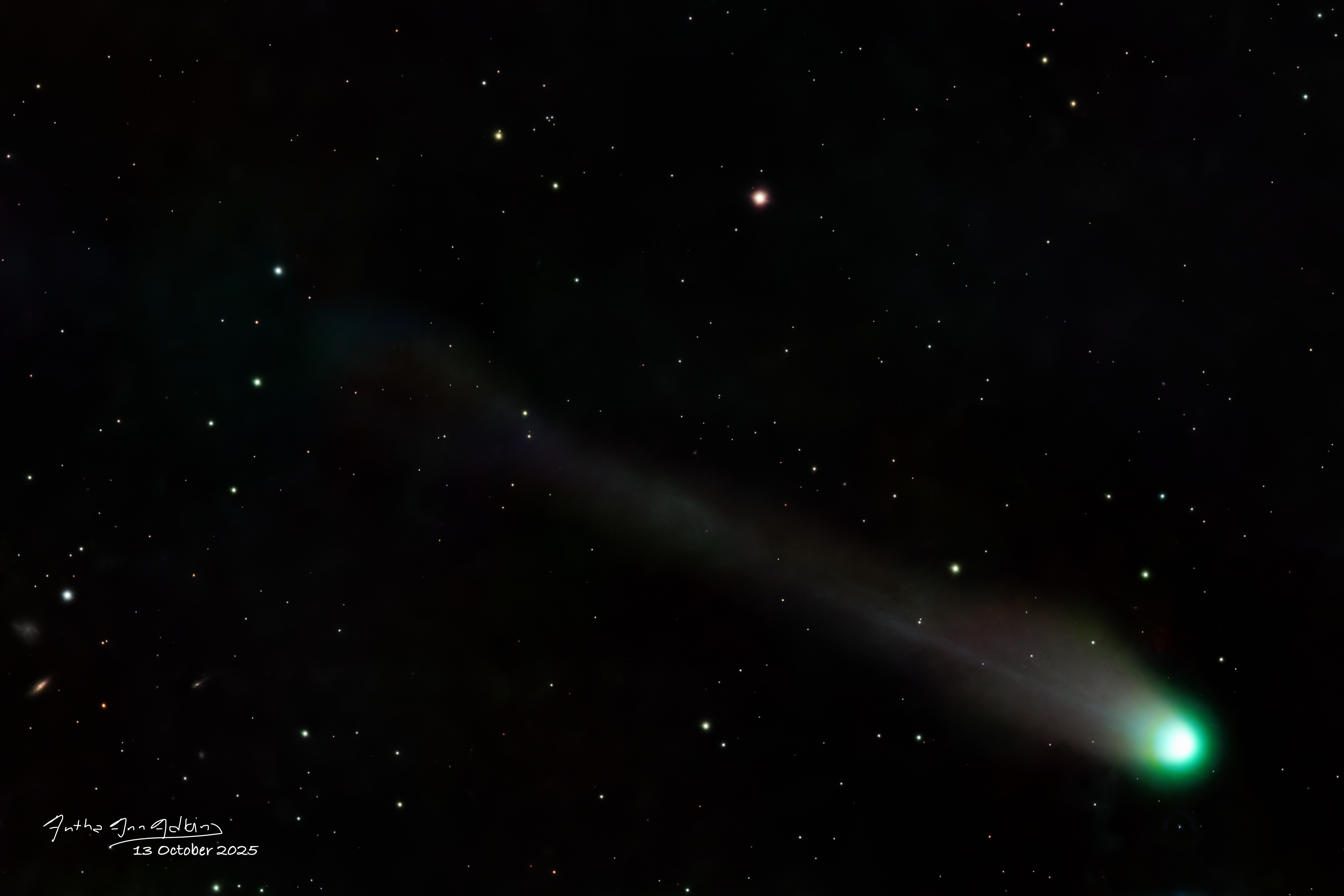
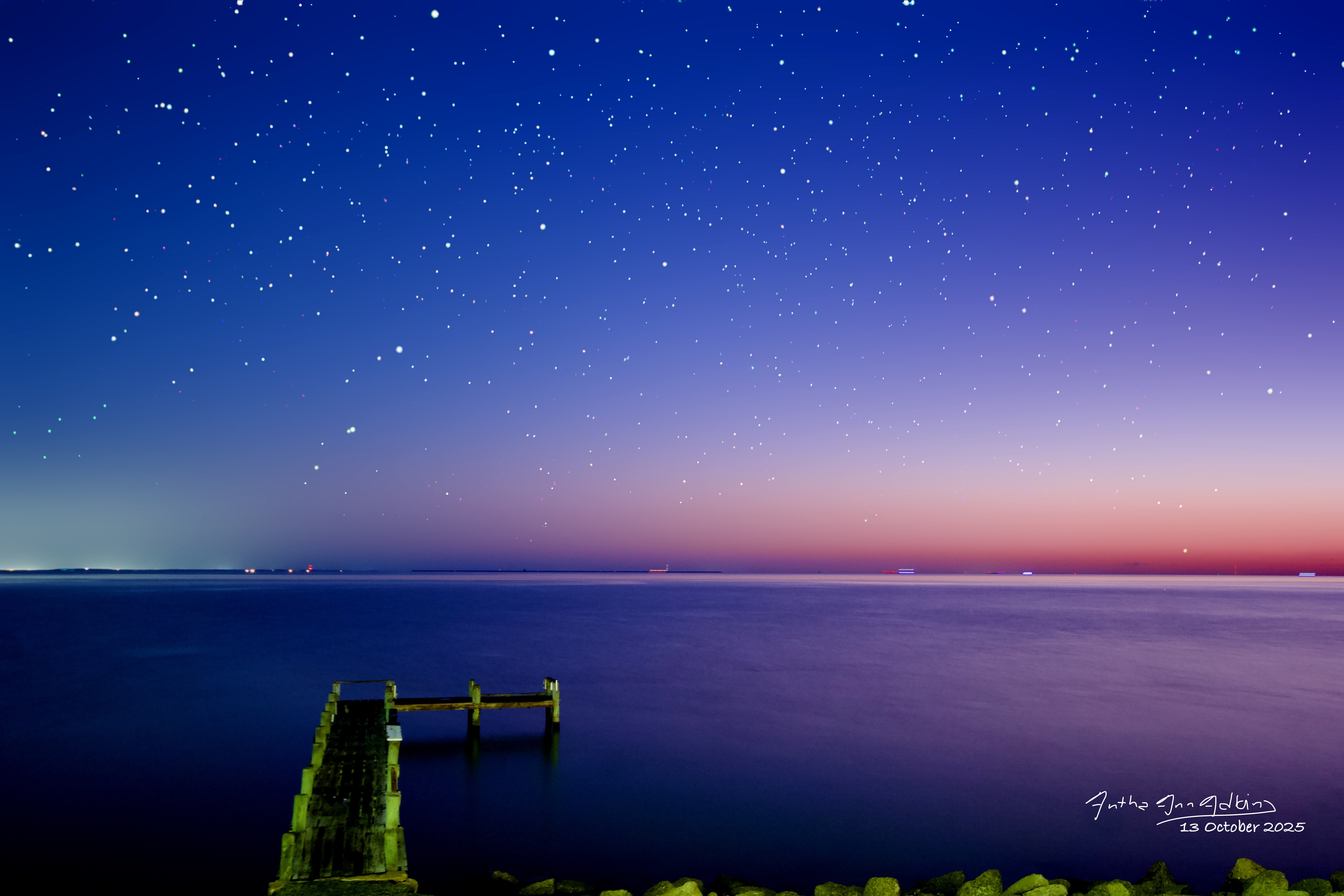
Monday, October 13, was my fourth morning in a row trying to capture Comet C/2025 A6 Lemmon. This time, my husband and I drove back to darker skies with a clear horizon looking out over the water in Bacliff, Texas.
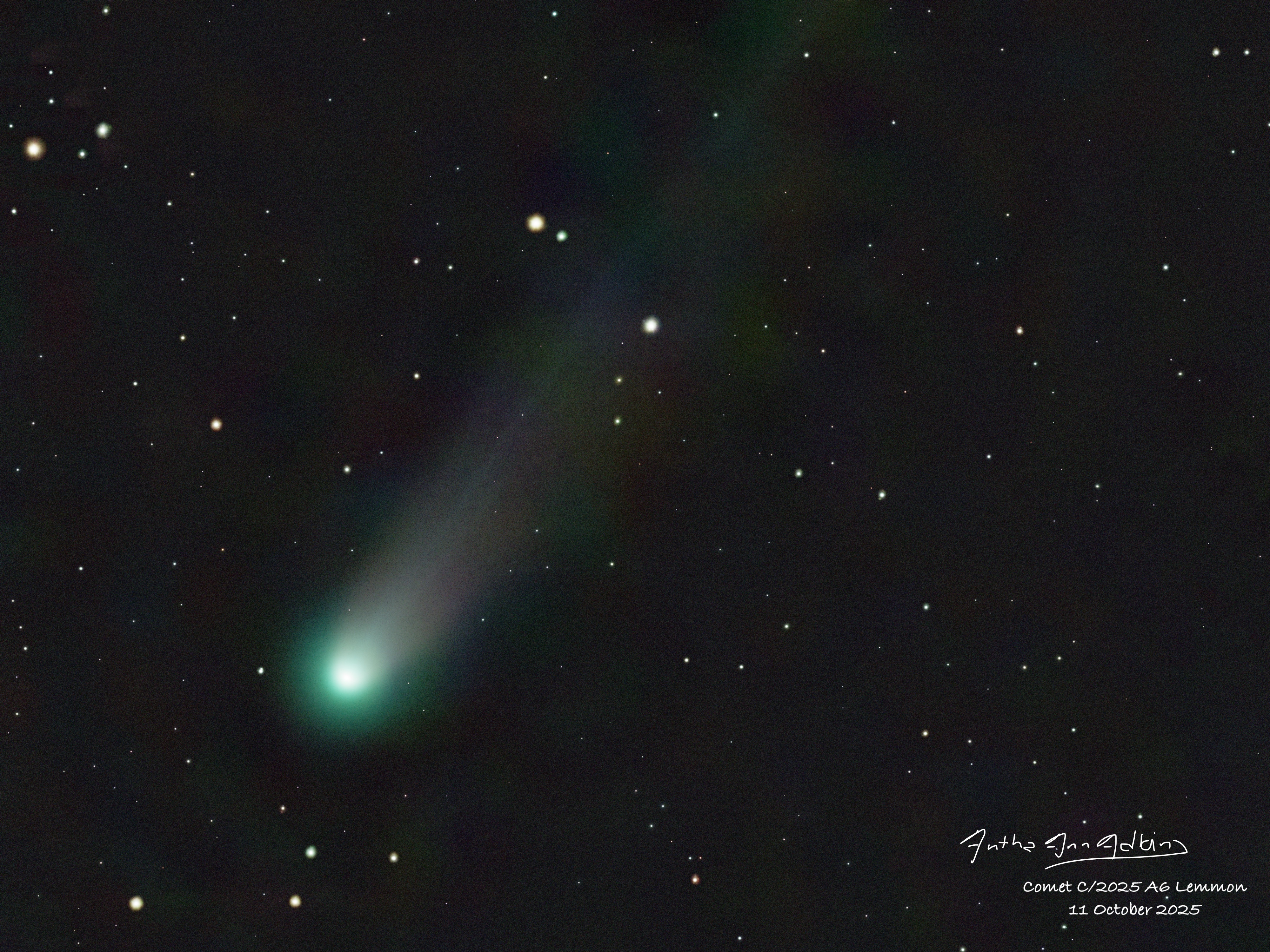
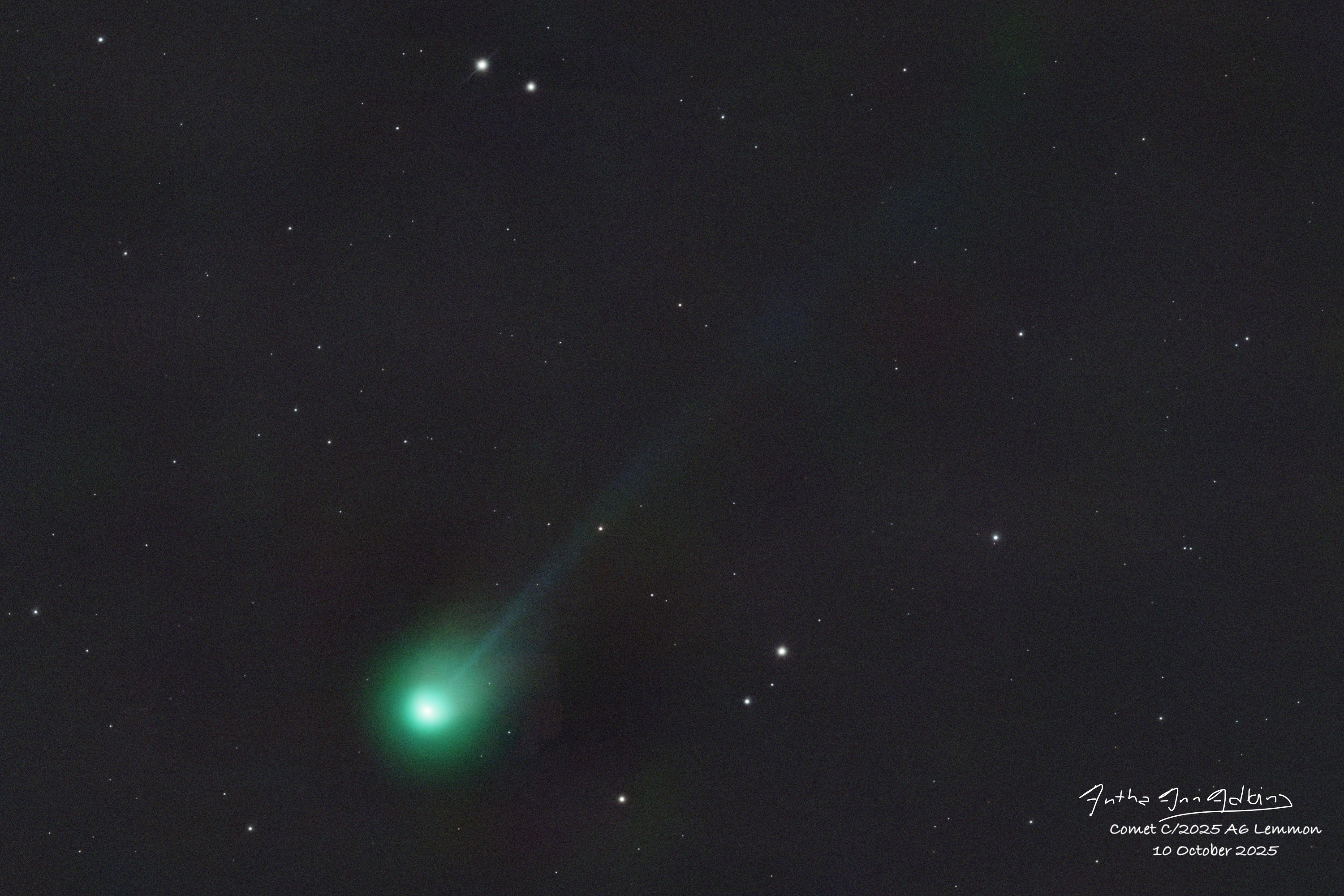
From Bortle 6 skies, the comet was lovely in my smaller telescope. The processed image used 25.75 minutes of red frames, 26.5 minutes of green frames, and 24.5 minutes of blue frames for the stars. It used 16.5 minutes of red frames, 16.5 minutes of green frames, and 15 minutes of blue frames for the comet. There are less frames for the comet because I removed the late ones where the comet had reached the edge of the image and the early ones where the comet’s tail was not yet visible. I’ve added a new step to my processing where I mask out the comet and set the blotchy background to a neutral level. This doesn’t affect the comet data at all but allows me to “stretch” the comet data more without bringing out blotches in the background.
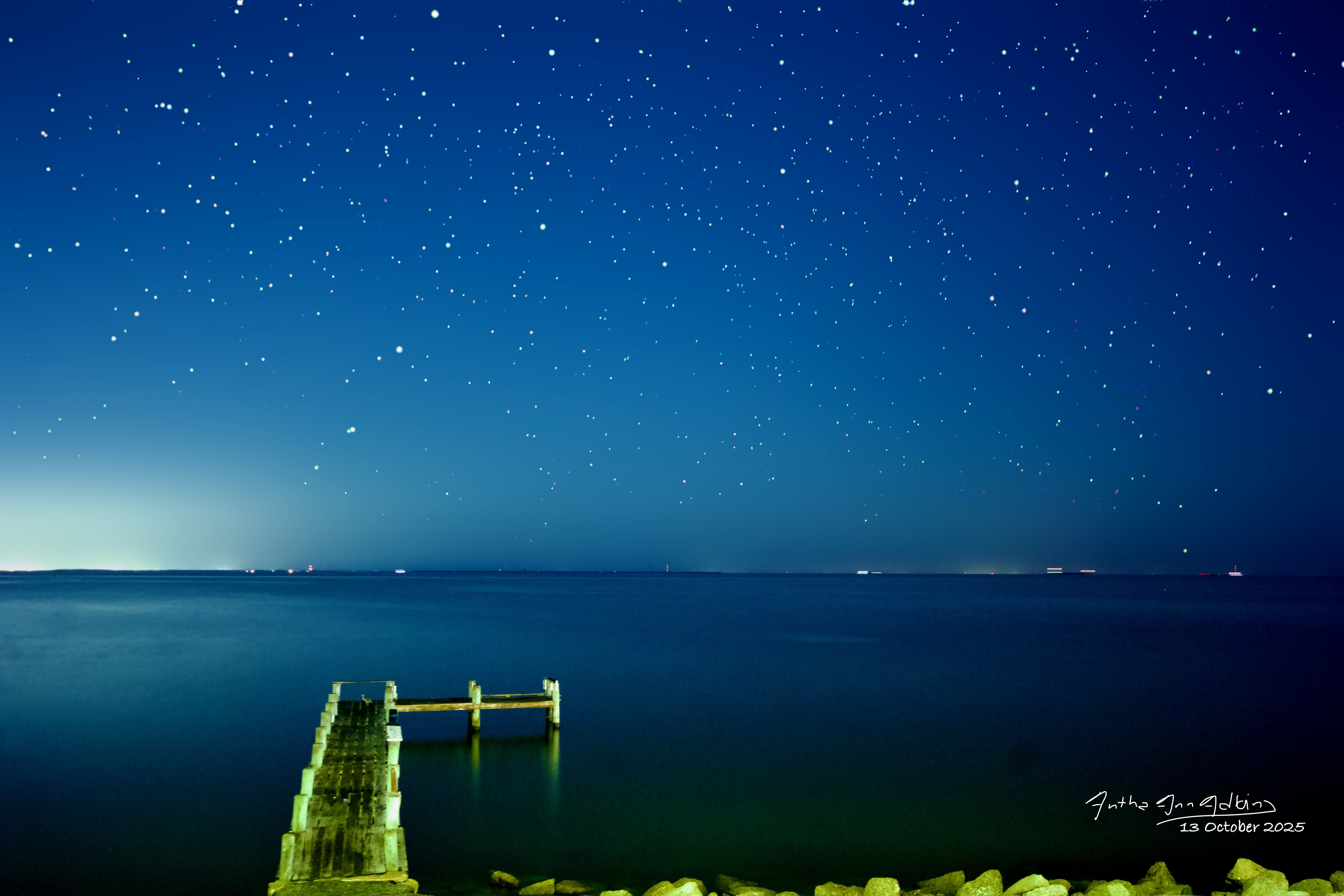
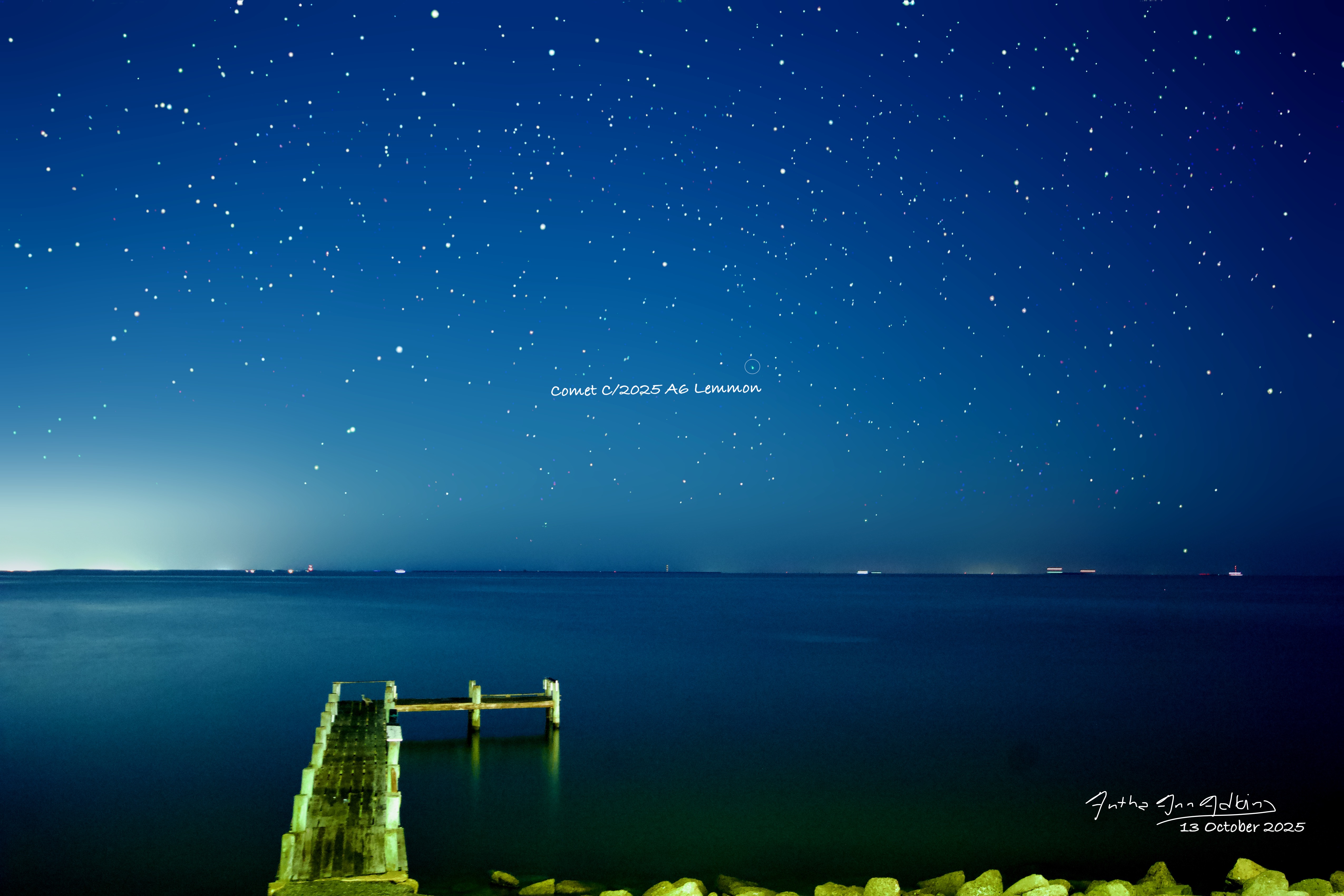
I set up my camera for a wide field image, and the comet is in the picture, but it does not stand out as a comet, even with extra processing to enhance it. The processed image used 17.7 minutes of data but only 13.7 minutes for the comet because the pre-processing tossed a bunch of frames. I combined the widefield stars image with foreground and sky images taken from the same place with the same setup (no combining different focal lengths or locations). The “night” version really captures what it was like – peaceful and calm. (Can you spot the bird on the dock?) The “sunrise” picture is a bit of a stretch, since the starfield is from earlier in the morning than the sunrise light, and the stars were fading at that point. However, it is pretty!
I was finally able to spot a small fuzzy spot with the binoculars, so I was able to declare victory on spotting the comet with binoculars.
We stayed for the sunrise, and my husband saw the green flash effect! Alas, I did not capture it with my camera.
The comet only got better from here … but it’s taking a while to get these images processed. More to come!
Camera geek info – telescope:
- William Optics Zenith Star 73 III APO telescope
- William Optics Flat 73A
- ZWO 2” Electronic Filter Wheel
- Antila RGB filters
- ZWO ASI183MM-Pro-Mono camera
- William Optics Uniguide 32MM F/3.75
- ZWO ASI220MM-mini
- ZWO ASiair Plus
- iOptron CEM40
- Bacliff, Texas Bortle 6 suburban skies
Frames – telescope:
- October 13, 2025
- 103 15 second Gain 150 R lights (66 for comet)
- 30 0.05 second Gain 150 R flats
- 106 15 second Gain 150 G lights (66 for comet)
- 30 0.02 second Gain 150 G flats
- 98 15 second Gain 150 B lights (60 for comet)
- 30 0.02 second Gain 150 B flats
- Matching darks and flat darks from library
Camera geek info – camera:
- Canon EOS 60D in manual mode set at f/5.6, 20 second exposure, ISO 800
- Sigma 10-20 mm f/4-5.6 lens, set at 20 mm, manual focus
- Tripod
- Intervalometer
Frames – camera:
- October 13, 2025
- 53 20 second lights (41 for comet)
- 30 1/125 second flats
- Matching darks and flat darks from library
 Space&Aliens