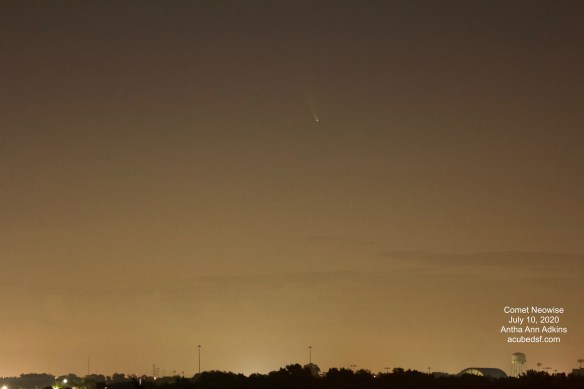
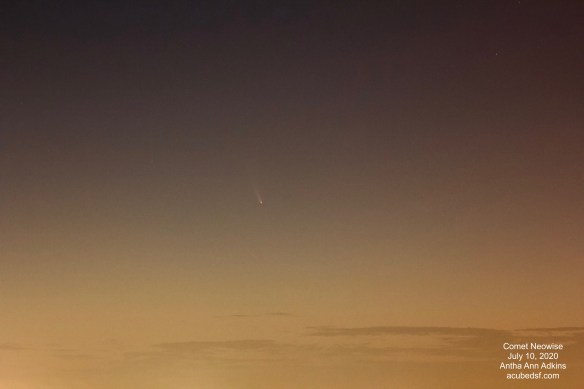
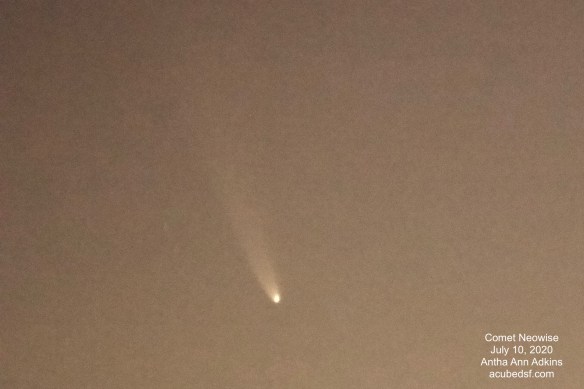
Comet Neowise – July 10, 2020

CometNeowise20200710-1-largeCometNeowise20200710-3-medCometNeowise20200710-2-small

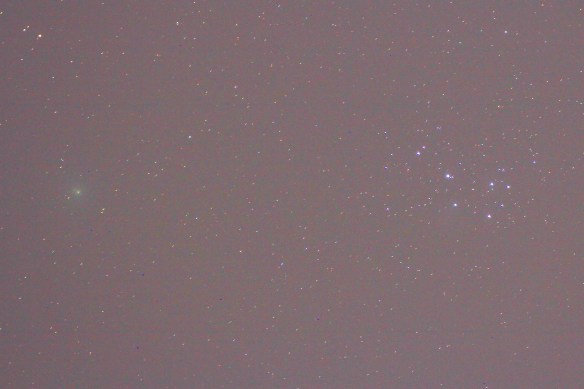
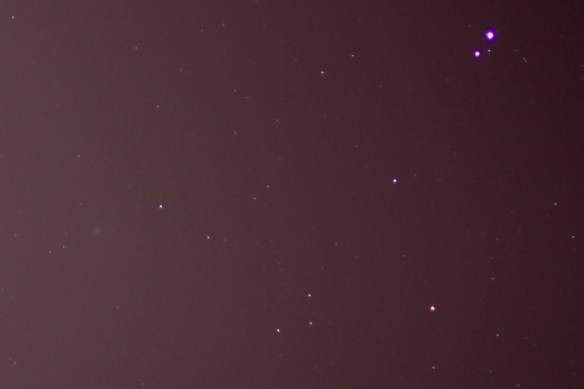
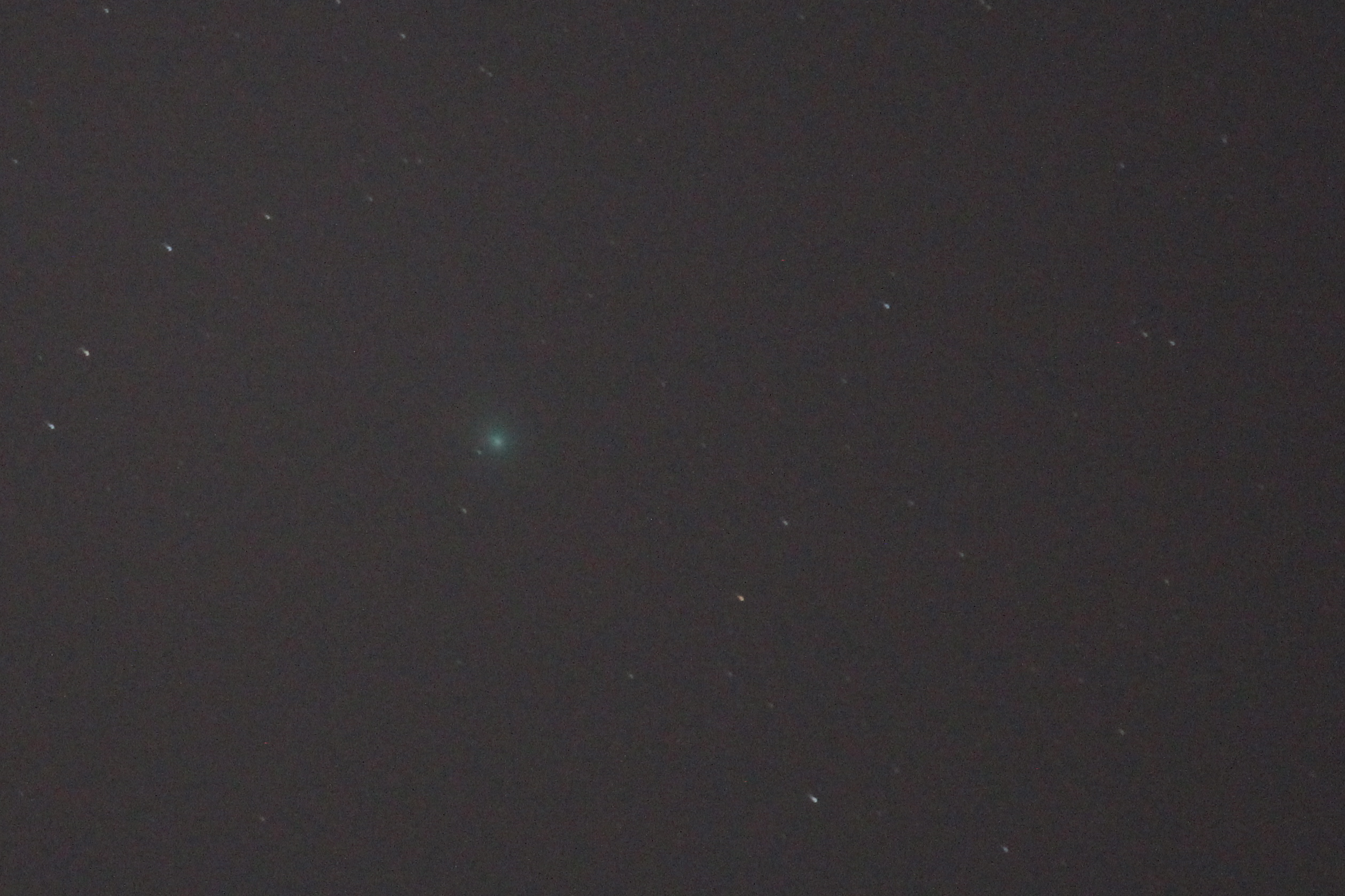
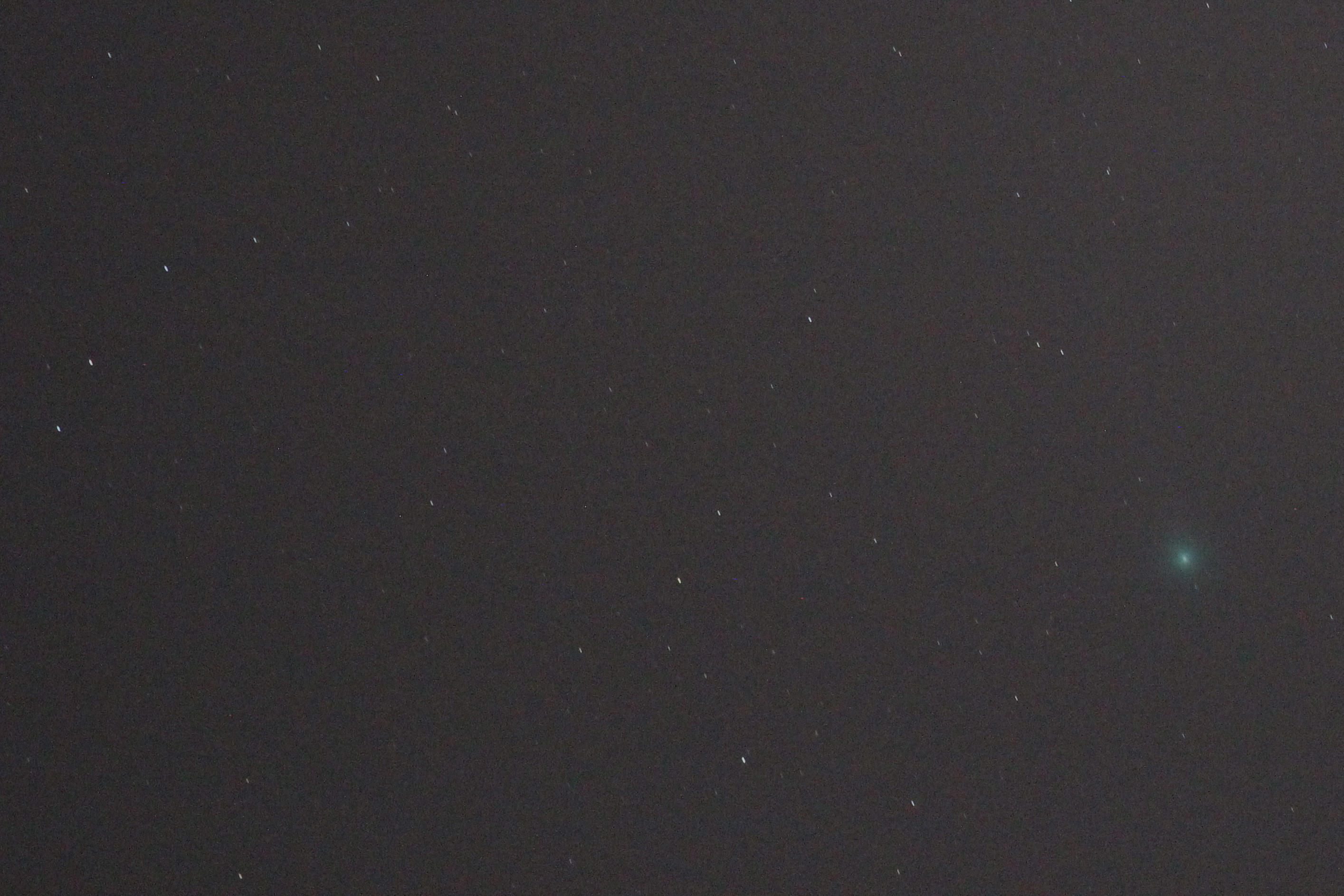
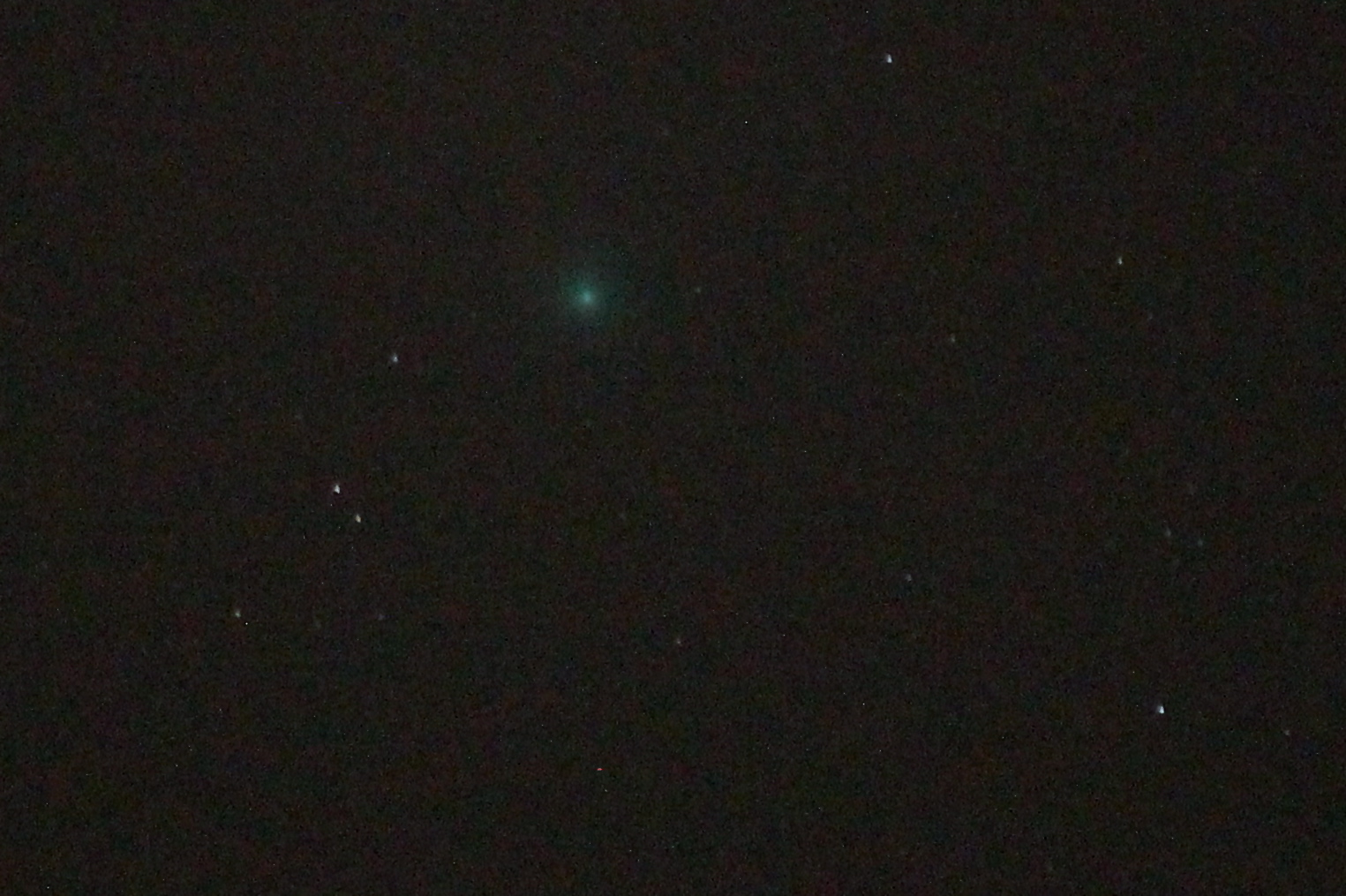
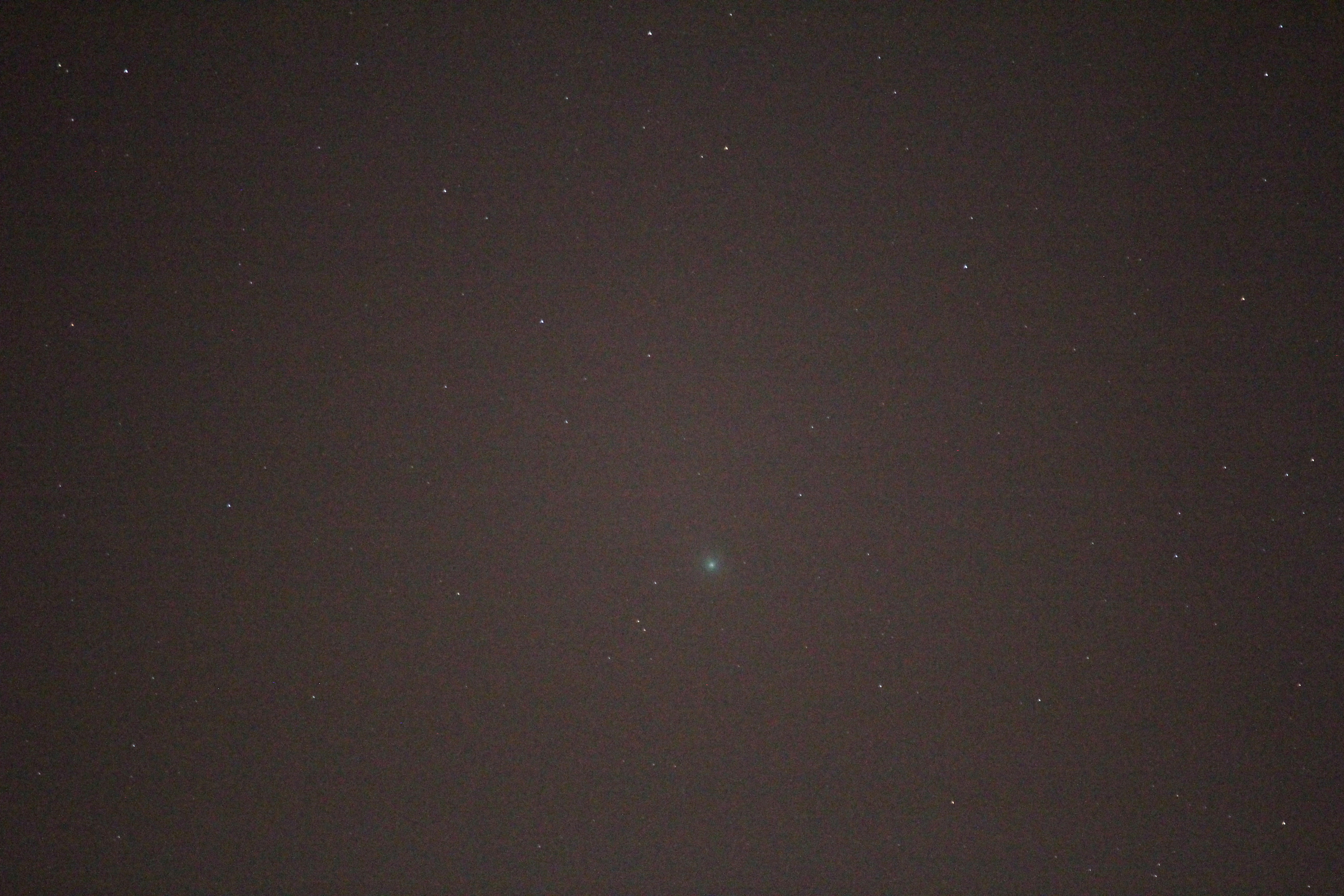
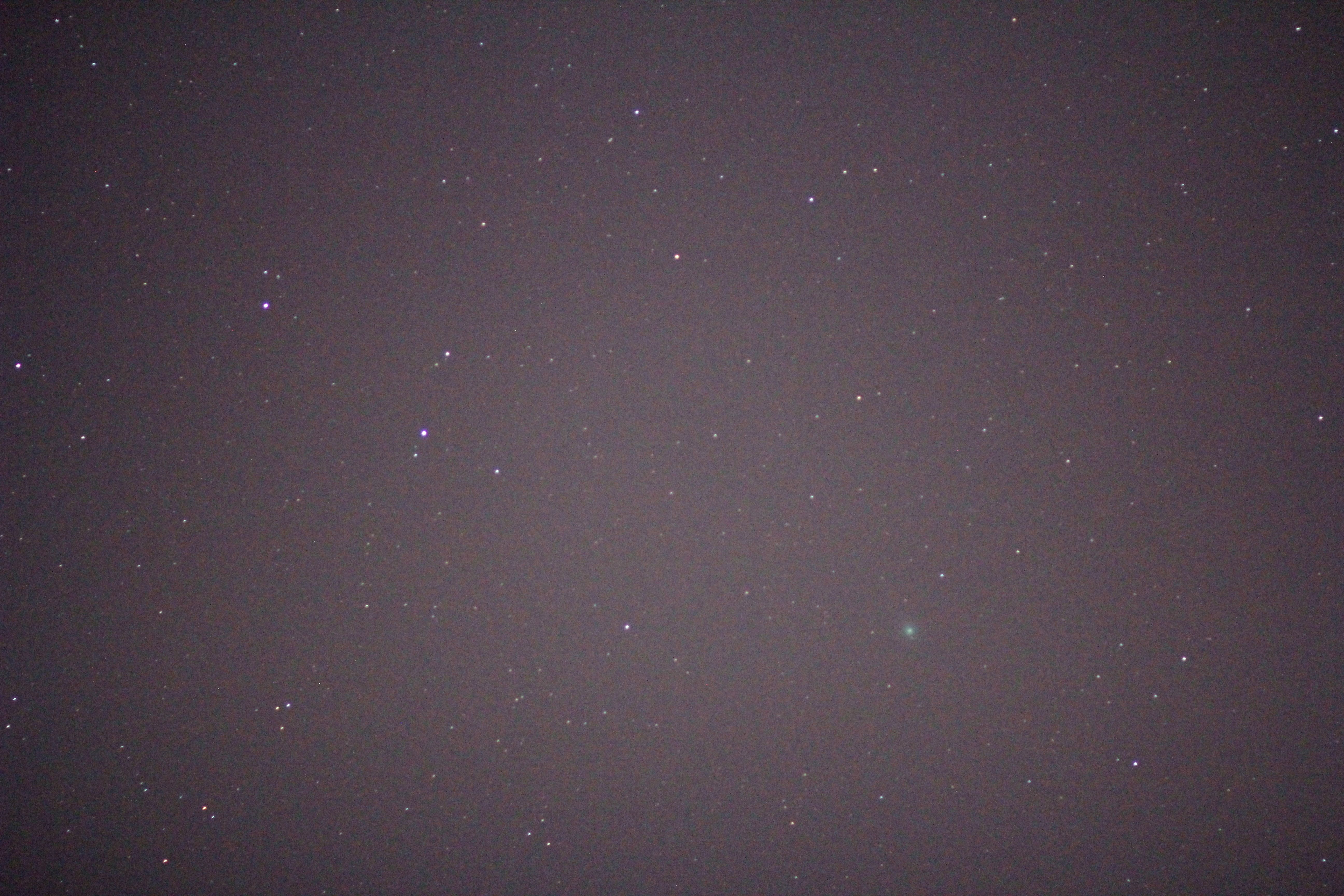
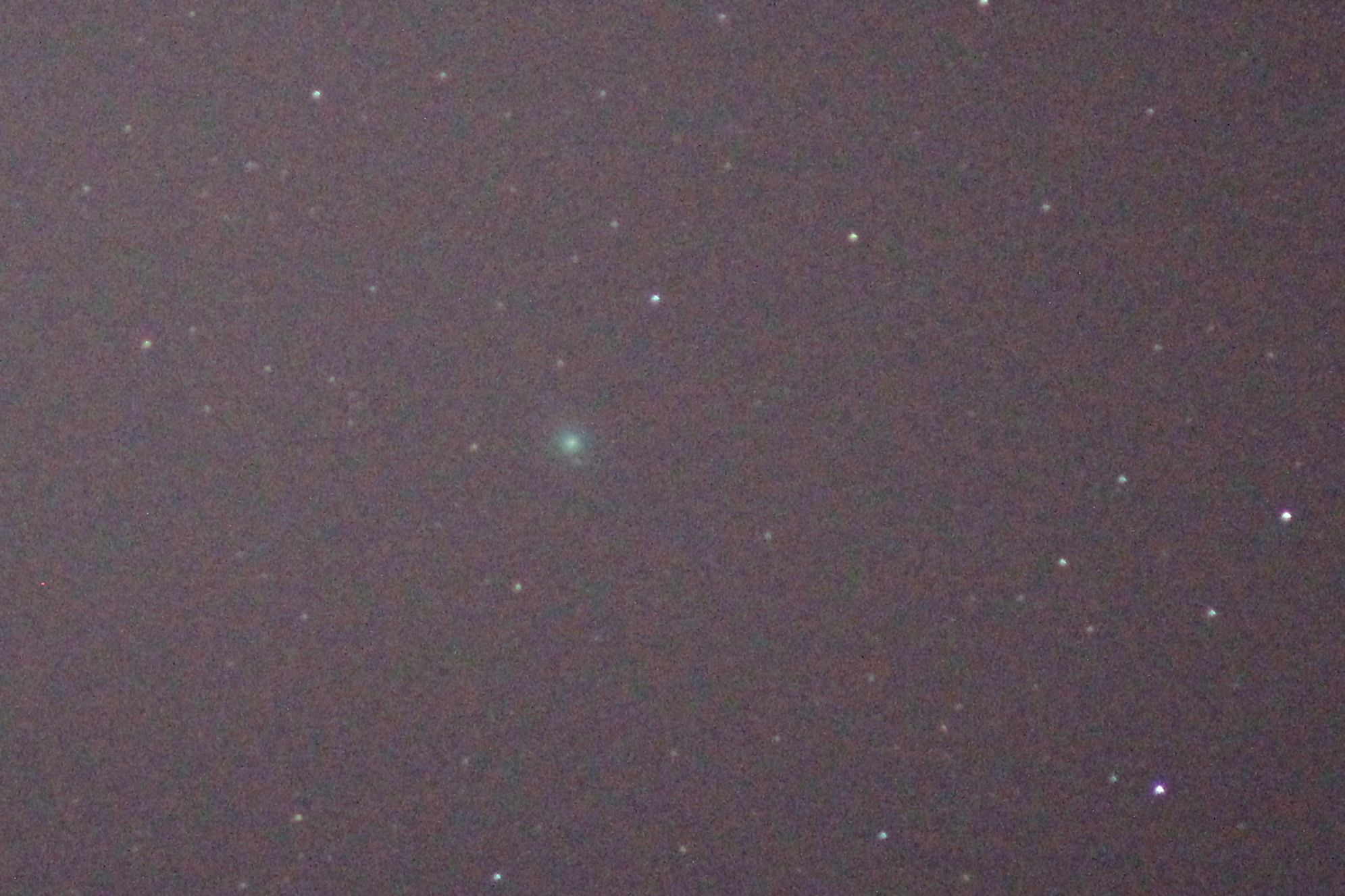
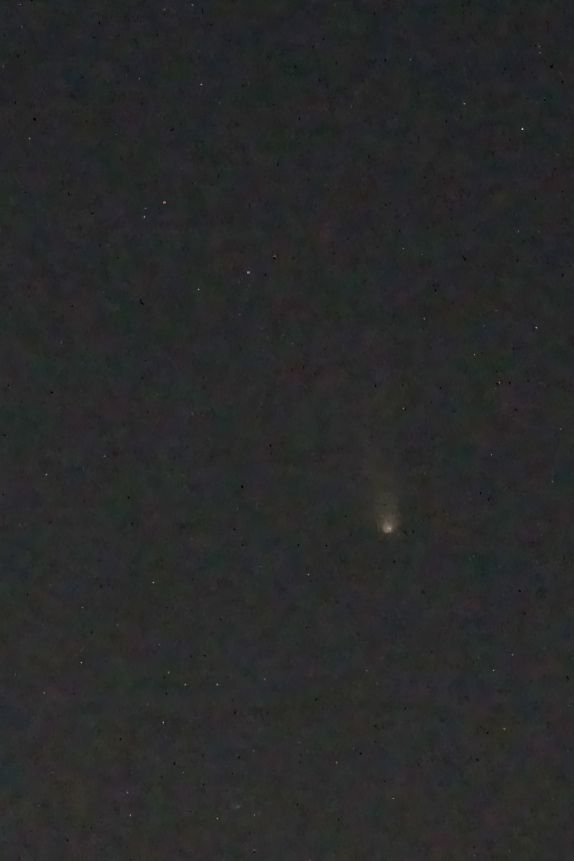
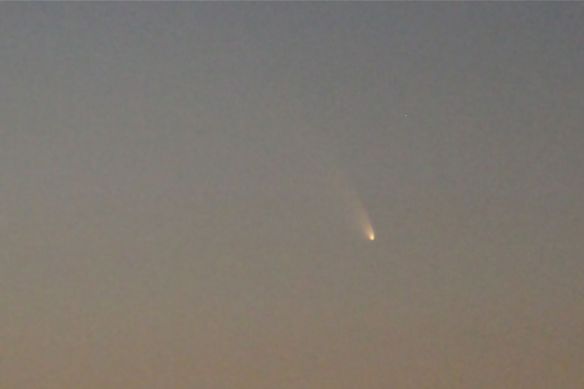
My husband and I got up at 4:15 AM (!) on Friday to drive to our favorite spot with a good view towards the horizon to try to spot Comet Neowise C/2020 F3.  We were not disappointed!  While not naked eye visible, the comet and its tail were easily visible in binoculars and through the camera lens.  We enjoyed a good look at it and the planets – Venus, Mars, Jupiter, and Saturn were all visible – until the sky started to grow light.  Then we enjoyed driving through McDonald’s for what my father-in-law would call a “naughty breakfast” (not on the diet!).

The comet should now be visible in the night sky, and we’re going out to take another look!

If you want to try to find it, too, you can find a sky map here.  Happy hunting!

Camera Geek Info (comet and horizon)

  •             Canon EOS 60D in manual mode set at f/4, 1 second exposure, ISO 640
  •             Canon EF 70-300mm f/4-5.6L IS USM lens, set at 100 mm, manual focus
  •             Cable release
  •             Tripod

Camera Geek Info (comet and clouds)

  •             Canon EOS 60D in manual mode set at f/4, 1 second exposure, ISO 1000
  •             Canon EF 70-300mm f/4-5.6L IS USM lens, set at 70 mm, manual focus
  •             Cable release
  •             Tripod

Camera Geek Info (close up)

  •             Canon EOS 60D in manual mode set at f/5.6, 1 second exposure, ISO 3200
  •             Canon EF 70-300mm f/4-5.6L IS USM lens, set at 300 mm, manual focus
  •             Cable release
  •             Tripod

Comet 46P/Wirtanen

Comet46P-Wirtanen-20181216-1AM-acubedsf

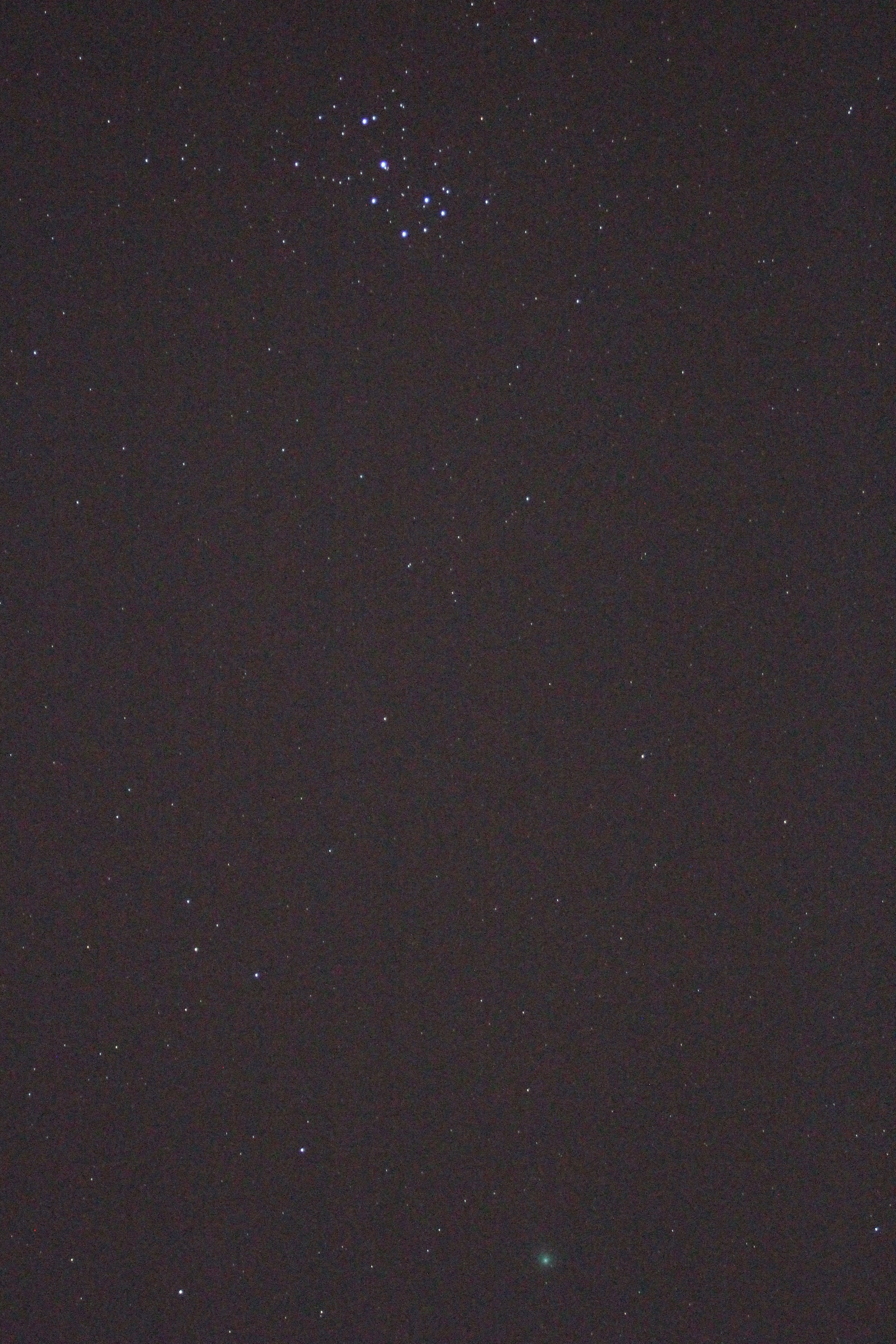
I was excited to learn that there was a comet that might be visible to the naked eye this month.  I went out Tuesday night and was not able to see it, but was able to spot it in my pictures.  Unfortunately, the pictures were poor.

And then it rained.

And now it is clear again, and Comet 46P/Wirtanen is visible in binoculars, but still not obvious naked eye.  I got out all my tools to try to get a decent picture.

It’s right next to the Pleiades – a gorgeous site in themselves.

Camera geek info:

  •             Canon EOS 60D in manual mode set at f/4.5, 20 second exposure, ISO 500
  •             Canon EF 70-300mm f/4-5.6L IS USM lens, set at 150 mm, manual focus
  •             iOptron SkyTracker with ballhead
  •             Tripod
  •             Cable Release

Have you been able to spot it?

Comet Catalina

CometCatalina20160118

Can you spot the comet?  (Hint: it’s kinda green.  And kinda fuzzy.)

I braved the cold last night to play with a new toy: an iOptron SkyTracker. It’s a camera mount that tracks the rotation of the sky so you can take longer exposure pictures. Neat!

I have a sky-tracking telescope, but I rarely get it out because it is so heavy and hard to move. The SkyTracker is extremely portable and I expect I’ll be getting it out a lot more.

This was my first night out with it, and I must admit I hadn’t practiced using it, so I don’t think I had it set up as well as I could. Even with my poor setup, I could take 30 second exposures with no star trails. And with a low ISO, I got some nice colors.

I’m hoping for clear skies tonight so I can get it out again.

Camera geek info:

Canon EOS 60D in manual mode set at f/1.8, 30 second exposure, ISO 100

Canon EF 85 mm f/1.8 lens, manual focus at infinity

iOptron SkyTracker with ballhead

Tripod

Comet Lovejoy and the Pleiades

Comet Lovejoy and the Pleiades

CometLovejoyPleiades20150118

Comet Lovejoy – Change in Position in One Day

CometLovejoy20150118

CometLovejoy20150119

Sunday and Monday evening it was clear, so it was time to find Comet Lovejoy again. This time it was near the beautiful Pleiades. Of course, that is worth a picture.

I thought it would also be fun to see how much the comet had moved over one day – the change is quite visible. I was hoping to go for a three-day comparison, but now it’s cloudy again.

Camera geek info:

  •            Canon EOS 60D in manual mode set at f/4.0, 3.2 second exposure, ISO 6400
  •            Canon EF 70 – 200 mm f/4L lens, set at 94 mm for Pleiades and comet and 200 mm for comet, manual focus at infinity
  •            Tripod
  •            Cable release

In choosing which picture is the best, I find that I am using the following criteria: good focus (automatic toss for out of focus picture unless happen upon cool “artistic” effect), no visible star trails (stars should look like a point, not a line), visibility of comet, color of objects, color of sky, and noise of sky. While I have pictures with darker, less noisy sky, they don’t show the comet as well.

I am also finding that the image quality is far better when I zoom to my desired field of view instead of cropping in post-processing to get there.

Comet Lovejoy – Take 2

CometLovejoy20150115-2

Zooming out this time:

CometLovejoy20150115-1

After over a week of dreary gray weather, we finally got (partly) clear skies. Comet Lovejoy was still not naked eye visible from the suburbs (the patchy clouds did not help), but I could find it with the camera! I’m hoping to get pictures two nights in a row so I can get pictures of it moving across the sky. It was certainly in a much different place this week than last week, and I had to re-learn how to find it.

Camera geek info:

  •            Canon EOS 60D in manual mode set at f/4.0, 2 second exposure, ISO 5000
  •            Canon EF 70 – 200 mm f/4L lens, set at 200 mm, manual focus at infinity
  •            Tripod

Comet Lovejoy

Can you spot the comet?  (Hint: it’s green!)CometLovejoy20150107-1

Zooming in … how about now?

CometLovejoy20150107-2

It’s been a long time since there’s been a comet that I could successfully see and photograph! Comet Lovejoy is a star hop from Rigel (Orion’s foot) into Eridanus, where it can easily be seen (at least in the suburbs in the northern hemisphere) with binoculars, a telephoto lens, or a telescope.  It looked gray through the binoculars, but in the pictures it is a beautiful green.

I am glad that our winter clouds cleared away and I got a clear night last night to spot it. I was hoping for a second clear night in a row so I could show that the comet is moving relative to the stars. Alas, the weather did not cooperate, and it looks like it’s going to be cloudy for a while. But I’ll keep looking up!