October 30, 2022 New(ish) Astrophotography Tools

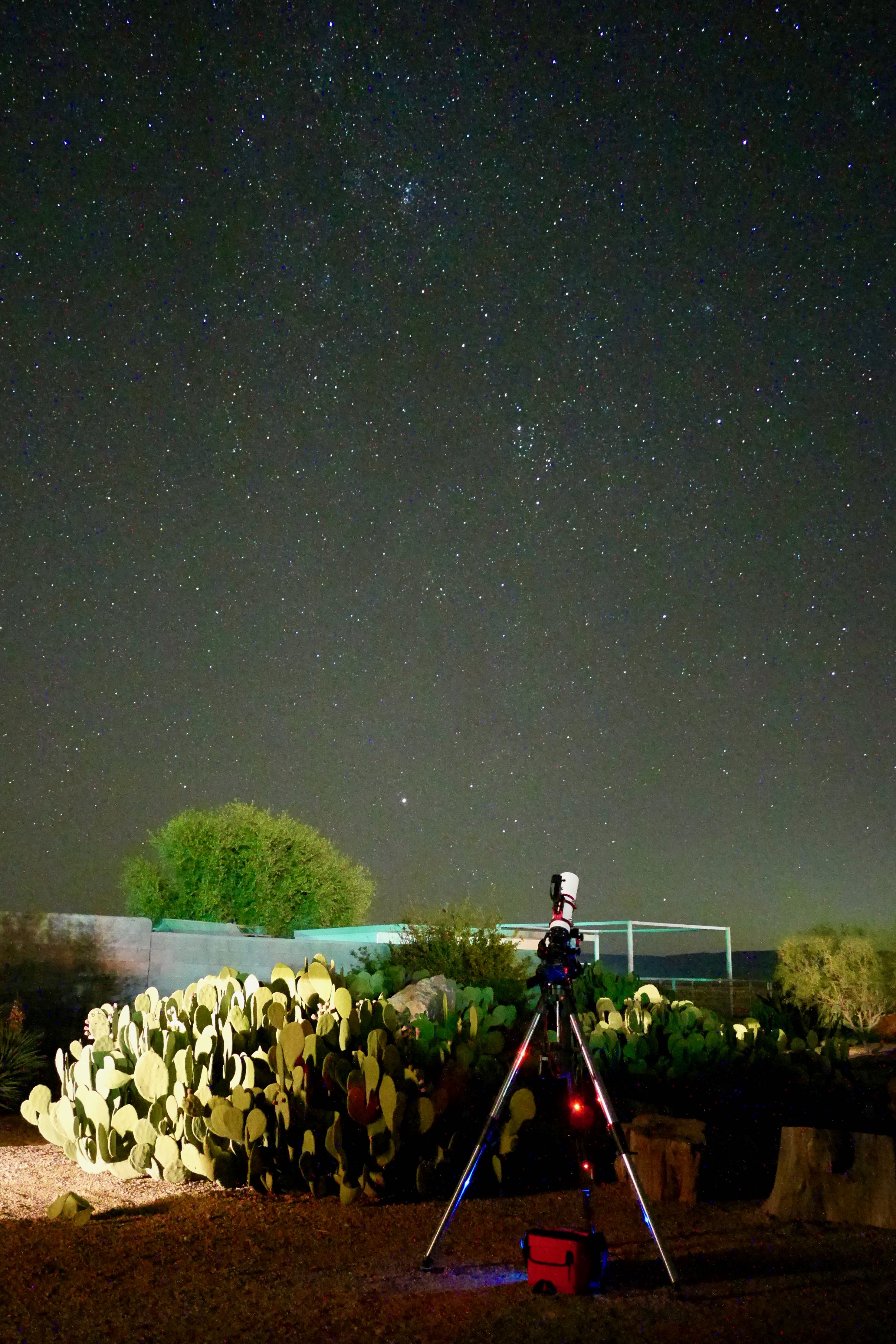
Camera geek info:

  • Panasonic DMC-GF7 set at f/2.5, 30 second exposure, ISO 800
  • LUMIX G 14/F2.5 II, 14 mm fixed
  • Tripod

Camera geek info:

  • Panasonic DMC-GF7 set at f/2.5, 10 second exposure, ISO 6400
  • LUMIX G 14/F2.5 II, 14 mm fixed
  • Tripod

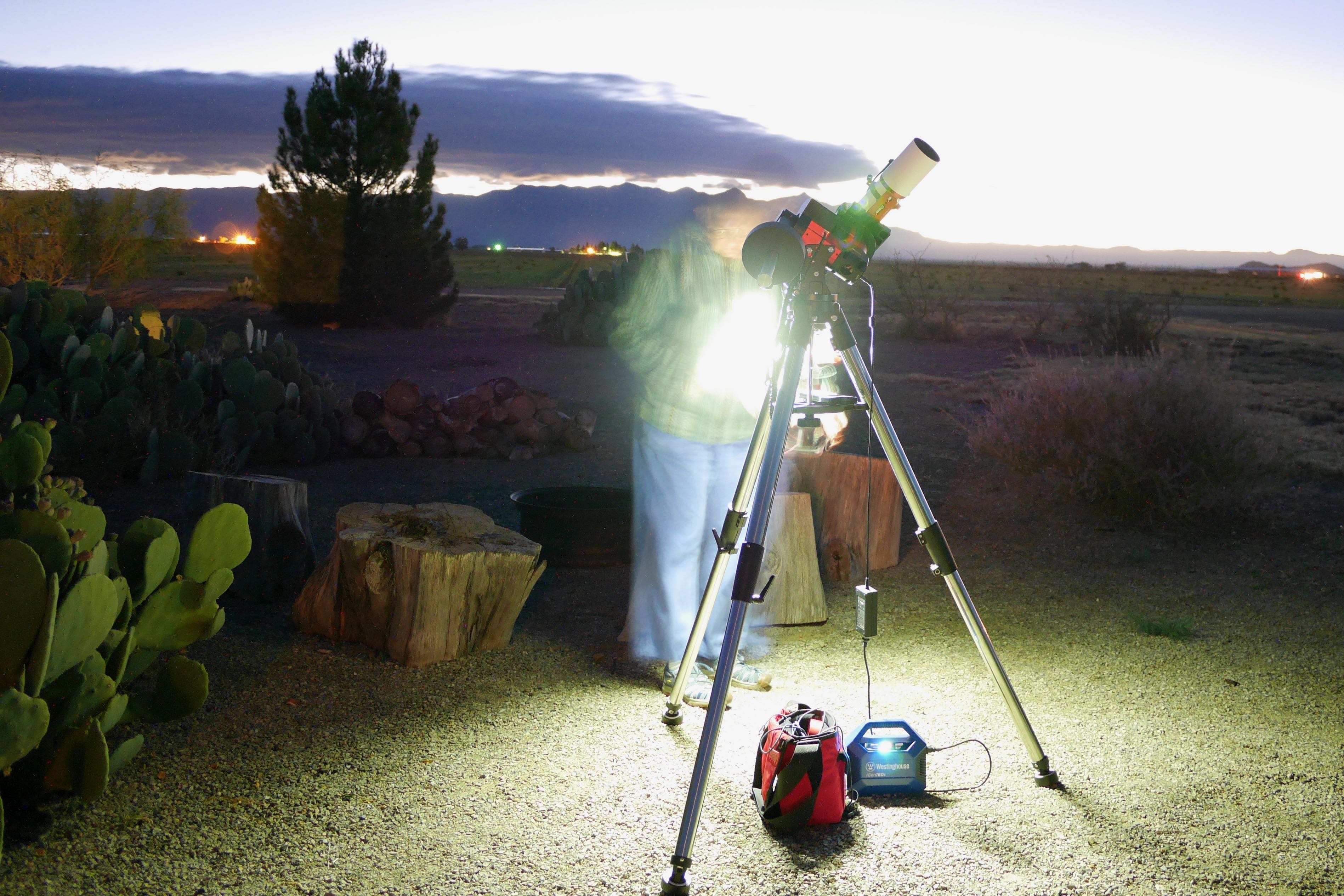
Since summer 2021, I’ve been acquiring some more advanced astrophotography tools (toys?).  

My first and biggest acquisition was a new tracking mount with GoTo capability, an iOptron CEM40.  This was my first GoTo tracking mount, and it is amazing.  It is so much easier to enter the object to point towards and watch the mount rotate to point the camera there than to iterate on camera images to find the object.  It is also a beautiful mechanical device.  I bought it because of its design and because it is relatively lightweight but could still handle the 8” or 10” telescope I eventually wanted to get.  However, it came with a steep learning curve.   

One thing I learned was that there are two different alignments that need to be done: the polar alignment to physically align the tracking axis with celestial north, and the GoTo alignment.  Just polar aligning is not sufficient.

For polar alignment, the mount comes with a polar alignment camera, but when I got it, the software only ran on a PC, which I did not have (there is a Mac version now, but I have not played with that yet).  So I was using the polar iterate align option with the digital display on my camera, and that was a slow, frustrating, and sometimes unsuccessful process.  

For the GoTo alignment, I use the three star alignment technique.  I read that the mount will try to combine new alignment measurements with the previous ones, so I delete the old alignment data prior to aligning.  I also search for zero position to get the mount set prior to doing any alignment.

My second acquisition was a Celestron StarPointer Pro Finderscope.  It made a huge improvement in my ability to align the tracking mount over using my camera screen to align it.  

My third acquisition was a Williams Optics Zenith Star 73 III APO telescope.  It is a 430 mm focal length, 73 mm diameter two element refractor.  It is a beautiful piece of hardware.  Although it is significantly smaller than what I originally intended to get, I picked it because I wanted to photograph larger objects such as the Andromeda Galaxy and because the larger the telescope gets, the more difficult it is to point.  And since I was still struggling with alignment … 

My fourth acquisition was a very low end PC to interface with the polar alignment camera.  It made a huge improvement in my ability to polar align the tracking mount.  What, even with a finderscope, was a slow and frustrating process, is now a less than 2 minute process, and much more accurate.

With all that, and a lot of trial and error, I am now very pleased with the images that this setup is producing.  As a teaser, here is a picture of the Andromeda Galaxy (M31).  
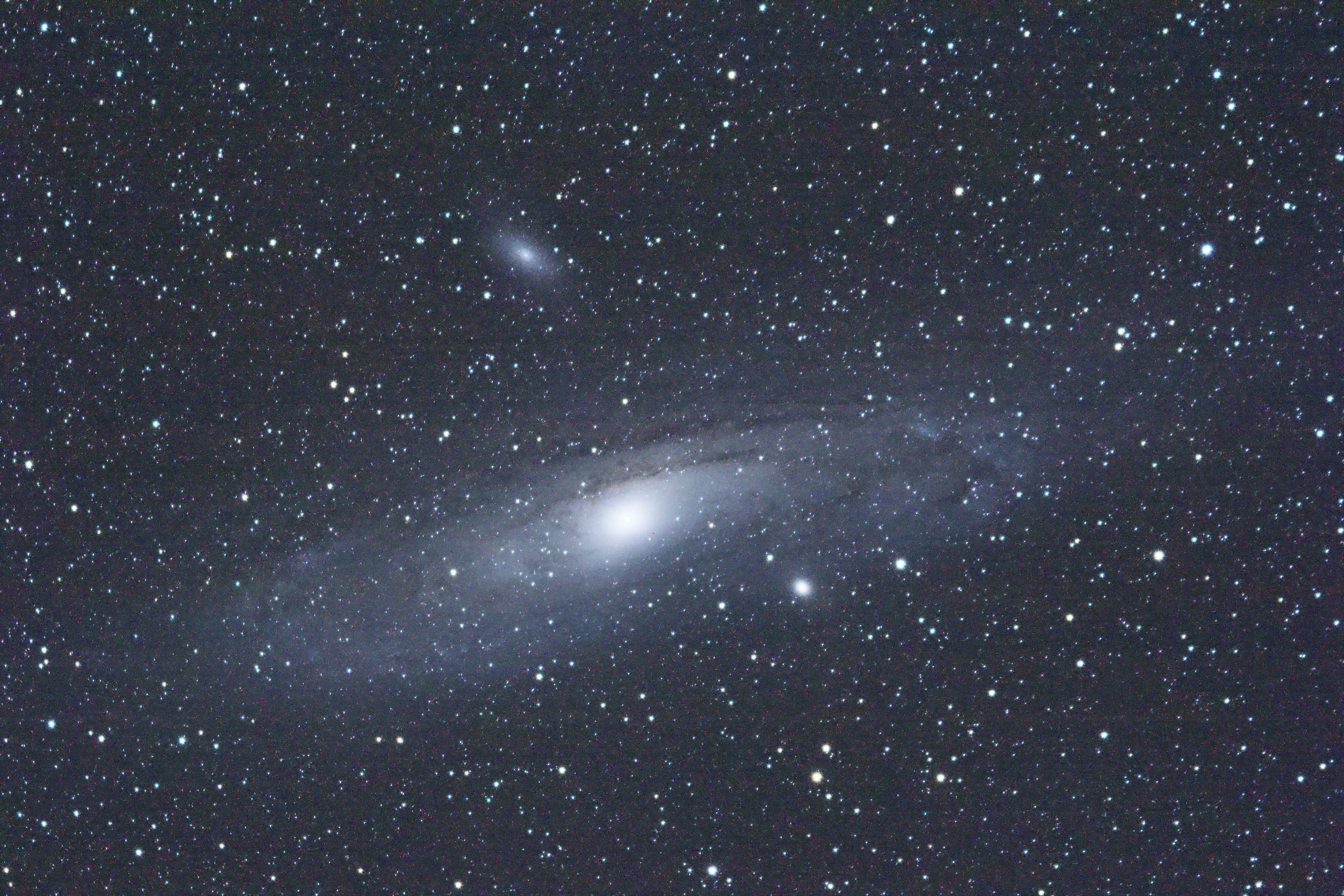
Camera geek info:

  • Canon EOS 60D in manual mode, 179 second exposure, ISO 1600, custom white balance 3500K
  • Williams Optics Zenith Star 73 III APO telescope
  • Williams Optics Flat 73A
  • iOptron CEM40

Expect to see more in the future!  

Three Meteor Showers July 31, 2022: Antha 14, Camera 4

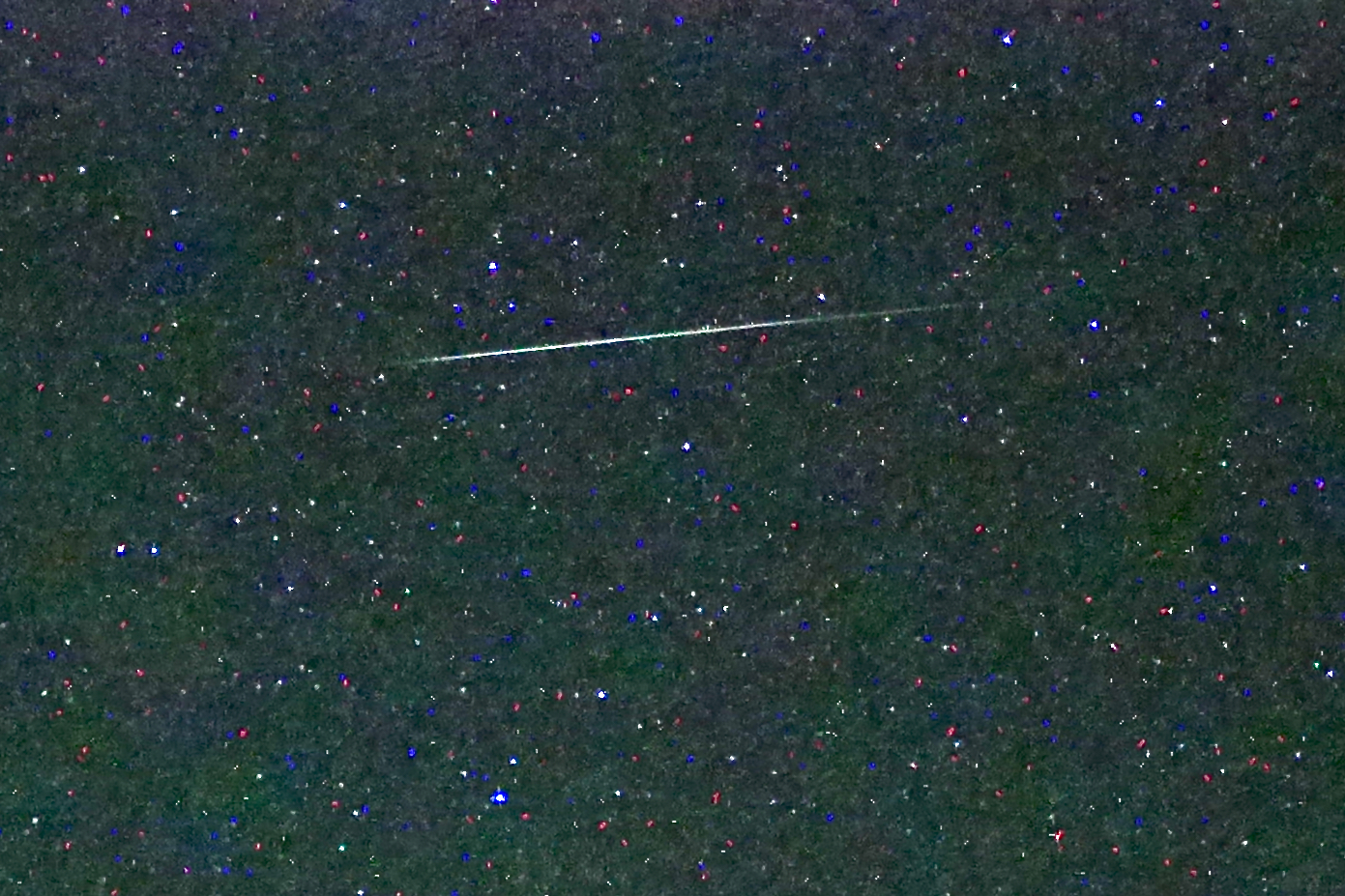
This past weekend, we were back in Dell City with its great dark skies just in time to enjoy three meteor showers at once: the Southern delta Aquariids, the alpha Capricornids, and the Persieds.  The clouds did not cooperate with my viewing plans on Friday night/Saturday morning or 2 AM Sunday morning, but the northern and western sky had cleared up by 4 AM Sunday morning.  While I was setting up my camera, I saw three meteors in quick succession, so I stayed out.  I saw 14 meteors in an hour and fifteen minutes.  The camera got four, as well as a lot of satellites (I can tell they’re satellites because there are consecutive streaks in multiple frames – meteors are too fast for that).

The picture above is my favorite, with the green meteor contrasting with the blue Pleiades.  

Camera geek info:

Panasonic DMC-GF7 set at f/2.5, 5 second exposure, ISO 6400

Time lapse mode

LUMIX G 14/F2.5 II, 14 mm fixed

Tripod

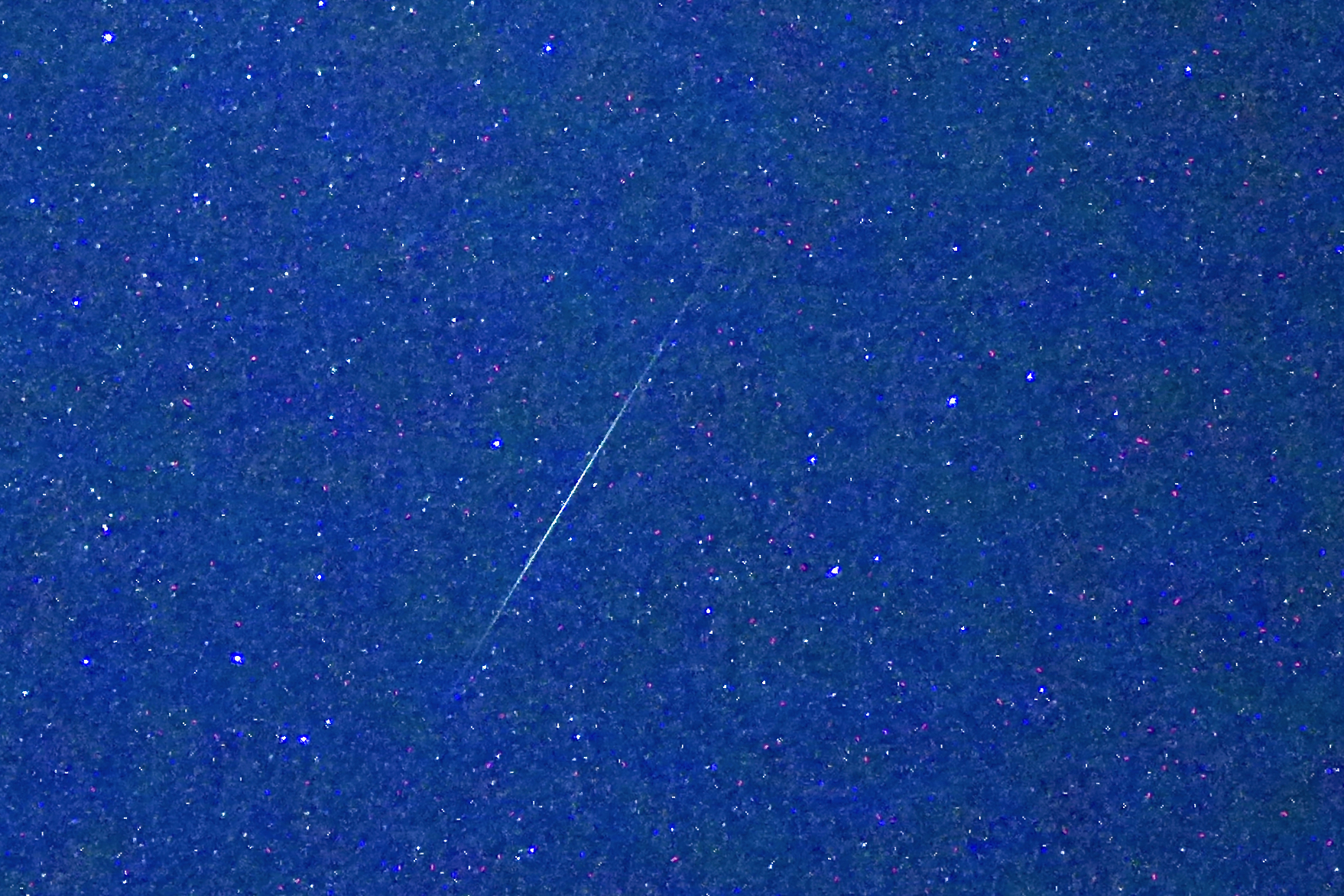
I tried moving my camera around to get the most meteors, so the next two green meteors do not have interesting companions.

Camera geek info:

Panasonic DMC-GF7 set at f/2.5, 5 and 3.2 second exposures, ISO 6400

Time lapse mode

LUMIX G 14/F2.5 II, 14 mm fixed

Tripod

My fourth meteor picture had the meteor going out of the frame. 

In this last shot, there was a bright flash.  Since the shots before and after also show a very dim track, I concluded this was a satellite flare and not a meteor.  It looks cool, though.  

Camera geek info:

Panasonic DMC-GF7 set at f/2.5, 3.2 second exposure, ISO 6400

Time lapse mode

LUMIX G 14/F2.5 II, 14 mm fixed

Tripod

Jupiter and Mercury – January 13, 2021

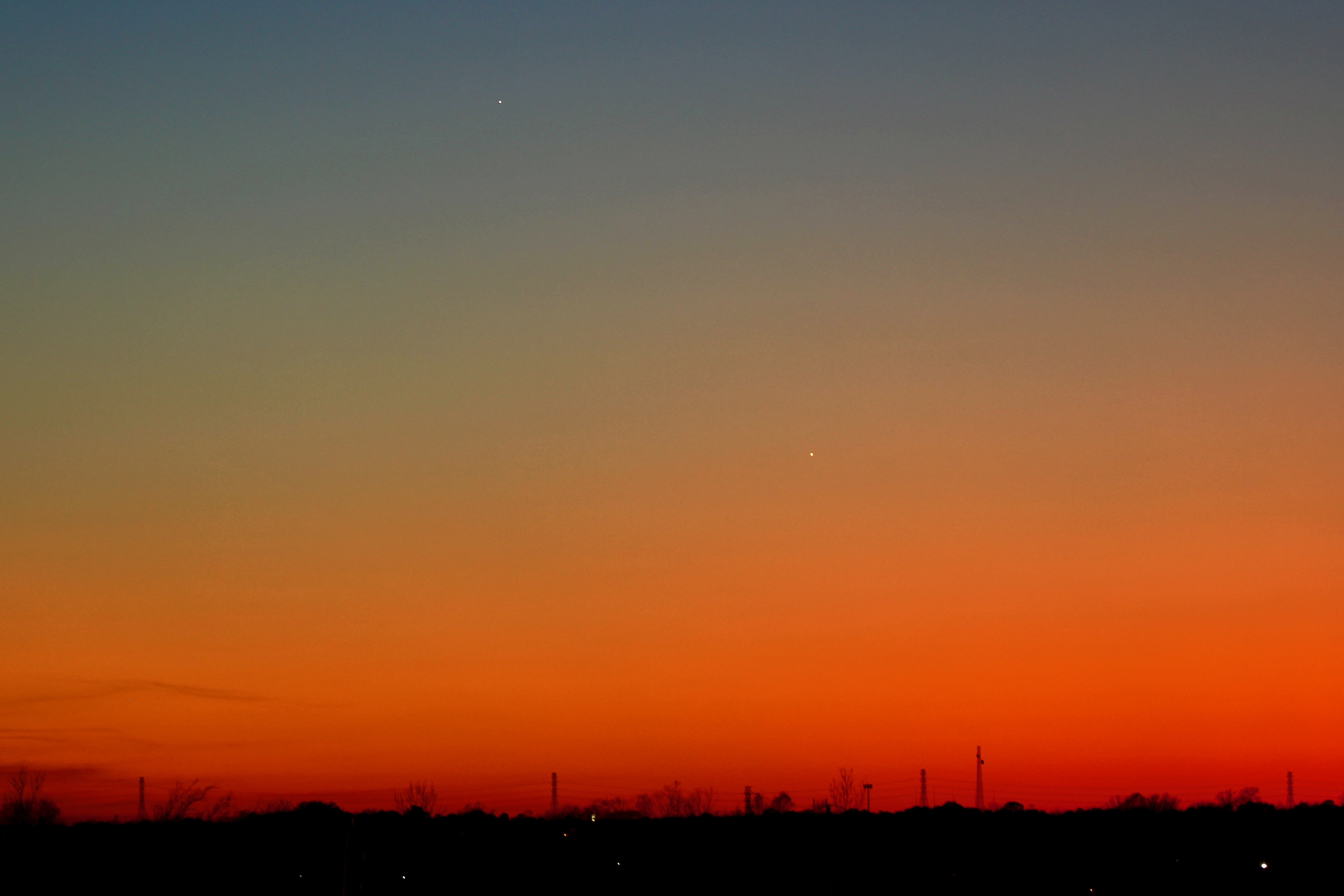
This past week, Jupiter and Saturn were close to Mercury in the sky.  On Wednesday January 13, the one day there was a break in the clouds, there was also a new Moon, so we drove out to our favorite high spot with a view West.  The new Moon and Saturn ended up being in the bright sunset, so we never spotted them.  We did find Jupiter and Mercury. Mercury is the higher of the two bright dots in the sky.

Camera Geek Info 

  • Canon EOS 60D in manual mode set at f/4.5, 1 second exposure, ISO 100, sunlight white balance
  • Canon EF 70-300mm f/4-5.6L IS USM lens, set at 108 mm, manual focus
  • Tripod

The Christmas Star: A Reminder of Hope

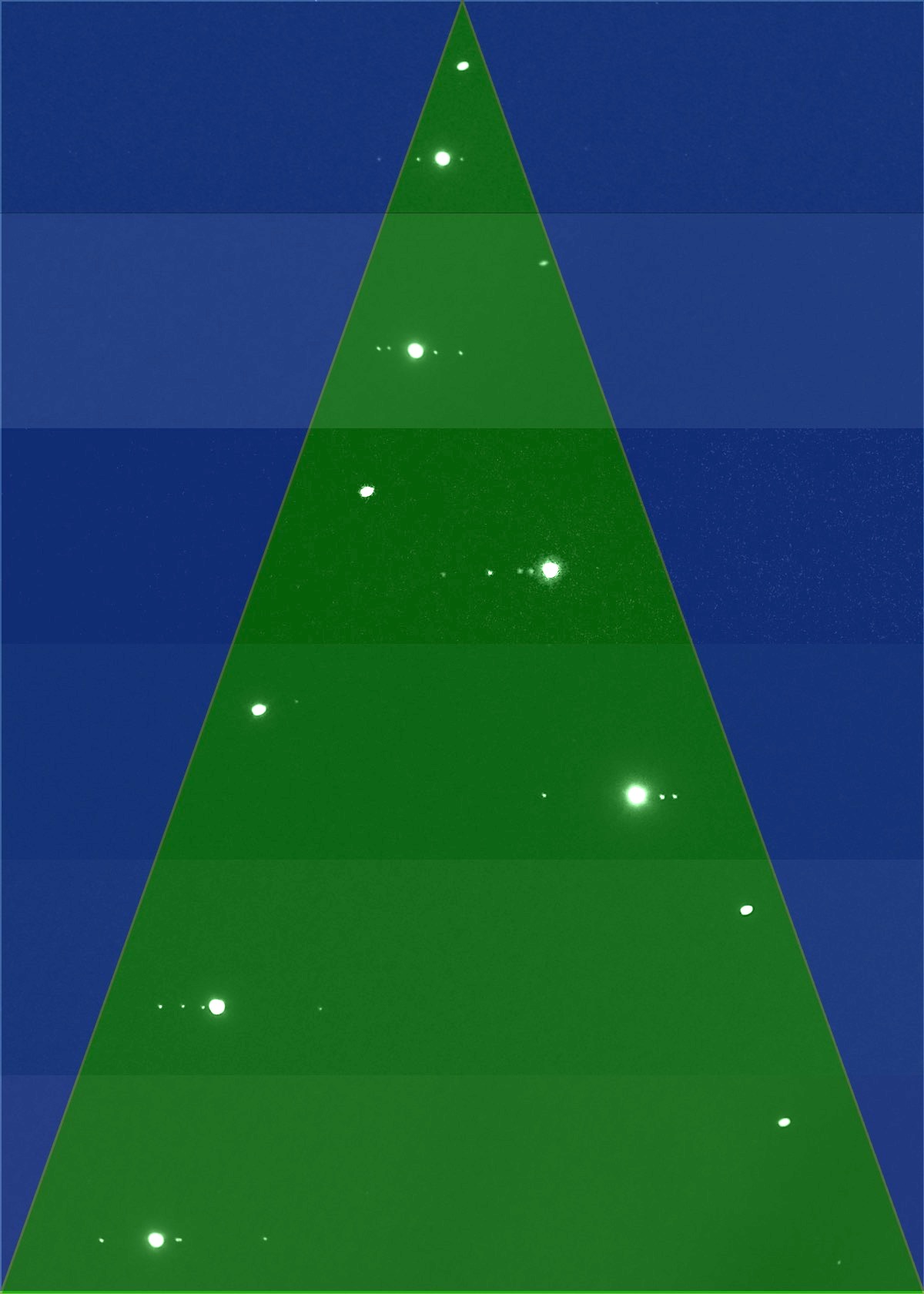
Since I’ve taken a sequence of pictures of Jupiter and Saturn together, I thought they would make a nice, though late, Christmas card, and I like having a message of hope.

Here are the dates for the planet pictures, from top to bottom:

  • December 21, 2020 (Day of conjunction) Jupiter – Saturn
  • December 22, 2020 (1 day after conjunction) Jupiter – Saturn
  • December 19, 2020 (2 days before conjunction) Saturn – Jupiter
  • December 17, 2020 (4 days before conjunction) Saturn – Jupiter
  • December 26, 2020 (5 days after conjunction) Jupiter – Saturn
  • December 27, 2020 (6 days after conjunction) Jupiter – Saturn

One of the things that is the most amazing to me is how much Jupiter’s moons (the 3 – 4 small dots around the more circular planet) move in just one day.

Camera Geek Info

  • Canon EOS 60D in manual mode set at f/5.6, custom white balance 3500K
    • December 21, 2020: ISO 2000, 1/10 second exposure
    • December 22, 2020: ISO 100, 6 second exposure
    • December 19, 2020: ISO 800, 1/10 second exposure
    • December 17, 2020: ISO 800, 2 second exposure
    • December 26, 2020: ISO 100, 2 second exposure
    • December 27, 2020: ISO 100, 4 second exposure
  • Canon EF 70-300mm f/4-5.6L IS USM lens, set at 300 mm, manual focus
  • Cable release
  • Tripod

Processing Geek Info

  • Rotated so Jupiter’s moons were on the x-axis, shifted to black and white, and histogram adjusted in Photos
  • Selected a region exactly 1200 pixels x 280 pixels in Preview
  • Imported to PowerPoint and made transparent over green and blue background
  • Saved as JPEG
  • Histogram adjusted in Preview

Great Conjunction with the Moon – December 16, 2020

Conjunction-Moon-20201216

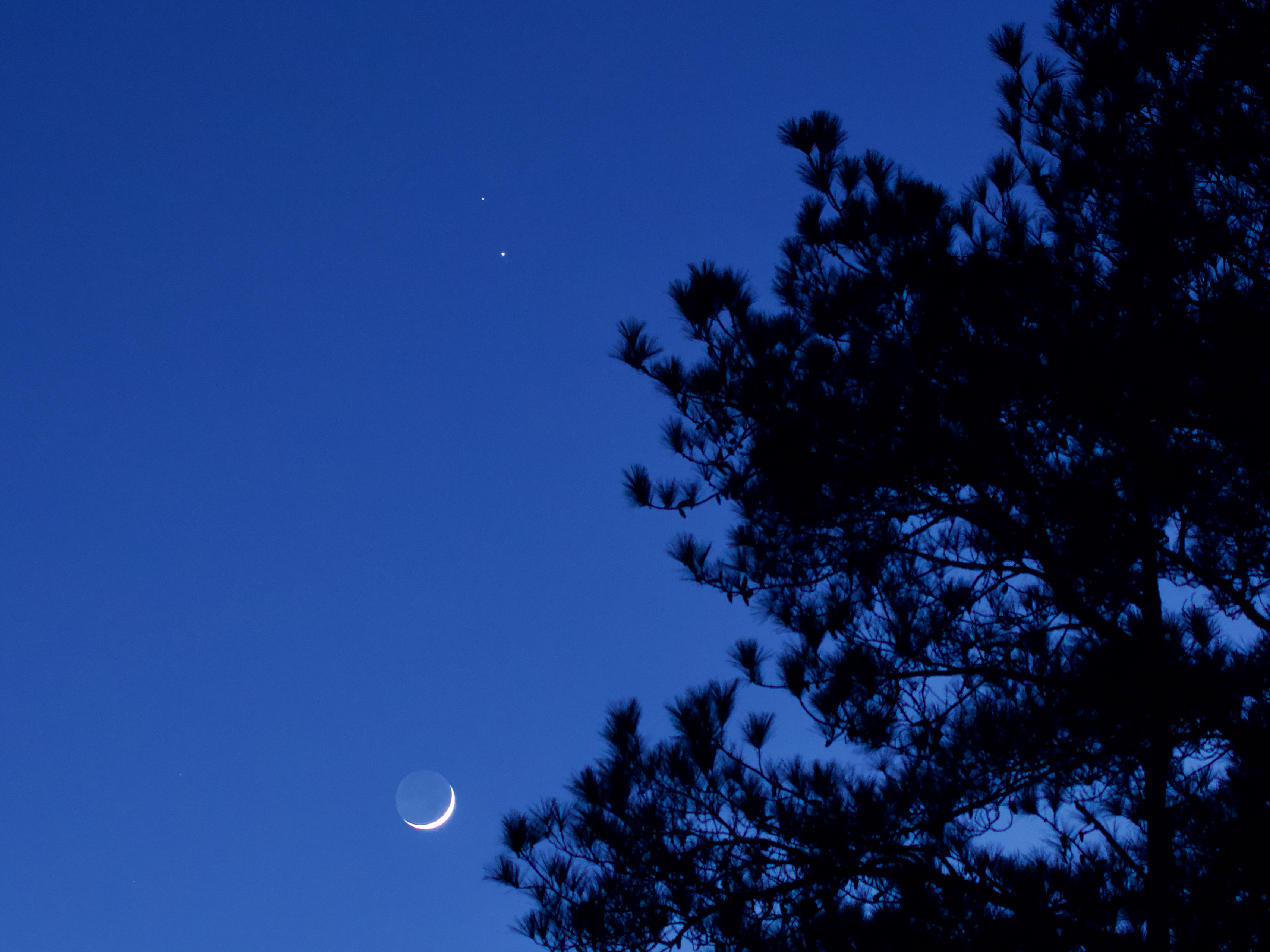
Every cloud-free evening this month, I’ve been outside viewing and taking pictures of Jupiter and Saturn as they’ve gotten closer and closer in the sky.  Now I’m working on processing the results.  Here the two planets are with the crescent moon.

Camera Geek Info 

  • Canon EOS 60D in manual mode set at f/4, 1/8 second exposure, ISO 2000, custom white balance 3500K
  • Canon EF 70-300mm f/4-5.6L IS USM lens, set at 70 mm, manual focus
  • Cable release
  • Tripod

December Astrophotography Project

This December, Jupiter and Saturn are visually approaching each other in a Great Conjunction.  I am trying to take a picture of them every night (weather permitting) so I can make a short time lapse video of the event.  It’s neat to see Jupiter’s Moons’ positions change from night to night.

Tonight, just after I finished photographing planets, I was treated to the sight of a bright meteor (alas, the camera was not on).

And I was also treated to the sight of an equally bright overhead pass of the International Space Station, which visually passed by Mars (the bright red object).  I did have the camera on for that!

Camera Geek Info (ISS and Mars)

  • Canon EOS 60D in manual mode set at f/8, 30 second exposure, ISO 250, custom white balance 3500K
  • Sigma 10-20 mm f/4-5.6 lens, set at 10 mm, manual focus
  • Intervalometer
  • Tripod

More ISS Passes – November 18 and 19, 2020

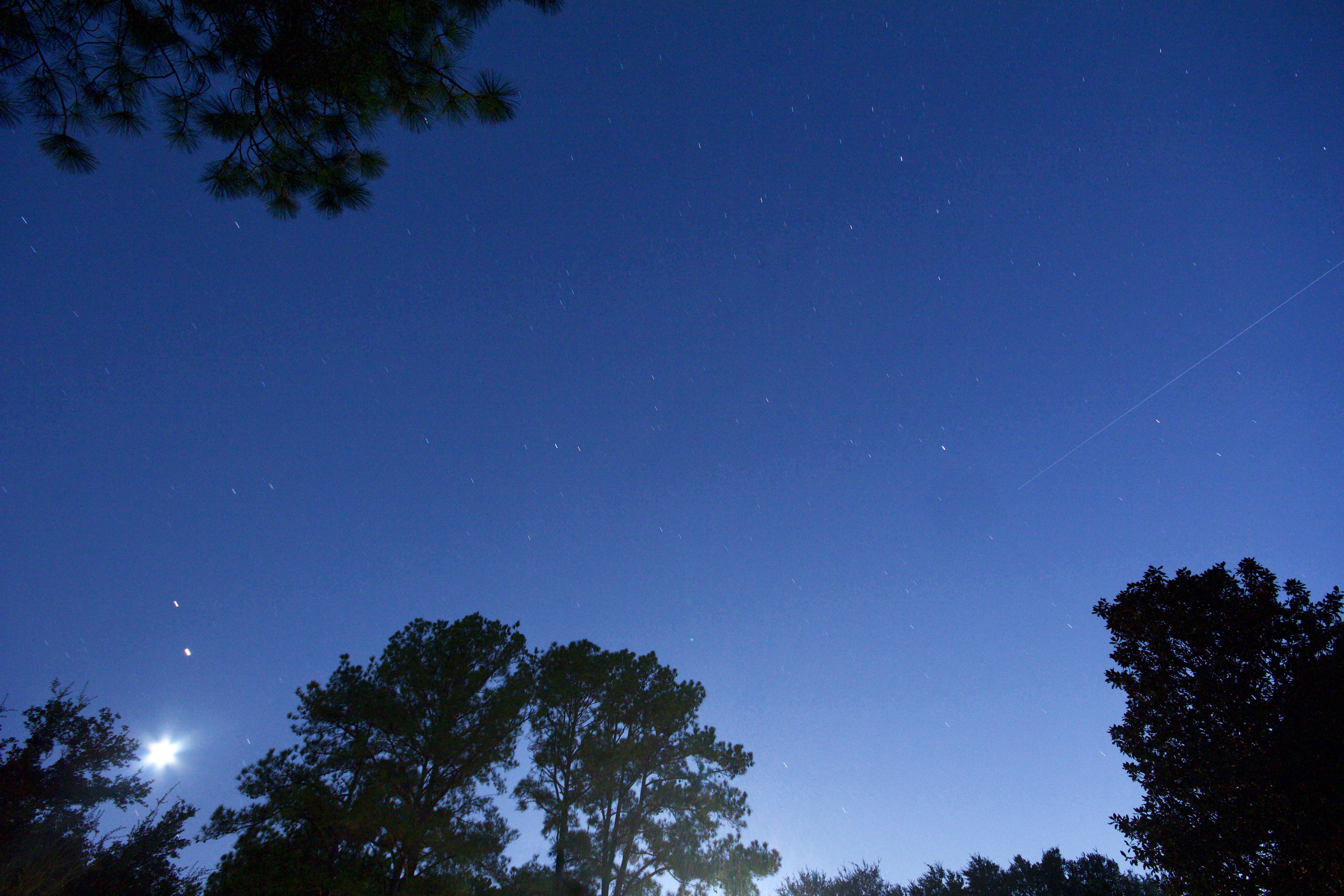
iss-20201118-1-1

November 18, 2020 – ISS rises from the trees

iss-20201118-2-1

November 18, 2020 ISS passes out of view

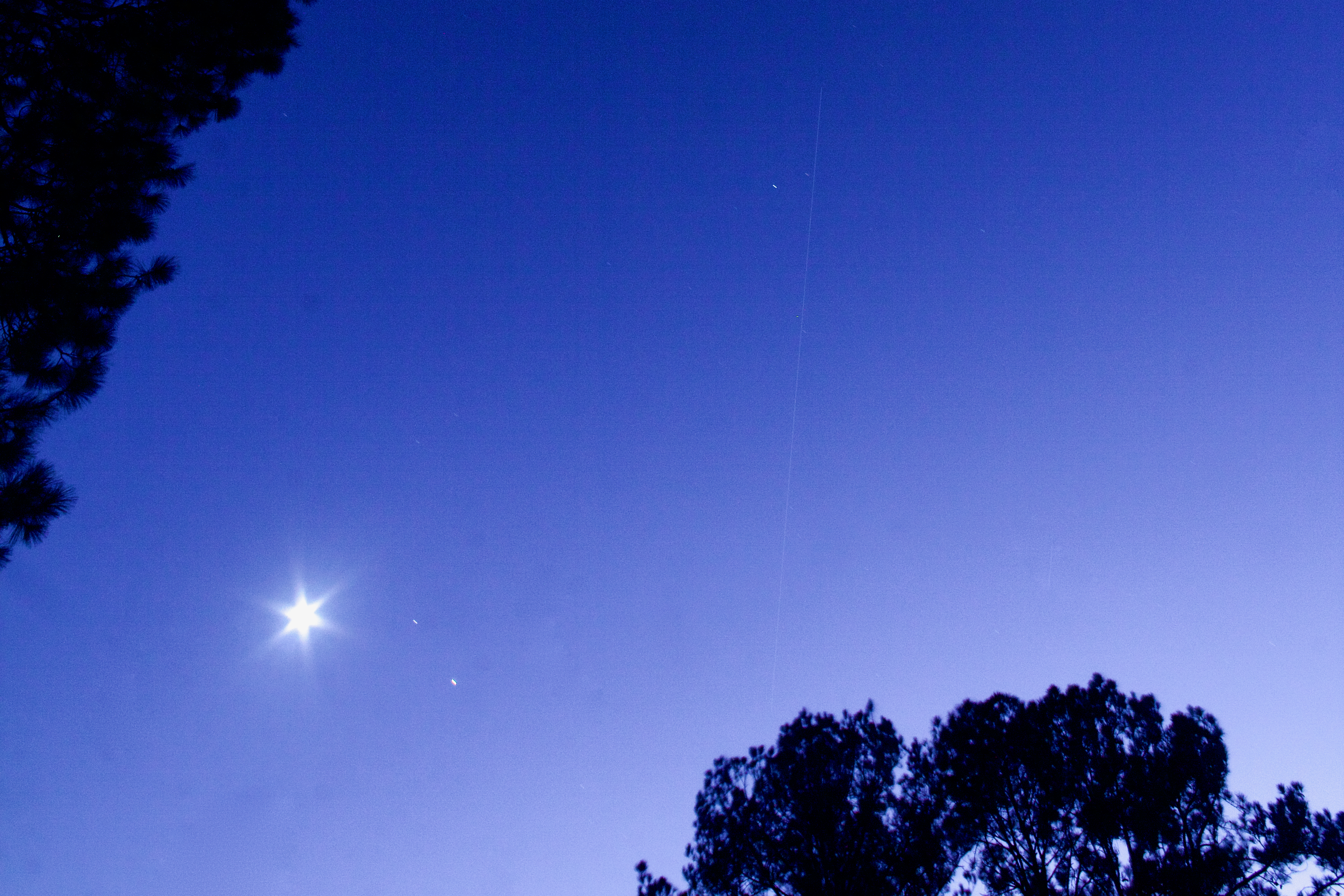
iss-20201119-1-1

November 19, 2020 ISS rises above the trees next to the Moon, Jupiter, and Saturn

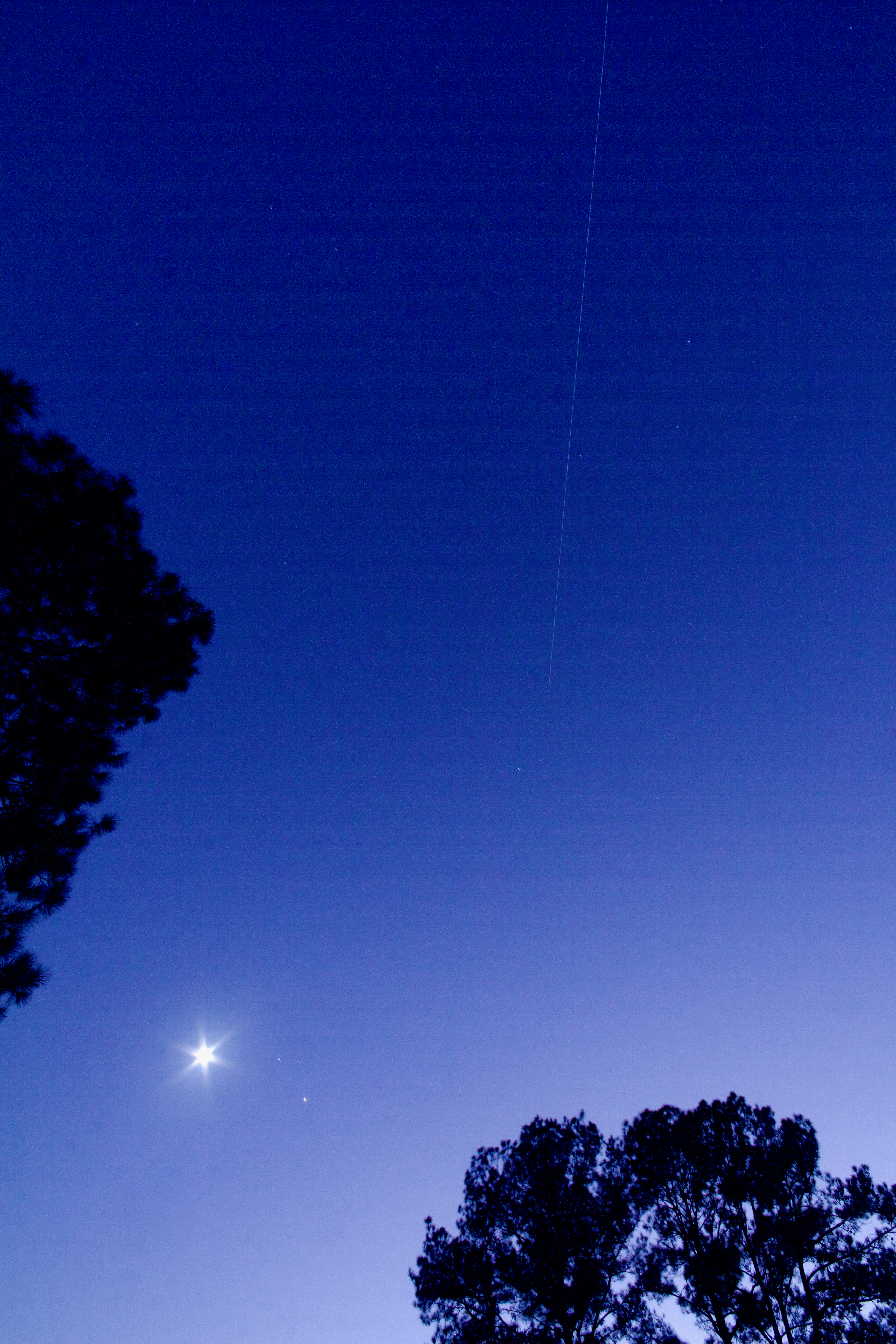
iss-20201119-2

November 19, 2020 ISS on a long overhead pass

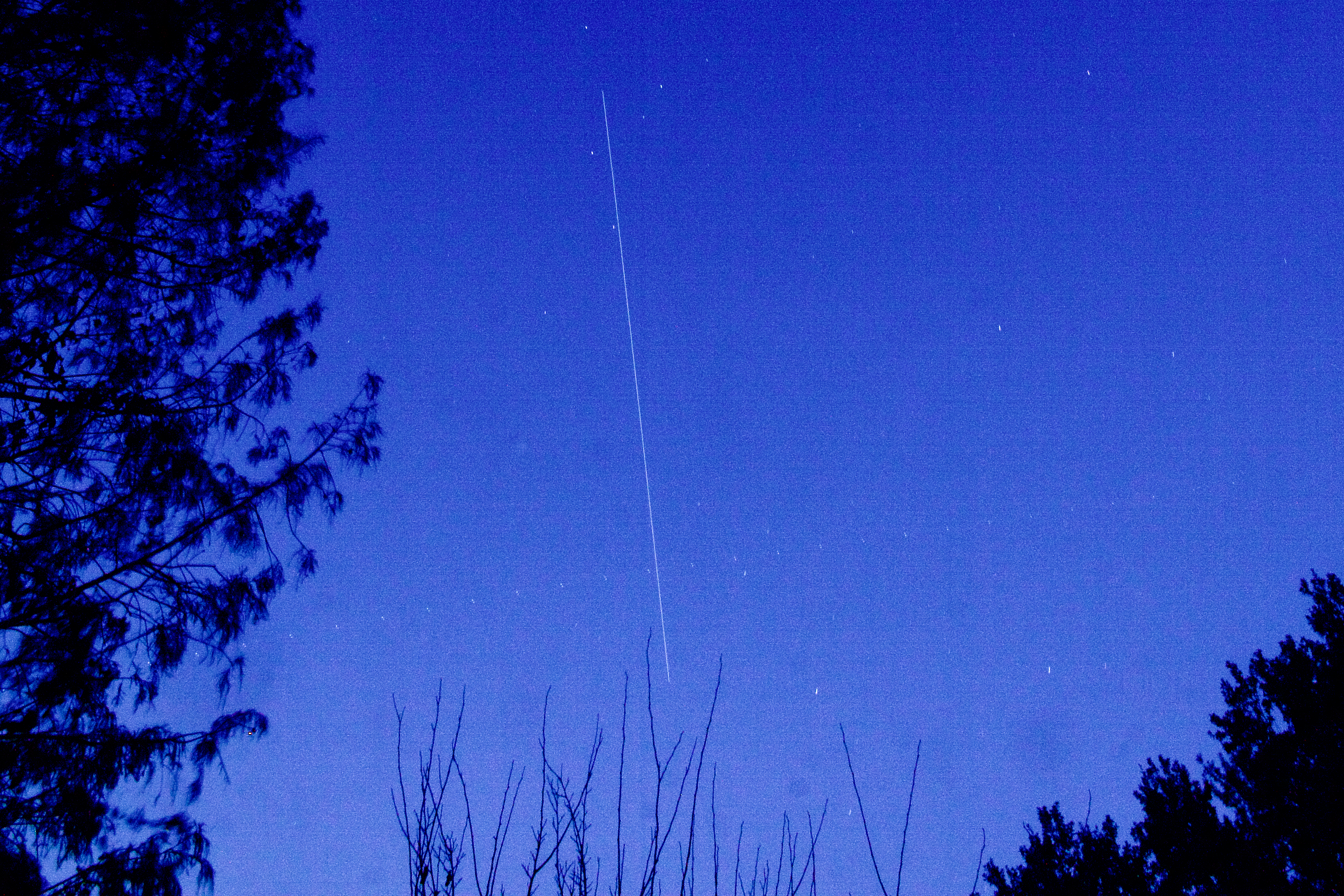
iss-20201119-3

November 19, 2020 ISS sets, with airplane photobomber

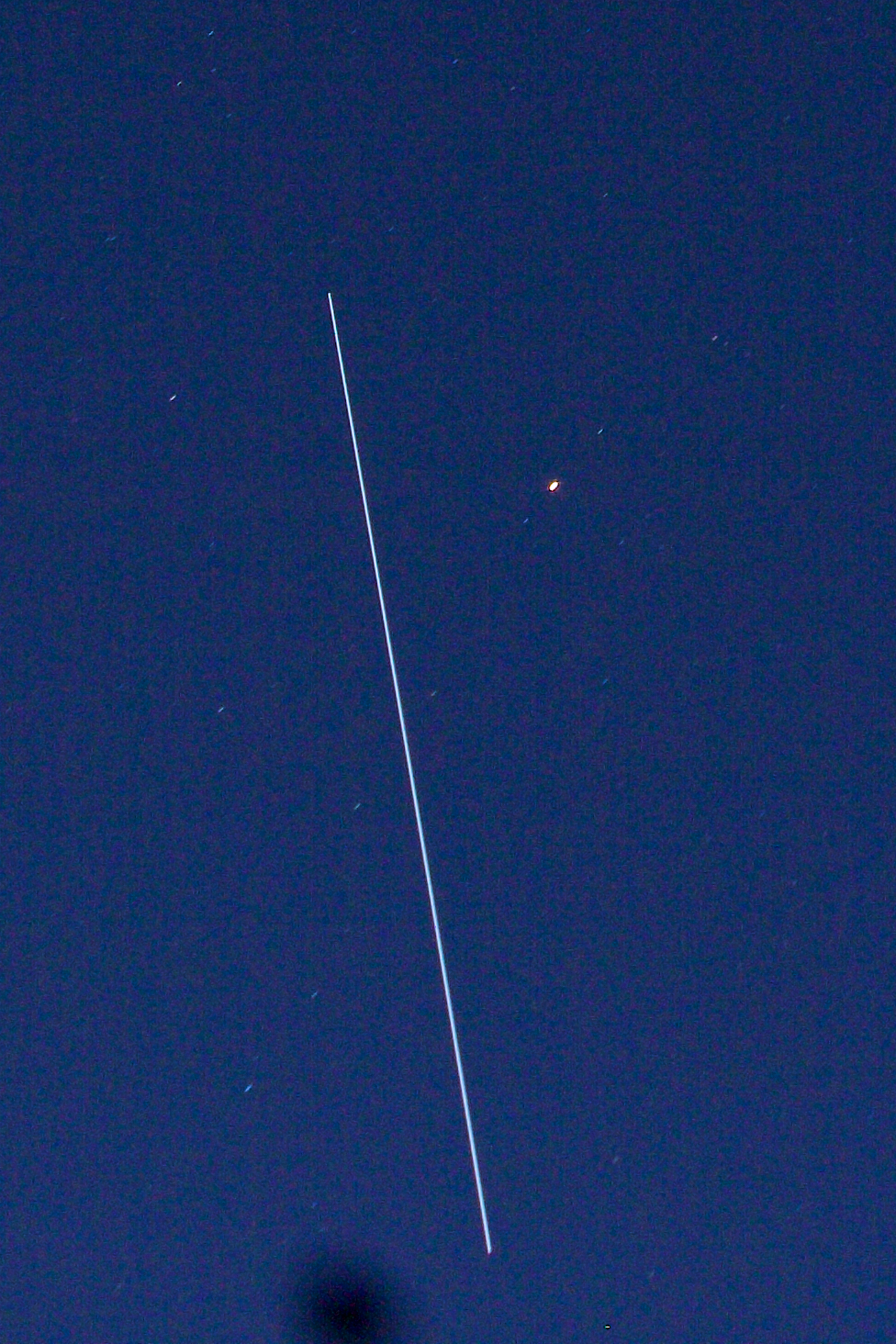
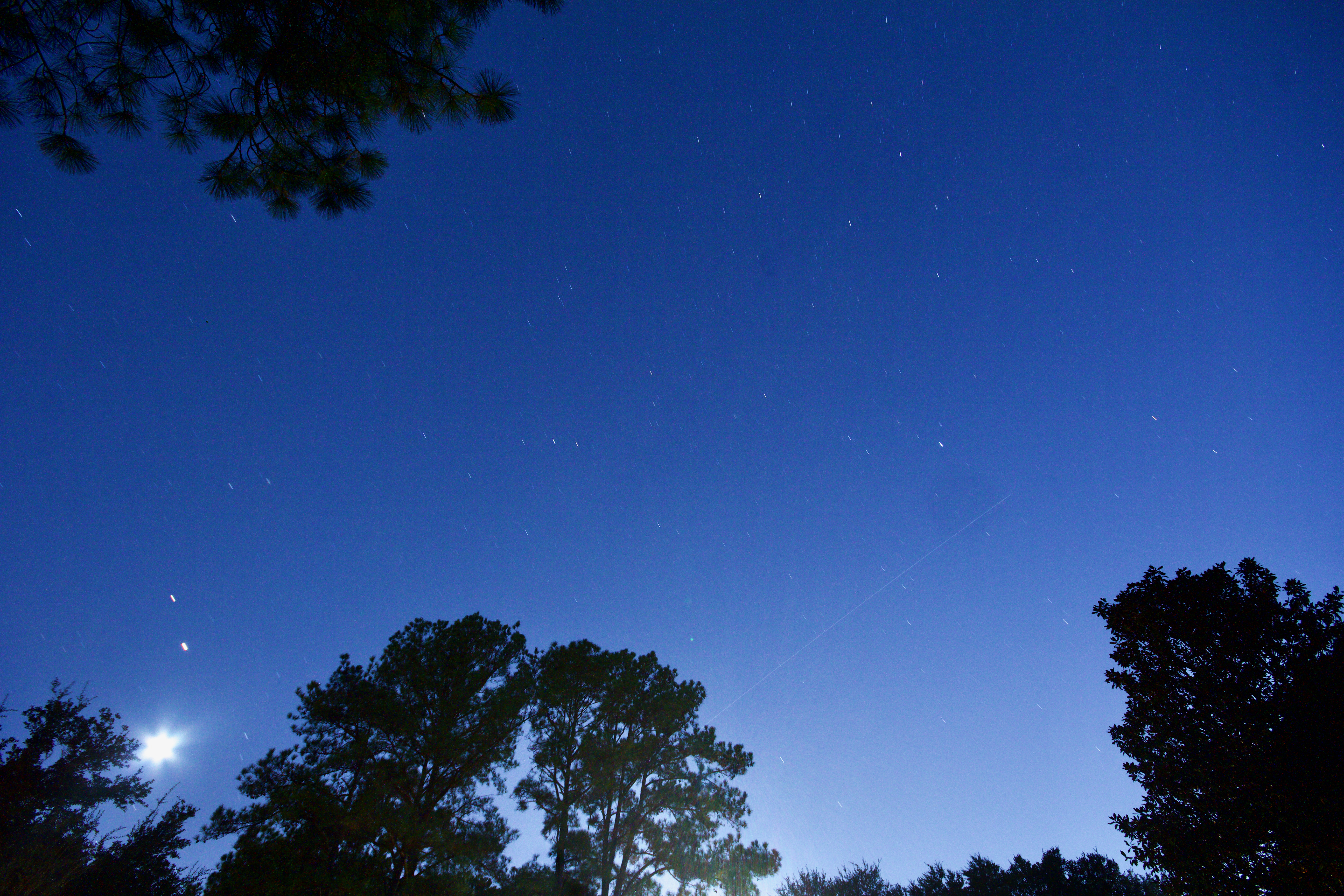
I had so much fun seeing Dragon chase the International Space Station that I decided to do some experiments with long-exposure satellite photography.  The International Space Station, as the brightest of the satellites, is a good subject, and we had some more good passes this week.

On Wednesday, November 18, 2020, the now-docked Dragon and Space Station passed to the side of a crescent Moon, Jupiter, and Saturn.  I tried two minute long exposures to catch a long pass.

On Thursday, November 19, 2020, the now-docked Dragon and Space Station flew almost overhead, but at twilight.  The sky was much too bright to use a 2 minute exposure, so I dialed it back to one minute.  And, because the long pass went almost directly overhead, I had to turn the camera around in the middle.  As the Space Station was setting, an airplane (seen as a line of pairs of lights) flew in front of it and their paths crossed in the photograph.  They almost, but not quite, were in the same direction at the same time.

Note that with the long exposures, the lovely crescent Moon turned into a starburst.  Note also the change in the Moon’s position relative to Jupiter and Saturn in one day.

When I try this again, I think I will use my sky-tracking mount so there aren’t star trails.

Camera Geek Info Wednesday November 18

  • Canon EOS 60D in manual mode set at f/8, 119 second exposure (1) and 103 second exposure (2), ISO 250, custom white balance 3500K
  • Sigma 10-20 mm f/4-5.6 lens, set at 10 mm, manual focus
  • Intervalometer with bulb at 2 minutes, intervals at 2 minutes and 1 second
  • Tripod

Camera Geek Info Thursday November 18

  • Canon EOS 60D in manual mode set at f/16, 59 second exposure, ISO 100, custom white balance 3500K
  • Sigma 10-20 mm f/4-5.6 lens, set at 10 mm, manual focus
  • Intervalometer with bulb at 1 minute, intervals at 1 minute and 1 second
  • Tripod

ISS and SpaceX Crew Dragon Resilience

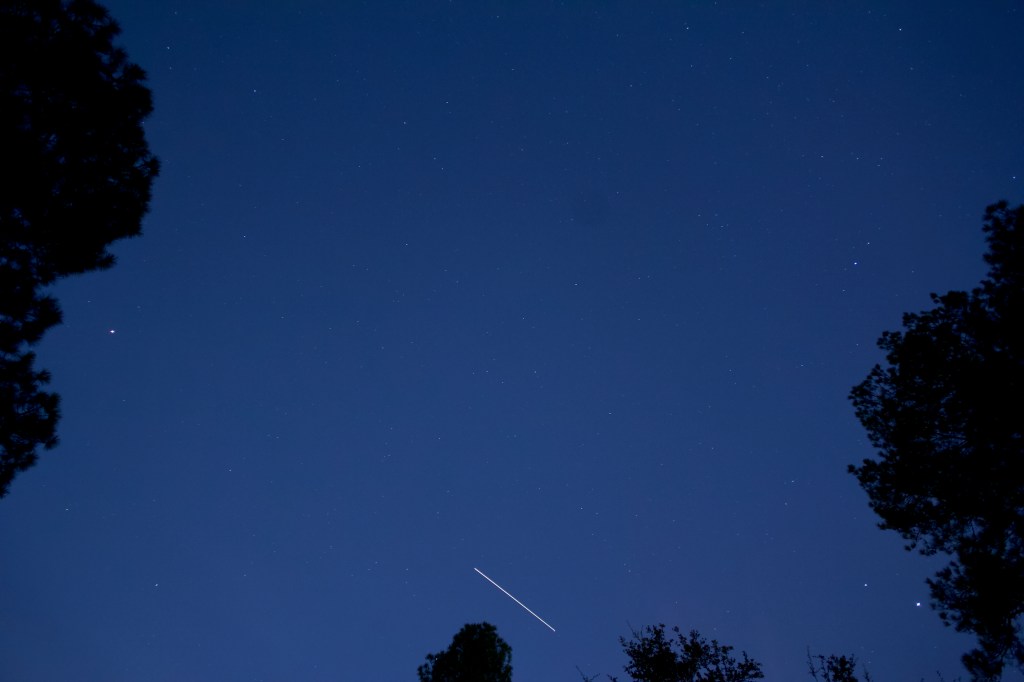
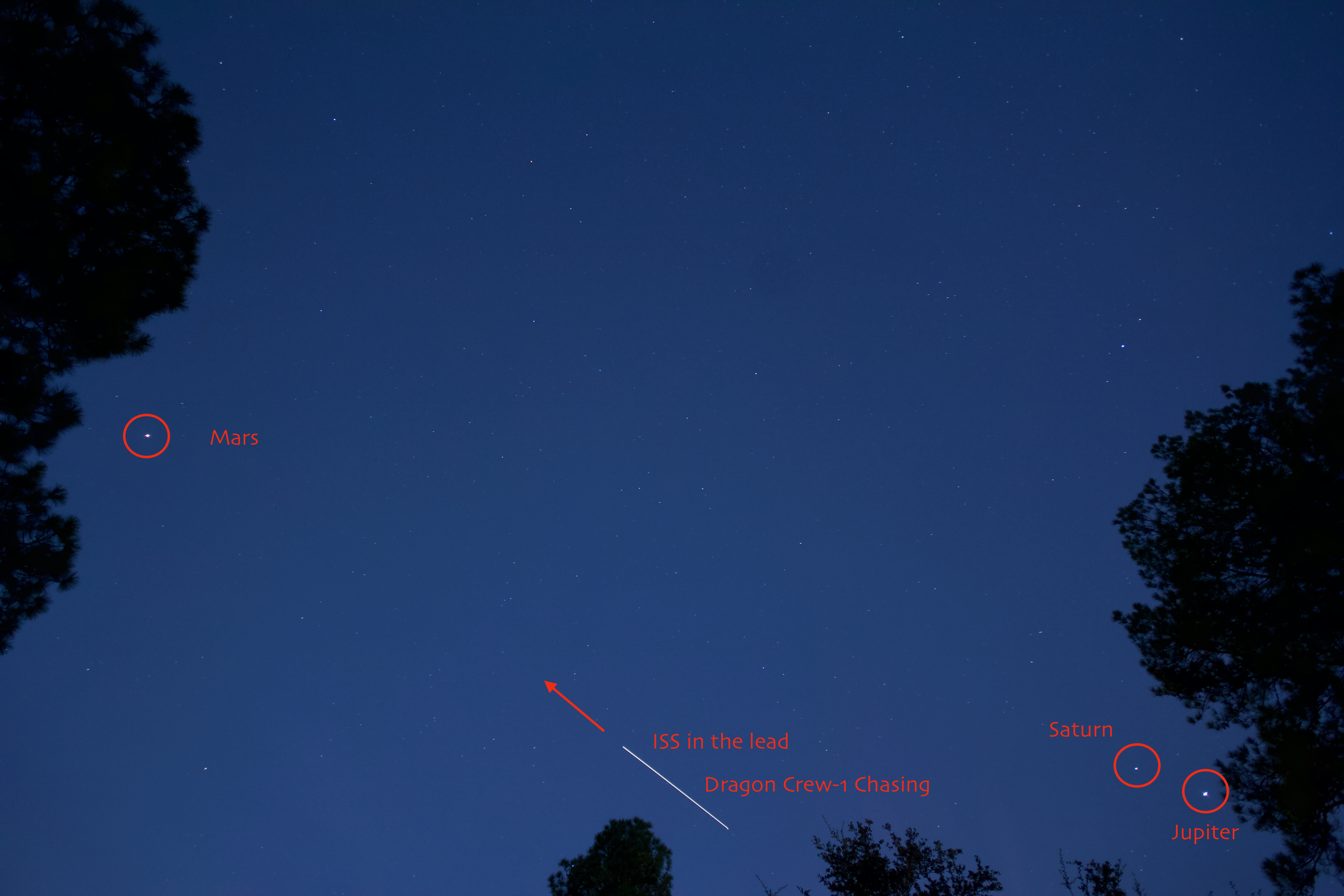
The International Space Station and the SpaceX Crew Dragon Resilience flew overhead this evening.  The Crew-1 Dragon vehicle is chasing the ISS, catching up to dock later this evening.  I was so delighted that I could actually see one vehicle following the other that I forgot to keep taking pictures.  But in this shot you can see Mars, the bright line of ISS and Dragon (one overlays the other, so they appear as one line), Saturn, and Jupiter.  

I love their motto: “All for One, and Crew-1 for All!”

Camera Geek Info 

  • Canon EOS 60D in manual mode set at f/4.5, 20.0 second exposure, ISO 400, custom white balance 3500K
  • Sigma 10-20 mm f/4-5.6 lens, set at 10 mm, manual focus
  • Tripod

Throwback Thursday – Comet Hale-Bopp! April 7, 1997

I was looking through an old photo album and found a picture of Comet Hale-Bopp.  I knew from the trees (and memory, actually), that it had been to the NW of my driveway.  Using GoSkyWatch on my phone, I was able to determine the date the picture was taken – April 7, 1997 – by matching the comet’s position relative to the stars.  Interestingly, the position in the app is not exactly where it is in the photograph, but this is the closest match.  The app, by the way, gives the comet’s magnitude on that date as -1.6.

Since this is a scanned picture from film, I don’t have any camera setting or equipment info for this one.  But I can tell I must have used a long exposure and a tripod from the length of the star trails.

Comet NEOWISE – Photobombers!

It’s been clear the last few nights, so I’ve been out every night to capture Comet NEOWISE as it moves across the sky.  My pictures have been photobombed by an airplane (alternating red and green lights are the airplane give-away) and a satellite!  My satellite tracking tool suggests the satellite photobomber was Orbiting Astronomical Observatory (OAO) 2.

Camera Geek Info (airplane photobomb, comet in upper right)

  • Canon EOS 60D in manual mode set at f/5.6, 15 second exposure, ISO 1000
  • Canon EF 70-300mm f/4-5.6L IS USM lens, set at 300 mm, manual focus
  • Cable release
  • iOptron SkyTracker with ballhead
  • Tripod

Camera Geek Info (satellite photobomb, comet in-line with satellite, below and to the left)

  • Canon EOS 60D in manual mode set at f/4, 6 second exposure, ISO 1000
  • Canon EF 70-300mm f/4-5.6L IS USM lens, set at 70 mm, manual focus
  • Cable release
  • iOptron SkyTracker with ballhead
  • Tripod