Capturing Comet PANSTARRS C/2021 S3 with two Ancient Globular Clusters M9 and NGC6356

I was looking through my comet posts after my post yesterday, and I discovered I hadn’t posted this image of Comet PANSTARRS C/2021 S3 with two globular clusters that I made last spring.  Enjoy!

I hadn’t planned on imaging comets when we were in Dell City last spring, but when I saw this combination of two globular clusters and comet PANSTARRS C/2021 S3, I knew I had to try it.

Globular cluster M9, the brighter one to the left, is 25,800 light years away from us.  It’s 90 light years across, giving it an apparent size of 12 arcminutes.  Globular cluster NGC6356, the smaller one to the right, is 49,200 light years away from us.  Its apparent diameter is 8 arcminutes, giving it a diameter of 115 light years across.  Globular clusters are mind-bogglingly old parts of our galaxy and can be used to infer the age of the universe.  There are some interesting open questions about them, including their exact ages and whether they formed as part of our galaxy or were accreted later (probably a mix of both).  In the paper I found giving the ages for these two globular clusters, it shows that M9 is 14.60 ± 0.22 billion years old with one model, 14.12 ± 0.26 billion years old with a second model, and 12 billion years old in the literature.  It shows that NGC6356 is 11.35 ± 0.41 billion years old with one model, 13.14 ± 0.64 billion years old with a second model, and 10 billion years old in the literature.  No matter which age ends up being correct, ~10 billion years old is amazingly OLD!

Comet PANSTARRS C/2021 S3 was discovered by the Panoramic Survey Telescope and Rapid Response System located at Haleakala Observatory, Hawaii on images taken on September 24, 2021.  It reached perihelion (its closest point to the sun) on February 14, 2024 (the day after this image was taken) at 1.32 AU distance.  Its orbital eccentricity is higher than 1, meaning it’s on a parabolic trajectory and isn’t coming back.

I feel very fortunate that my trip out to the dark skies was timed so I could image this comet with two ancient globular clusters.  I also feel fortunate that I imaged it in a time when so many processing tools are being developed to make processing the image so much easier!  The tools I have this year are so much more powerful than the ones I had last year.

Camera geek info:

  • Williams Optics Zenith Star 73 III APO telescope
  • Williams Optics Flat 73A
  • ZWO 2” Electronic Filter Wheel
  • Antila LRGB filters
  • ZWO ASI183MM-Pro-Mono camera
  • ZWO ASiair Plus
  • iOptron CEM40
  • Dell City, Texas Bortle 2-3 dark skies

Frames:

  • February 13, 2024
    • Interleaved LRGB lights
      • 5 60 second Gain 150 L lights (only used for the comet)
      • 5 60 second Gain 150 R lights
      • 5 60 second Gain 150 G lights
      • 4 60 second Gain 150 B lights
    • 30 0.05 second LRGB flats
    • 30 0.05 second darks
    • 30 60 second darks

Processing geek info:

  • PixInsight
  • BlurXterminator
  • NoiseXterminator
  • StarXTerminator
  • ImageBlend

Comet vs Clouds: A Glimpse of Comet Tsuchinshan-ATLAS C/2023 A3

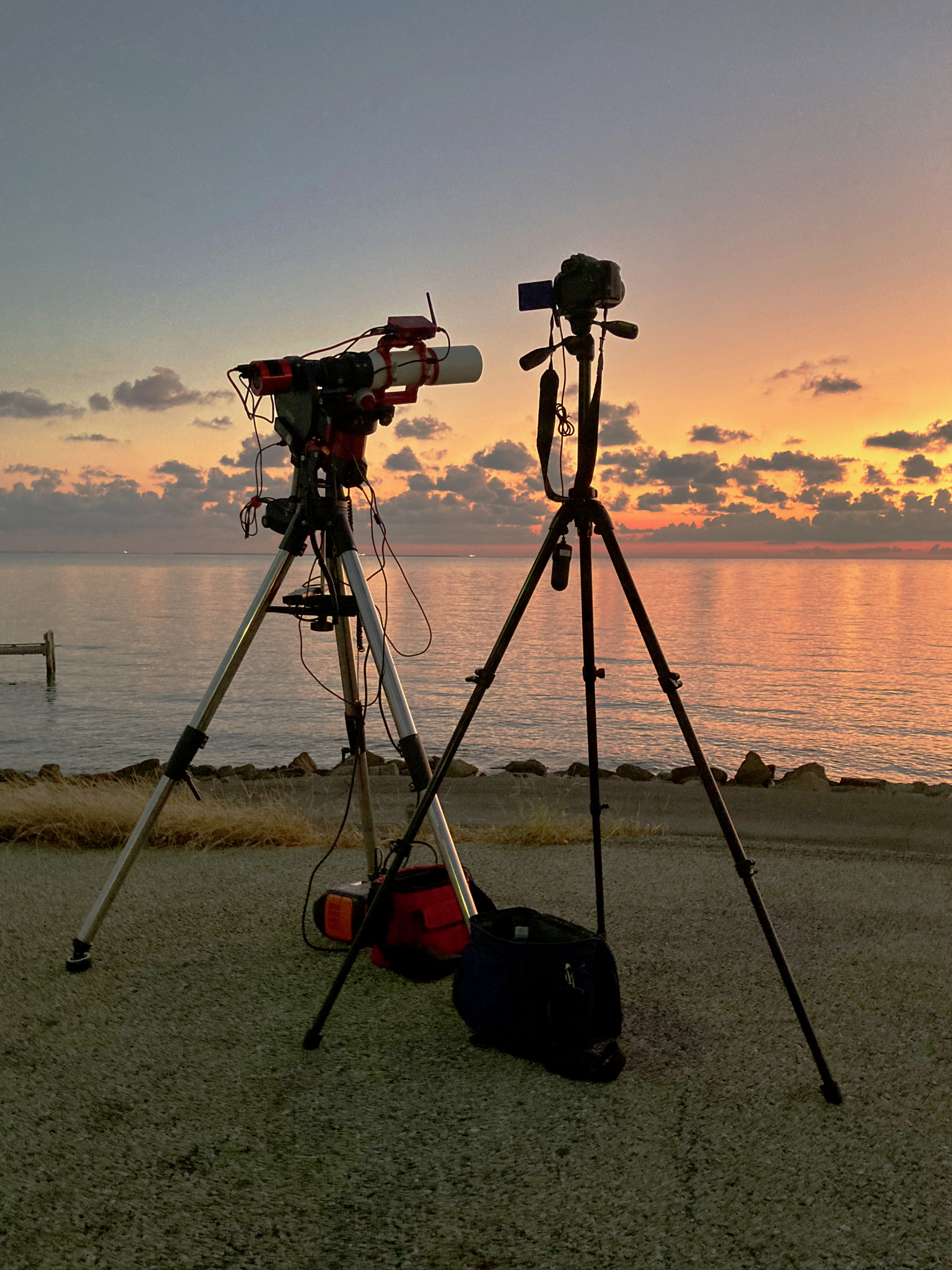
On Sunday morning, we got up at 4:00 AM to drive to a spot with a long view to the East to go comet hunting.  I successfully got the telescope set up prior to the time when Comet Tsuchinshan-ATLAS C/2023 A3 was supposed to rise.  However, when the comet did rise, the ASIAIR could find stars, but couldn’t plate solve to figure out if it was pointing exactly right.  So I ended up starting imaging without having successfully scanned to the predicted comet location.  Since I could see a tiny comet in the first shot, I let the system take an automated sequence of shots.  60 second shots were too bright, so I started with 10 second shots, and when they became too bright, I switched to 1 second shots.

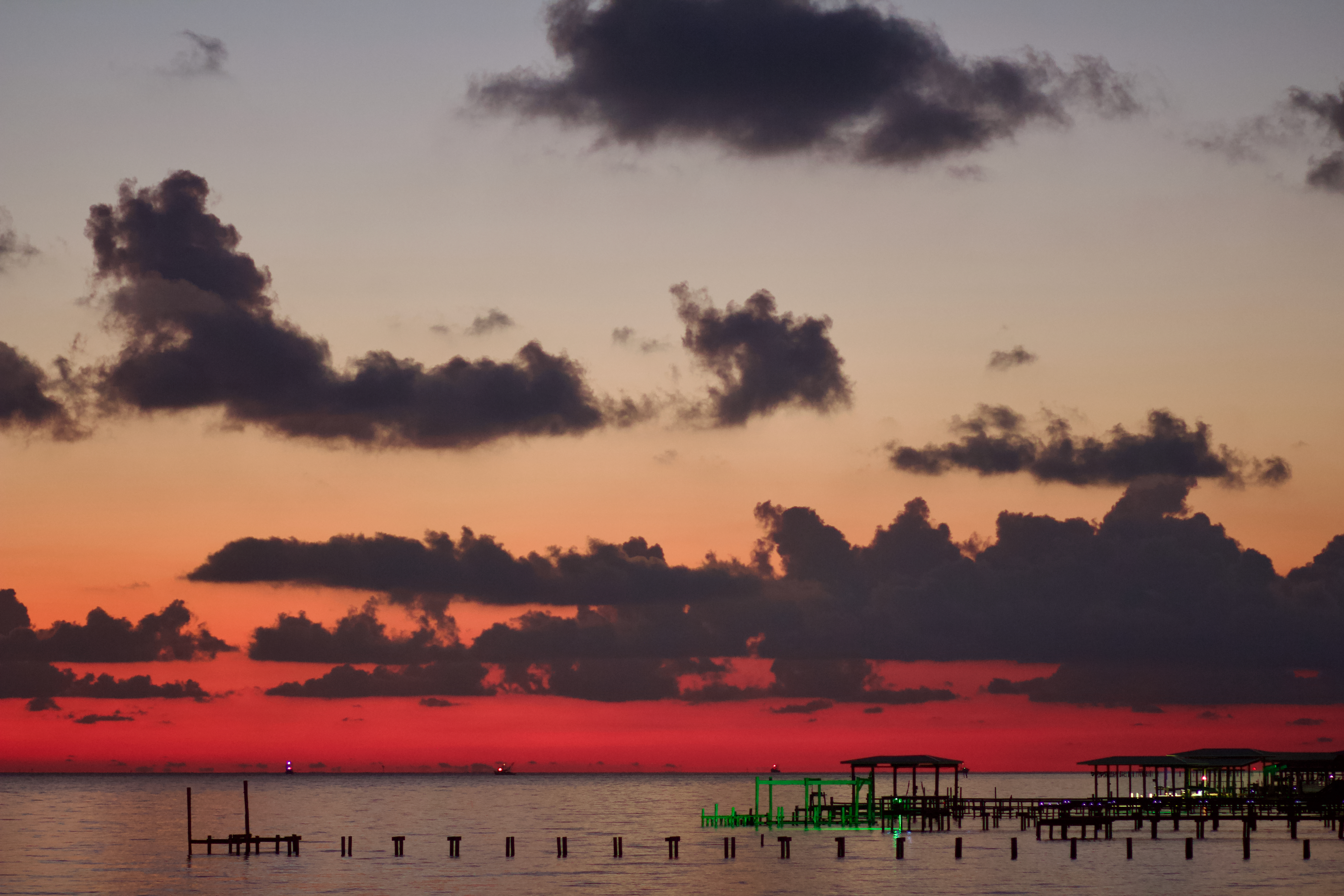
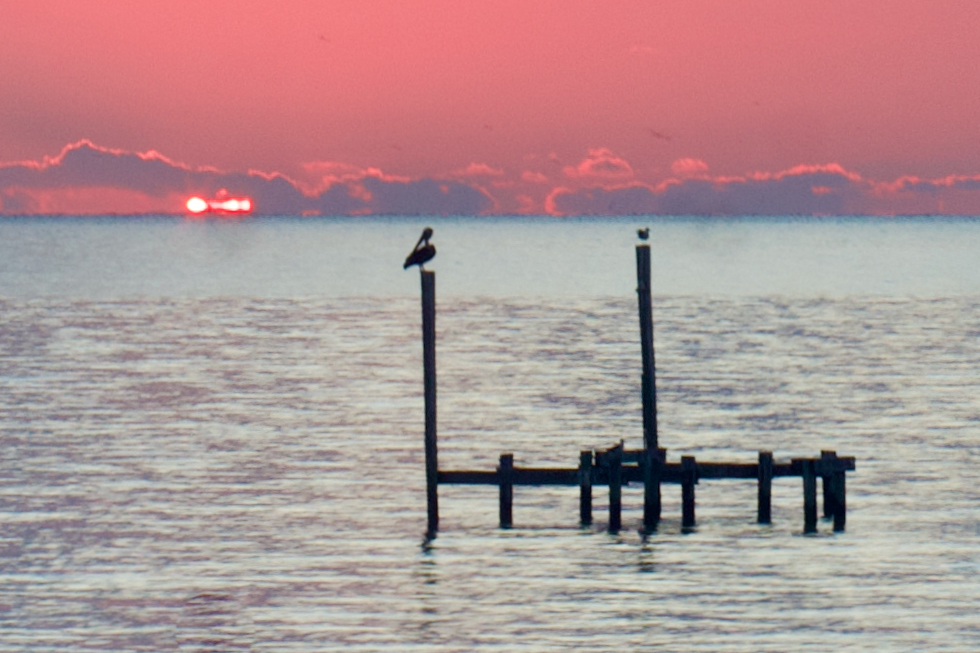
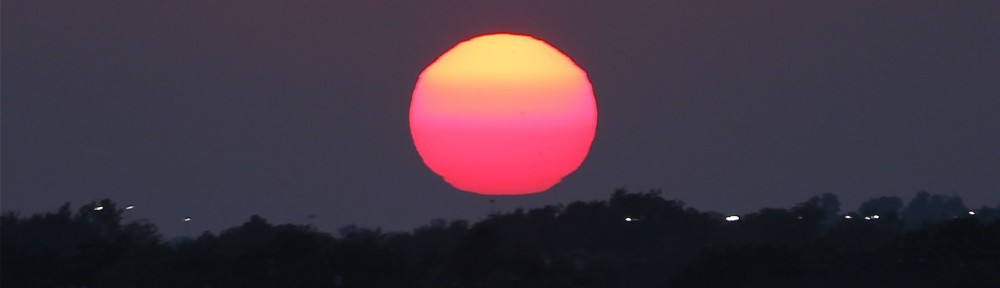
I also tried taking pictures with an 85 mm lens on my Canon EOS 60D, but that didn’t pick up the comet at all.  What it did pick up was the reason I didn’t get very many good comet images … clouds!  Of course, clouds are terrible for astrophotography, but they do lead to nice sunrise pictures.

We stayed for the sunrise, went out to breakfast, and then headed home.

Astrophotography is really two hobbies: capturing the images and processing them.

When we got home, I worked on processing the images I’d gotten.  I could see the comet in the 10 second images and in the 1 second images, but the 1 second image ones were generally partially through the clouds.  So I ended up using only the 10 second images.  Because there weren’t any stars captured in these short images, I only needed to process for the comet and use Comet Alignment to align the frames.

I’m hoping that I’ll get some better images later this fall.  Are you making plans to try to see this one?

Camera geek info:

  • Williams Optics Zenith Star 73 III APO telescope
  • Williams Optics Flat 73A
  • ZWO 2” Electronic Filter Wheel
  • Antila RGB filters
  • ZWO ASI183MM-Pro-Mono camera
  • ZWO ASiair Plus
  • iOptron CEM40
  • Bacliff, Texas Bortle 6 suburban skies

Frames:

  • 4 10 second red lights
  • 7 10 second green lights
  • 5 10 second blue lights
  • 30 0.02 second flats for green and blue
  • 30 0.05 second flats for red
  • 30 0.02 second flat darks for green and blue
  • 30 0.05 second flats darks for red
  • 1 second dark from library 

Processing geek info:

  • PixInsight
  • Generalized Hyperbolic Stretch
  • NoiseXterminator

M27 NGC6853 The Dumbbell Nebula or The Apple Core Nebula

M27, also called the Dumbbell Nebula or Apple Core Nebula, is a planetary nebula – the gases expelled from a red giant star before it becomes a white dwarf, lit up by that star.  It’s located in the Milky Way, approximately 1250 light years away, and it has an apparent size of 8 arcmintues, making it 2.9 light years across.  It’s estimated to be 12,700 years old.

Planetary nebulae do not last long on an astronomy time scale because the expelled gases grow dimmer as they expand away from the central star.  I am glad I live in a time when we can observe them and they can be observed!

Planetary nebulae were originally called that because they looked like a round (like a planet) ball of fuzz by visual observers.  However, now we know they have nothing to do with planets and are actually shell(s) of gas expelled from a red giant star.  With astrophotography, we can pick up so much more detail than a fuzzball, and so we end up with interesting names.  For this nebula, some thought the inner core of this nebula looked like a dumbbell; others thought it looked like an apple core.  With the outer fringe, what do you think it looks like?

I used data from my driveway in Friendswood, Texas with suburban Bortle 7 – 8 brightness skies (lots of light pollution) to make this image.  In order to capture the outer fringe I needed a lot of data: 12.2 hours of Ha data and 10.65 hours of Oiii data, taken over nine nights.

This is a narrowband image, mapping Oiii to blue and Ha to red.  My goal was to capture both the details in the core and the outer fringe.  It took three processing tries, but I think I was ultimately successful.

Isn’t our galaxy beautiful?

Camera geek info – Narrowband:

  • Williams Optics Zenith Star 73 III APO telescope
  • Williams Optics Flat 73A
  • ZWO 2” Electronic Filter Wheel
  • Antila HO filters
  • ZWO ASI183MM-Pro-Mono camera
  • ZWO ASiair Plus
  • iOptron CEM40
  • Friendswood, Texas Bortle 7-8 suburban skies

Frames:

  • June 22, 2024
    • 20 60 second Gain 150 Ha lights
    • 30 0.05 second Gain 150 Ha flats
  • June 28, 2024
    • 47 60 second Gain 150 Oiii lights
    • 30 0.05 second Gain 150 Oiii flats
  • July 3, 2024
    • 100 60 second Gain 150 Ha lights
    • 30 0.05 second Gain 150 Ha flats
  • August 15, 2024
    • 256 60 second Gain 150 Oiii lights
    • 30 0.05 second Gain 150 Oiii flats
  • August 16, 2024
    • 283 60 second Gain 150 Ha lights
    • 30 0.05 second Gain 150 Ha flats
  • August 20, 2024
    • 45 60 second Gain 150 Oiii lights
    • 30 0.05 second Gain 150 Oiii flats
  • August 22, 2024
    • 136 60 second Gain 150 Oiii lights
    • 30 0.05 second Gain 150 Oiii flats
  • August 23, 2024
    • 155 60 second Gain 150 Oiii lights
    • 30 0.05 second Gain 150 Oiii flats
  • August 24, 2024
    • 327 60 second Gain 150 Ha lights
    • 30 0.05 second Gain 150 Ha flats
  • 30 Flat Darks from library
  • 30 Darks from library

Processing geek info:

  • PixInsight
  • BlurXterminator
  • NoiseXterminator
  • StarXTerminator
  • Generalized Hyperbolic Stretch
  • NBColourMapper

NGC6357 The Lobster Nebula or the Bug-Eyed Monster Nebula

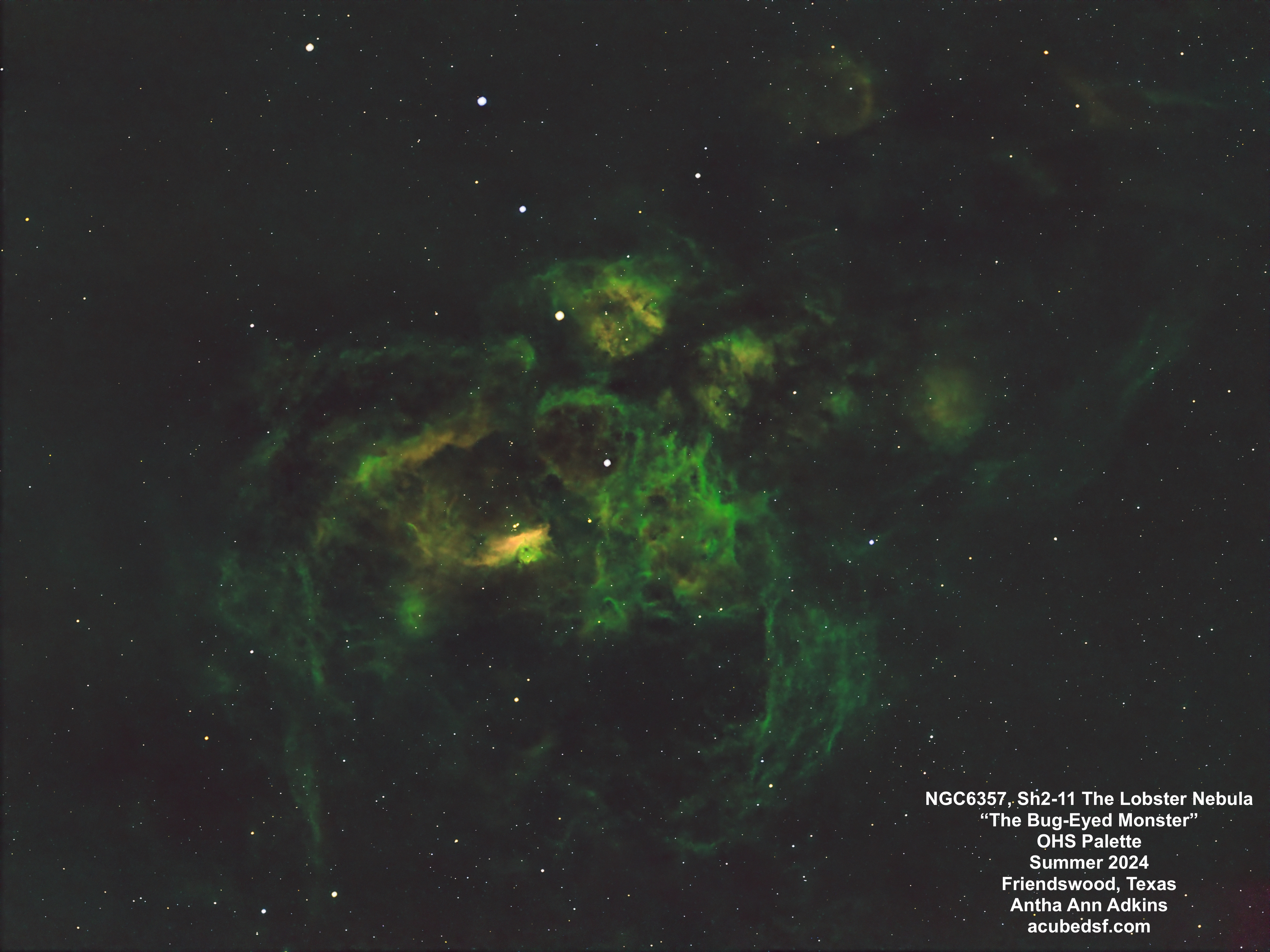
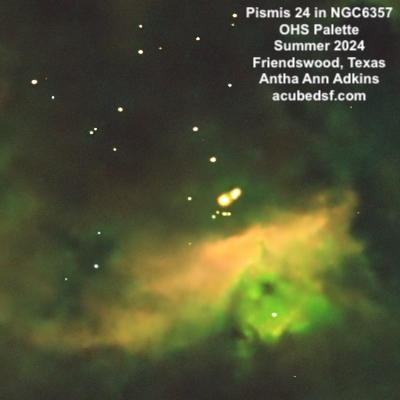
NGC6357, the Lobster Nebula, is an emission nebula.  It is a large star-forming region containing three star clusters, many young stars, and some massive stars.  One cluster is Pismis 24, located just above the bright blue core in this picture.  The stars in this cluster are about 1 million years old and four are massive – 40 – 120x the mass of our sun, among the most massive stars in our galaxy.  The Lobster Nebula is located in the Milky Way, approximately 5550 light years away, and it has an apparent size of 60 x 45 arc min, so it is approximately 97 x 73 light years across.    

From my driveway, the Lobster Nebula is low to the South and is only visible for a short time from when it rises above my house to when it goes behind the pine tree.  So it took many nights of data collection to get enough data to make this image – 12.2 hours of data collected over 13 nights.  And it would still benefit from more!  I may collect more data the next time we visit the dark skies of Dell City, Texas, where I have an unimpeded view to the South.  But, until then, I have declared the end of Lobster season!

Although NGC6357 is traditionally named the Lobster Nebula, I think it looks like a bug-eyed monster.  And a bug-eyed monster should be green with a red core and have red eyes.  So in addition to the traditional Hubble SHO (Sii mapped to red, Ha to green, and Oiii to blue), I also made a version using a OHS (Oiii mapped to red, Ha to green, and Sii to blue) palette.  I thought this version produced a nice contrast in the pillar in the core near the Pismis 24 cluster.

Which color palette do you like better?

Camera geek info – Narrowband:

  • Williams Optics Zenith Star 73 III APO telescope
  • Williams Optics Flat 73A
  • ZWO 2” Electronic Filter Wheel
  • Antila SHO filters
  • ZWO ASI183MM-Pro-Mono camera
  • ZWO ASiair Plus
  • iOptron CEM40
  • Friendswood, Texas Bortle 7-8 suburban skies

Frames:

  • June 7, 2024
    • 106 60 second Gain 150 Ha lights
    • 30 0.05 second Gain 150 Ha flats
  • June 8, 2024
    • 51 60 second Gain 150 Oiii lights
    • 30 0.05 second Gain 150 Oiii flats
  • June 13, 2024
    • 73 60 second Gain 150 Sii lights
    • 30 0.05 second Gain 150 Sii flats
  • June 14, 2024
    • 82 60 second Gain 150 Sii lights
    • 30 0.05 second Gain 150 Sii flats
  • June 15, 2024
    • 81 60 second Gain 150 Oiii lights
    • 30 0.05 second Gain 150 Oiii flats
  • June 28, 2024
    • 69 60 second Gain 150 Oiii lights
    • 30 0.05 second Gain 150 Oiii flats
  • June 29, 2024
    • 37 60 second Gain 150 Sii lights
    • 30 0.05 second Gain 150 Sii flats
  • July 3, 2024
    • 51 60 second Gain 150 Ha lights
    • 30 0.05 second Gain 150 Ha flats
  • August 6, 2024
    • 13 60 second Gain 150 Oiii lights
    • 30 0.05 second Gain 150 Oiii flats
  • August 8, 2024
    • 61 60 second Gain 150 Oiii lights
    • 30 0.05 second Gain 150 Oiii flats
  • August 6, 2024
    • 37 60 second Gain 150 Oiii lights
    • 30 0.05 second Gain 150 Oiii flats
  • August 6, 2024
    • 34 60 second Gain 150 Oiii lights
    • 30 0.05 second Gain 150 Oiii flats
  • August 6, 2024
    • 36 60 second Gain 150 Oiii lights
    • 30 0.05 second Gain 150 Oiii flats
  • 30 Flat Darks from library
  • 30 Darks from library

Processing geek info:

  • PixInsight
  • BlurXterminator
  • NoiseXterminator
  • StarXTerminator
  • Generalized Hyperbolic Stretch
  • NBColourMapper