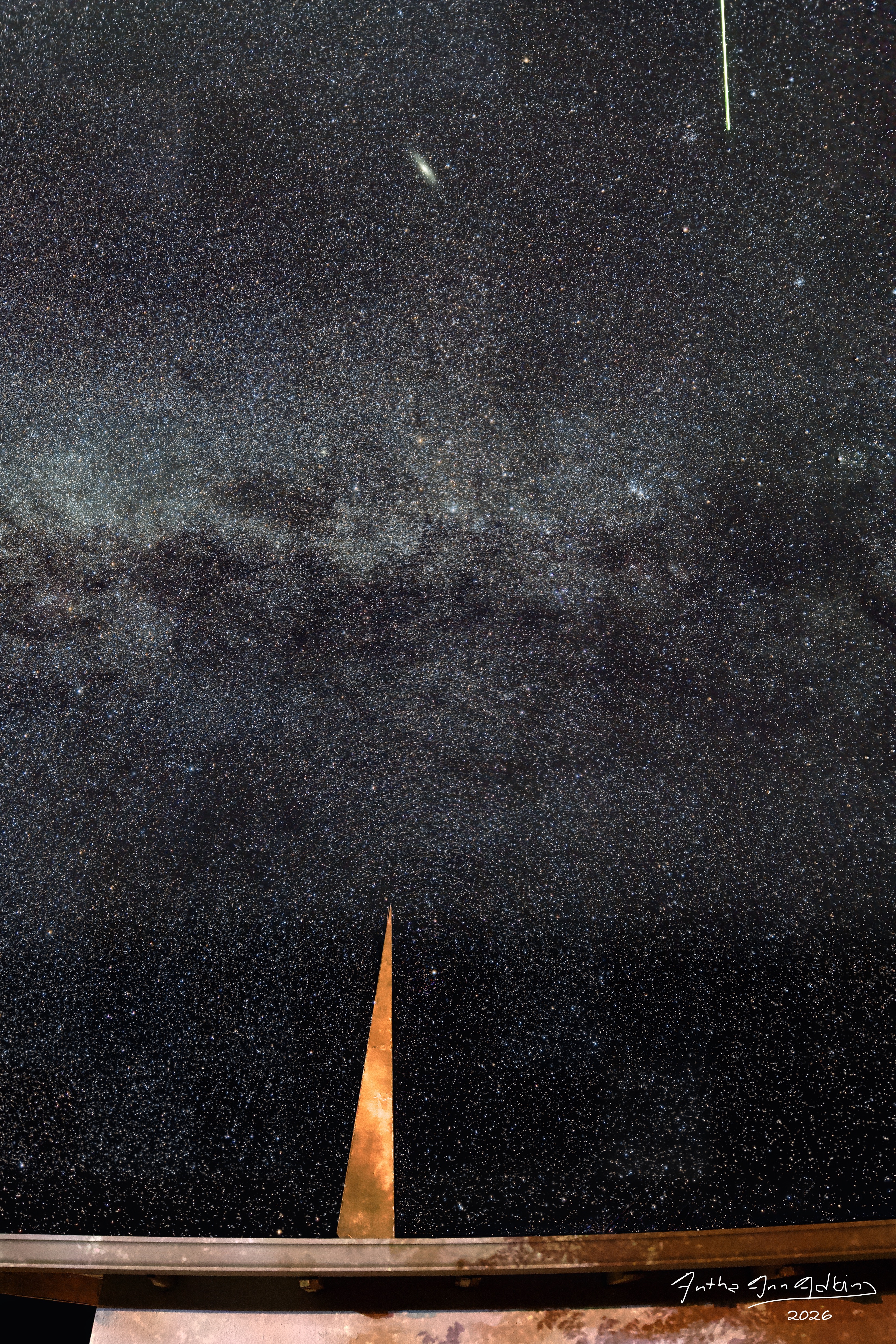
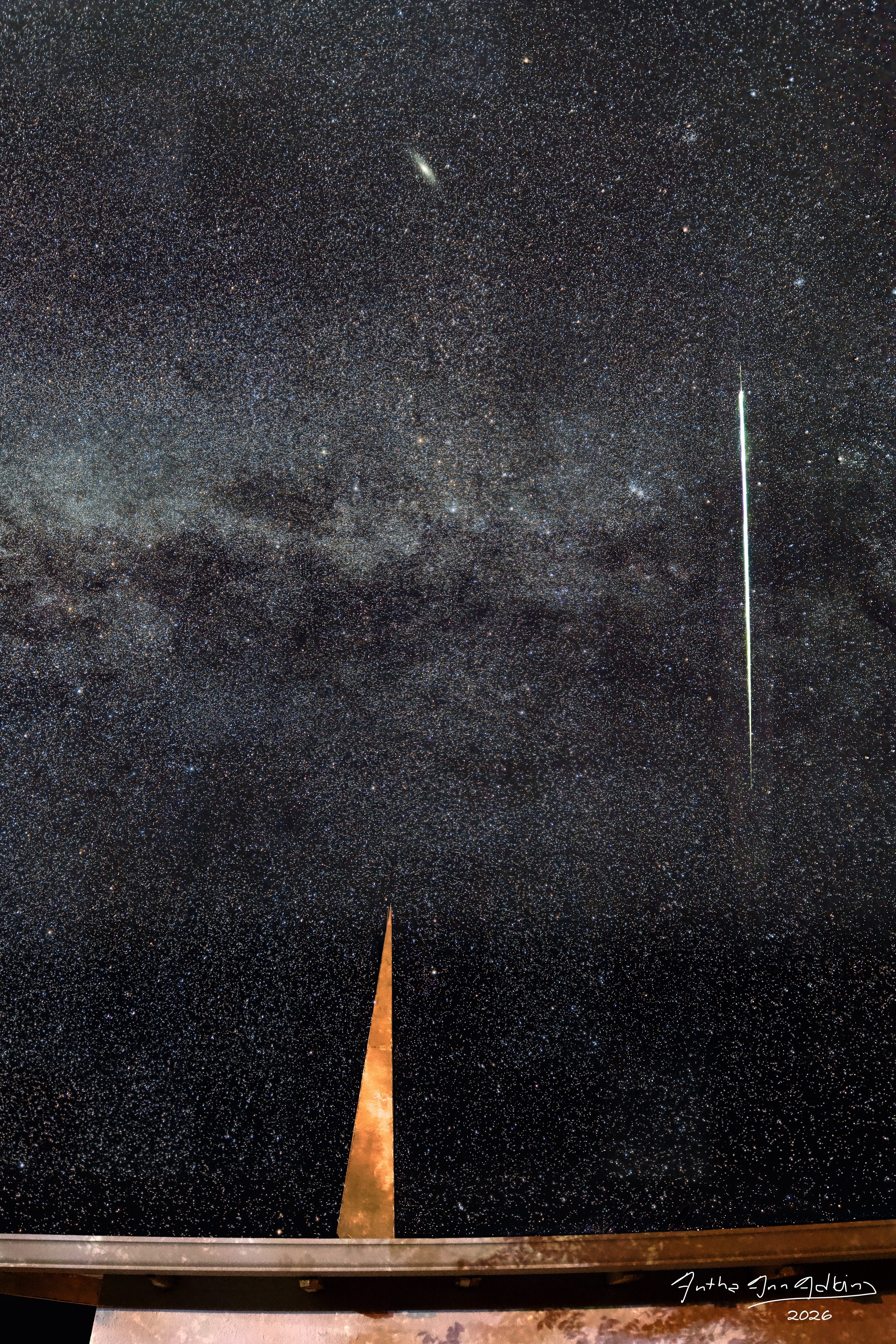
One of the things I love doing while running my telescope in Dell City is sitting outside and stargazing. Under the glorious dark skies, I can clearly see the Milky Way – our own galaxy – and I’ve figured out how to spot the Andromeda Galaxy next to it. While I was looking at the stars, an amazing – wow – brilliant brighter-than-the-planets fireball went overhead, split into at least three parts, and glowed green! I had enough time to say “WOW!” but not enough time to pull my phone out of my pocket and try to photograph it.
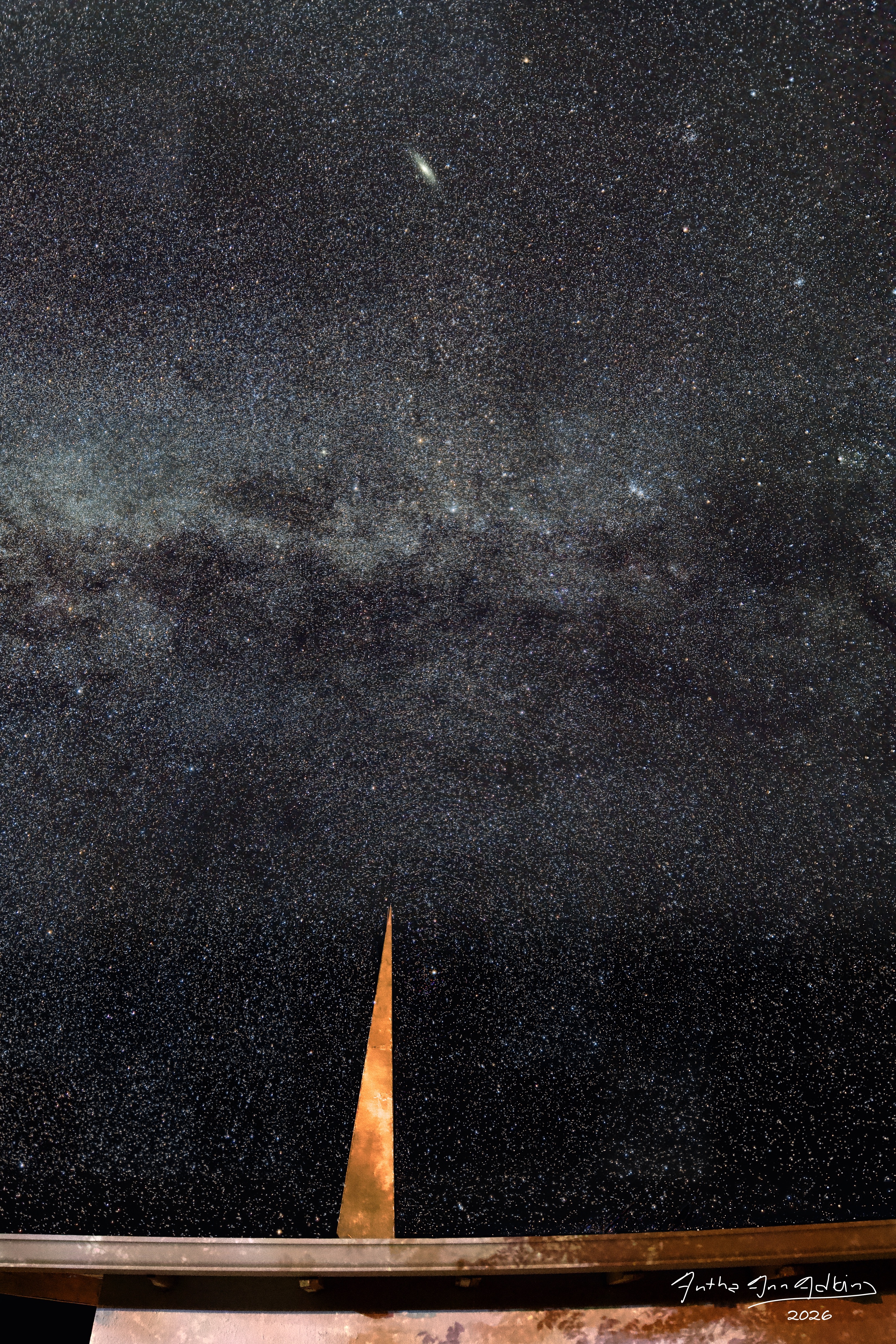
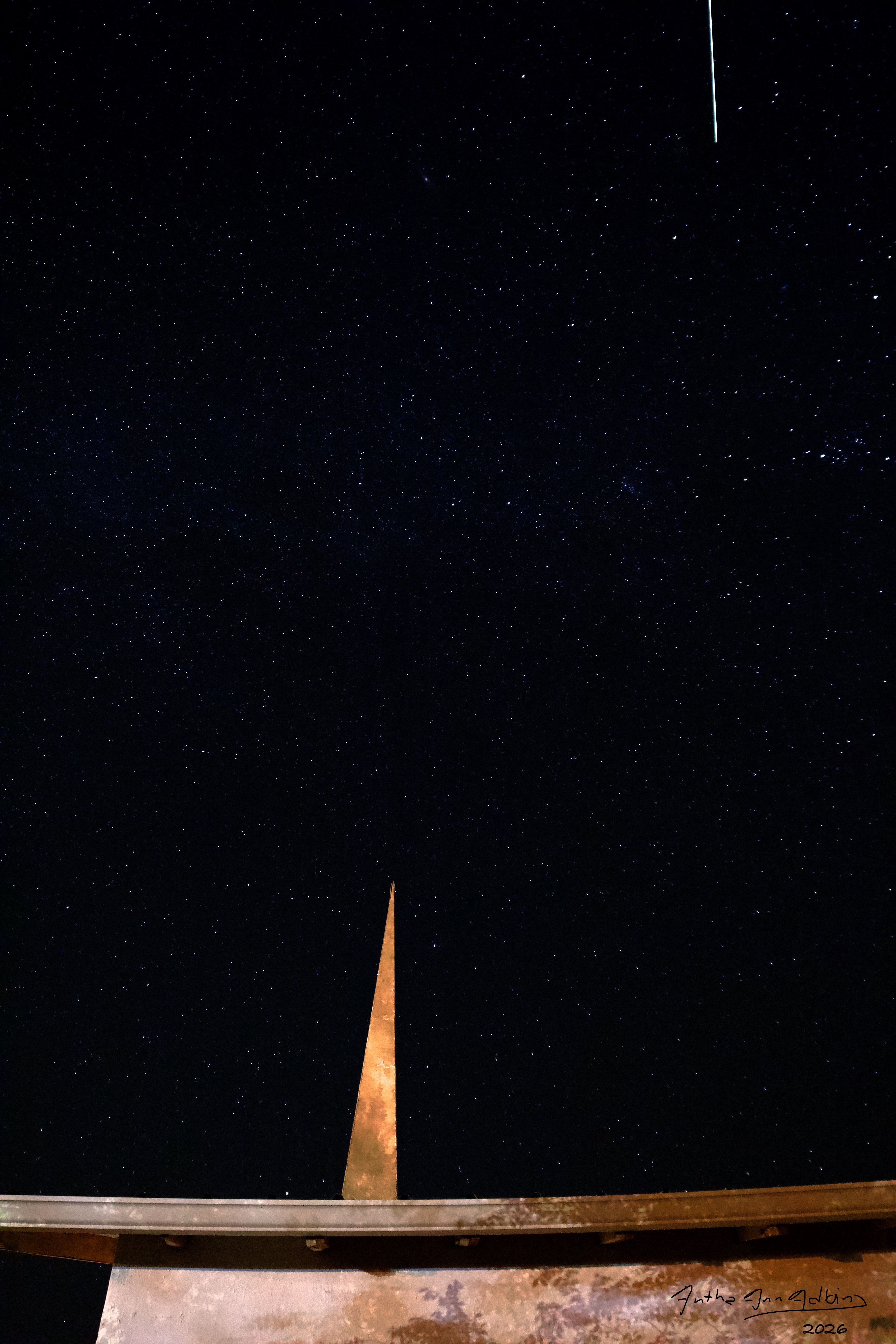
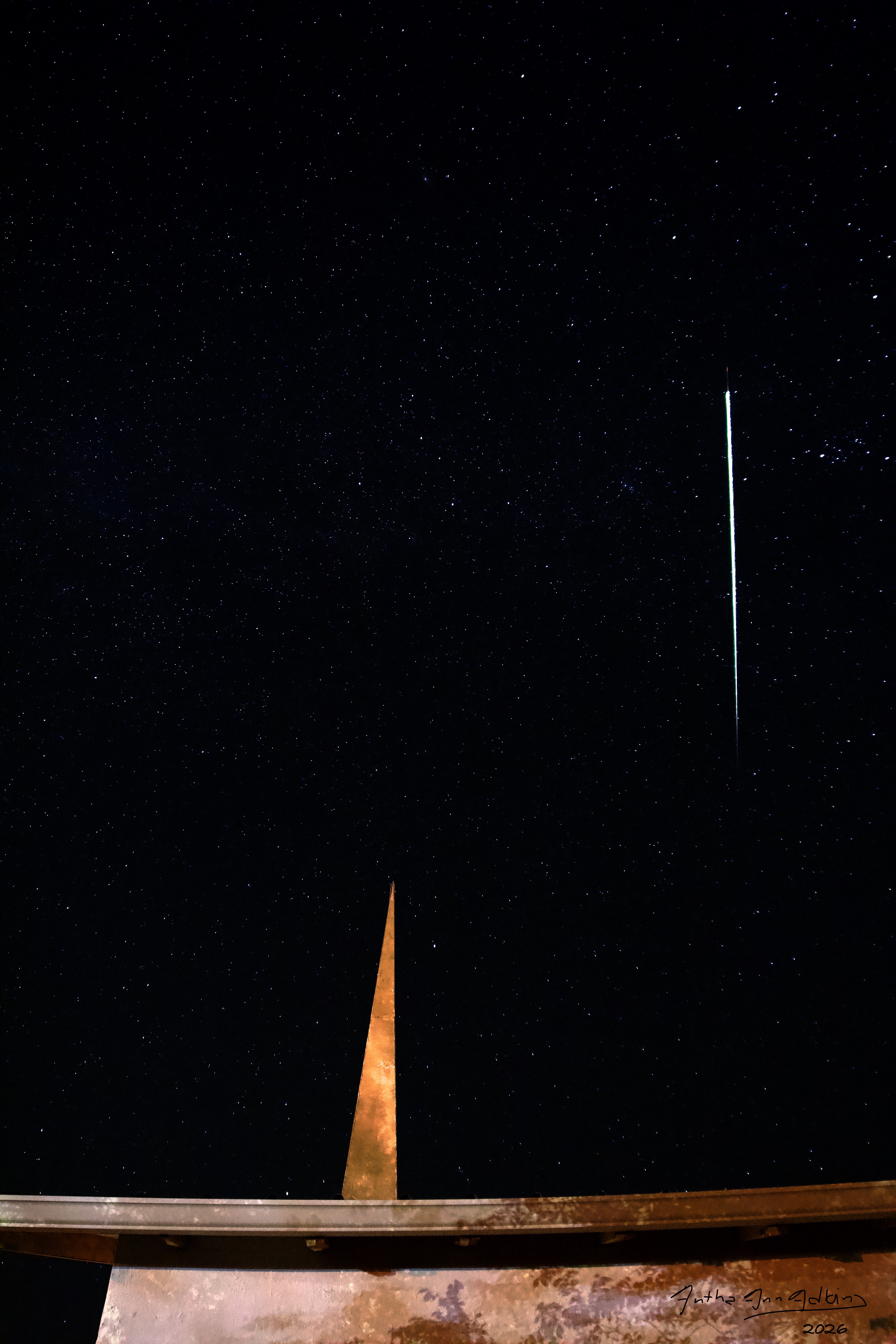
As luck would have it, I was collecting a series of wide-angle images of the Milky Way Galaxy (the side to side bright “cloud”) and the Andromeda Galaxy (bright elliptical object above the Milky Way) over the spire of the church where our very kind friends allow us to stay, and two of the last five images in the sequence of 201 showed the fireball! The first one shows it coming down from above. The second one picks it up one second later and captures its train (ionized gas in the air the fireball passed through, in this image the faint line above the fireball) as well as its termination.
These images were processed in five parts: a single shot for the spire, the integration of 201 frames for the stars, the integration of the same 201 frames for the Milky Way and Andromeda galaxies (processed separately from the stars), and single shots for the two fireball images.
For comparison, below are the original single frames for the meteor. You can see that it was actually much brighter than the Milky Way or the Andromeda Galaxy.
What has made you say WOW recently?
Camera geek info:
- Canon EOS 60D in manual mode, 9 second exposures, ISO 800
- Rokinon 14 mm f2.8 lens, manual focus
- Intervalometer
- Tripod
Frames:
- October 10, 2026
- 201 9 second lights
- 32 0.0008 second flats
- 51 0.0008 second dark flats
- 35 9 second darks

